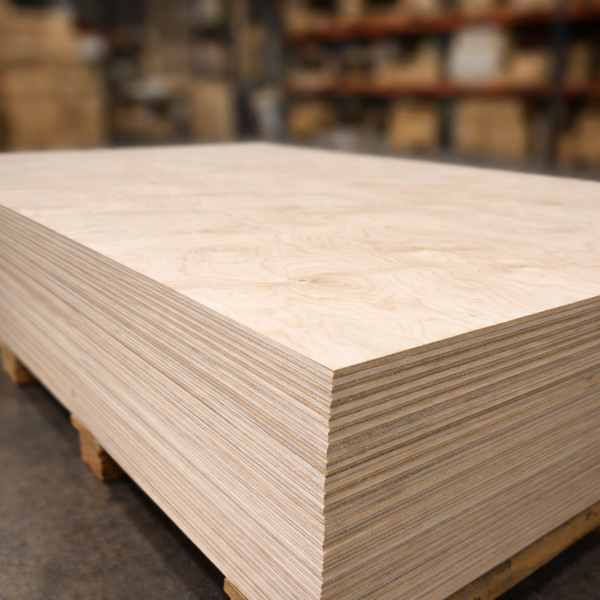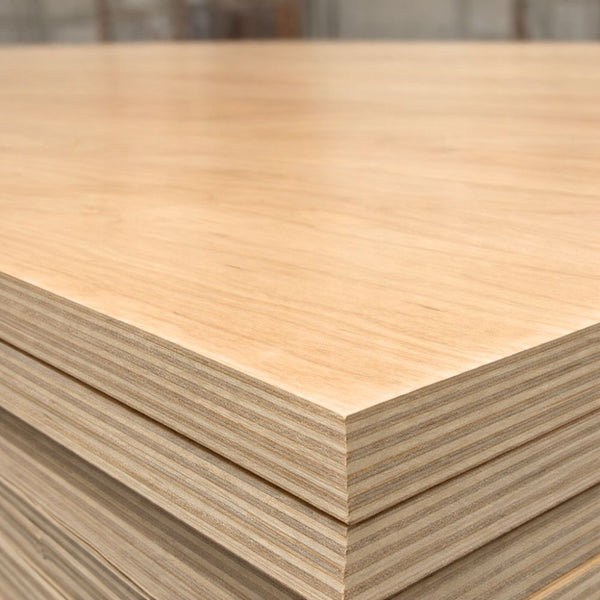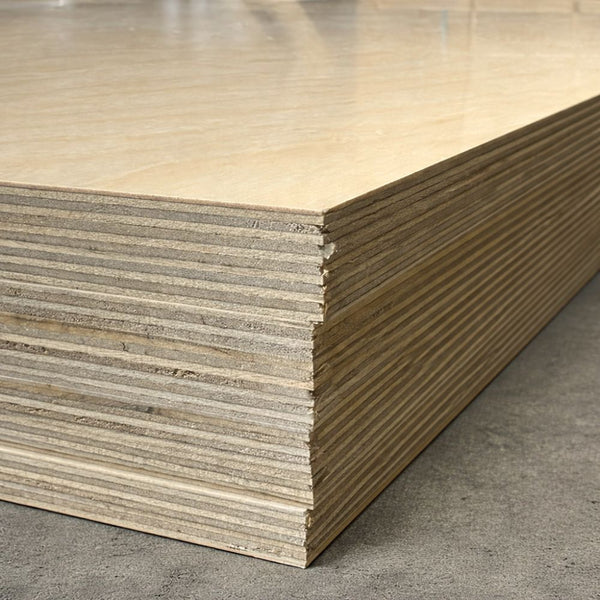

Panel quality
Quick answer
“Cabinet-grade MDF” is a purchasing description, not a complete technical grade. A good cabinet panel should be specified by the job: actual thickness, raw or factory-finished faces, density or product class when published, flatness, machining quality, edge condition, fastener strategy, moisture classification, emissions documentation, and intended interior use.
For painted routed fronts, a uniform raw MDF panel may be the right choice. For flat slab fronts, factory-finished acrylic MDF can remove painting from the workflow. The word “premium” does not make those products interchangeable, and a decorative face does not identify every property of the core.
Specification
What “cabinet grade” should make you verify
MDF standards such as ANSI A208.2 define performance classes for interior MDF, but a retail phrase such as “cabinet grade” does not by itself disclose the class, density, thickness tolerance, formaldehyde-emission documentation, or moisture resistance of a specific sheet. Those details belong in the manufacturer’s data and the current product specification.
Start with the part and work backward. Berta’s MDF uses and limitations reference explains the broad material; this article focuses on how to evaluate a particular panel before committing a cabinet run.
| Property | Why cabinet shops care | Evidence to request | Shop-level check |
|---|---|---|---|
| Actual thickness and tolerance | Controls grooves, dados, hinge boring, reveals and nesting | Published nominal/metric size and tolerance when available | Measure several points with calipers |
| Density / panel class | Influences weight, machining and some fastener behavior | Manufacturer technical data—not a guessed value | Weigh a known-size offcut only as a lot comparison |
| Face and edge uniformity | Affects primer absorption, profile sharpness and finish labor | Raw, primed, acrylic, TFL or other exact surface | Route an edge and prime a coupon |
| Flatness and balance | Matters for doors, end panels and long components | Storage requirements and surfaced-side construction | Check the sheet on a known-flat reference |
| Moisture classification | Dry-interior MDF and moisture-resistant MDF are not interchangeable | Exact manufacturer classification | Do not infer resistance from color or marketing language |
| Emissions documentation | May be required by project, code or customer specification | Current supplier/manufacturer compliance documents | Keep documents tied to the purchased product and lot |
| Fastener performance | Face and edge screw behavior affect assembly and hardware | Manufacturer recommendations where available | Prototype the exact pilot, screw and edge distance |
Density without mythology
Does denser MDF mean higher quality?
Not by itself. Density can affect mass, stiffness, machining feel, screw behavior, and transport effort, but a single number cannot predict every cabinet outcome. Density profile through the panel thickness, fiber distribution, resin system, pressing, moisture content, surface treatment, and the part design also matter.
Do not reverse-engineer a formal density specification from a product name such as “MDF 800.” Berta’s current unfinished product uses MDF 800 as its product designation, but the live product page does not publish a density value. The safe approach is to treat density as unavailable until the manufacturer or supplier provides it.
Weight is not density data
A whole-sheet weight can be useful for handling, but dimensions and moisture influence the calculation. Use the MDF sheet-weight planning method without turning an estimate into a certification.
Hard edge is not the whole panel
A dense-feeling face may machine differently from the center. Test the exact profile depth and fastener location.
Higher mass has tradeoffs
Heavier parts affect lifting, hinges, drawer hardware, shipping and installation. Choose by performance, not maximum weight.
Match panel to part
Cabinet MDF selection matrix
| Component | Useful starting route | Primary quality test | Watch-out |
|---|---|---|---|
| Routed painted door or front | Raw MDF intended for machining and coating | Route the deepest profile; seal and prime the exposed edge | Edges absorb finish differently from faces |
| Flat painted panel | Raw MDF with a specified paint system | Prime both face and edge coupons | One-sided finishing can create appearance or balance issues |
| Flat matte or gloss slab front | Factory-finished acrylic MDF | Approve an actual color/finish sample and edge match | Factory-finished does not mean the cut edge is finished |
| Cabinet box | Compare MDF with cabinet plywood by design priorities | Prototype joints, fasteners, handling and interior finish | Weight and edge fasteners may favor another substrate |
| Long shelf | Engineer thickness, span, support and load together | Check expected deflection or build a load prototype | “Cabinet grade” is not a shelf load rating |
| Wet or damp location | Use a product explicitly classified for the exposure | Verify manufacturer documentation and edge/seal system | Ordinary interior MDF is not waterproof |
The plywood versus MDF cabinet-part comparison helps when the substrate is still undecided. If the finish route is the real question, use the acrylic MDF versus raw MDF guide.
Receiving inspection
A six-step cabinet-shop quality check
Confirm the identity
Match the delivered product, thickness, finish, color, and quantity to the order before breaking the stack.
Check storage condition
Look for wet edges, damaged protective film, crushed corners, or sheets stored without adequate support. Follow the supplier’s acclimation guidance.
Measure thickness in several places
Use the actual lot to set toolpaths, grooves, hinge boring, reveals, and edge-banding width.
Inspect flatness and faces
Use a known-flat reference and raking light. For surfaced panels, verify the correct face and back before cutting.
Machine one representative offcut
Run the deepest profile, smallest hole, critical edge screw, and finish schedule the job will use. The unfinished MDF CNC and paint-prep workflow provides a detailed sequence.
Record the approved setup
Keep tool, feed, pilot hole, fastener, primer, coating, and edge-banding results with the job so the production run does not rely on memory.
Current Berta options
Two cabinet-quality routes, not one grade

Unfinished MDF 3/4″ 4×8
Berta lists MDF 800 as a raw, grain-free, nominal 3/4-inch panel for dry interior machining and custom finishing. It is not pre-primed and needs edge sealing, primer, and a compatible coating system.
Review the raw MDF specification
Premium Acrylic MDF 4×8 Panels
Berta lists nominal 18 mm panels with an MDF core and matte or high-gloss acrylic surfaces. This route fits flat components that need a consistent purchased finish rather than shop painting.
Compare acrylic colors and finishes
Premium Acrylic MDF Samples
Color names and screen previews cannot approve a cabinet finish. Berta lists approximately 8.5–10-inch samples so reflection, surface feel, and edge appearance can be checked in project lighting.
Review sample variantsSpecification gap to keep visible: the checked Berta product pages do not state an MDF density value, a moisture-resistant classification, or a specific emissions certification for these panels. Do not add those claims to a submittal without current documentation.
Common buying errors
What “premium” cannot answer
Density assumption
Do not convert a model name or price into a density claim.
Moisture assumption
Color, coating, or a smooth face does not establish moisture resistance.
Fastener assumption
Prototype face and edge screws with the exact pilot and edge distance.
Finish assumption
Raw, primed, painted, acrylic-faced, and melamine-faced panels need different workflows.
Thickness assumption
Nominal 3/4 inch and 18 mm are not permission to skip measurement.
Application assumption
A panel suited to a flat door is not automatically the best shelf, box, or wet-area material.
Frequently asked questions
Cabinet-grade MDF questions
What density is cabinet-grade MDF?
There is no single density implied by that retail phrase. Use the specific manufacturer’s data and product class. If density is not published, report it as unavailable rather than guessing.
Is cabinet-grade MDF better than plywood?
It is better for some outcomes, especially smooth painted faces and routed profiles. Plywood can be preferable where lower weight, veneer appearance, edge screw holding, or particular structural behavior matters. Choose by component.
Does cabinet-grade MDF hold screws?
MDF can hold properly selected face screws, but edge performance and repeated removal require care. Test the exact fastener, pilot hole, edge distance, torque, and load; use appropriate hardware or inserts where needed.
Is cabinet-grade MDF waterproof?
No universal claim follows from the phrase. Ordinary interior MDF should be kept dry. Use a product explicitly documented for the expected moisture exposure and follow its sealing requirements.
How many 4×8 MDF sheets do I need?
Use the Plywood & MDF sheet calculator with actual part sizes, kerf, grain/finish direction where applicable, and a realistic waste allowance.
Build the submittal
Useful Berta Store resources
Bottom line: a cabinet-quality MDF decision is evidence-based. Name the panel, match it to the part, verify the current technical data, and approve the machining and finish on the actual material.
Technical scope: The specification framework references Composite Panel Association resources and the existence of ANSI A208.2 for interior MDF; it does not assign that standard or any certification to a Berta product. Berta-specific facts were checked against current product pages on October 12, 2026.