

Full Overlay Hinges
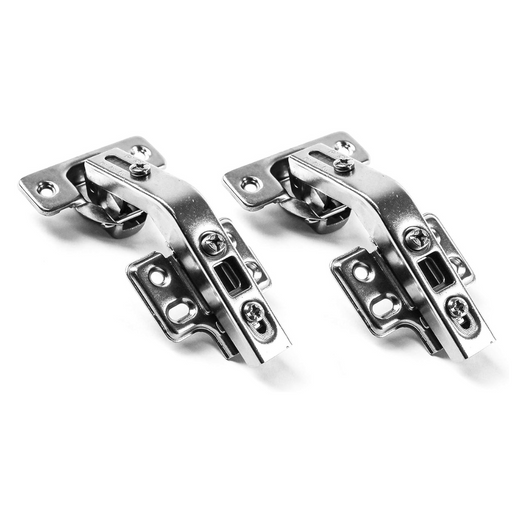
The door covers the cabinet side or face-frame opening as fully as the selected overlay size allows. Common on modern frameless cabinets.
Shop 110° full overlay hinges →
Compare full overlay, half overlay and inset cabinet hinges for frameless and face-frame cabinets. Start with how the door sits on the cabinet, then choose the correct opening angle, closing style and adjustment system.
The hinge type is determined mainly by the closed door position. Do not choose only by the opening angle—full overlay, half overlay and inset hinges create different door positions.
The door covers the cabinet side or face-frame opening as fully as the selected overlay size allows. Common on modern frameless cabinets.
Shop 110° full overlay hinges →Two doors share one center cabinet partition, and each door covers only part of that shared panel. Most common on frameless cabinets.
Shop 110° half overlay hinges →The door sits inside the cabinet opening instead of covering it. Inset layouts require careful alignment and the correct hinge for the cabinet construction.
Shop 110° inset hinges →A face-frame cabinet has a wood frame around the front opening. A frameless cabinet has no front frame—the hinge mounts directly to the cabinet box side. Confirm this before ordering.
Products are ordered to lead shoppers from the clearest inset and full-overlay choices into half-overlay, face-frame and specialty-angle options.

For frameless cabinet doors that sit flush inside the cabinet opening.

For frameless doors that fully cover the cabinet box side.

Standard spring-closing concealed hinges for frameless cabinets.

Multiple overlay-size variants for cabinets with a front face frame.

For diagonal, corner and non-standard frameless cabinet layouts.

For two frameless cabinet doors sharing one center partition.

Controlled door swing for tighter face-frame cabinet layouts.

For cabinet doors requiring a precise 5/8-inch overlay fit.

For frameless cabinet doors that need maximum interior access.
Use this table to match door position, cabinet construction and opening needs to the closest Berta Store hinge option. Always confirm the product-page measurements before drilling or replacing an existing hinge.
| Hinge Type | Closed Door Position | Cabinet Construction | Opening | Closing / Adjustment | Best Use | Matching Option |
|---|---|---|---|---|---|---|
| Full Overlay | Door covers the cabinet side or selected face-frame overlay area. | Frameless; face-frame versions require the correct overlay size. | Commonly 105°–110° | Soft close or standard spring close; adjustment varies. | Single doors and modern cabinet runs with maximum front coverage. | 110° Full Overlay |
| Half Overlay | Two doors share one center partition; each covers part of the panel. | Frameless | 110° | Soft close · 6-way adjustable | Double-door boxes, wardrobes and adjacent cabinet doors. | 110° Half Overlay |
| Inset | Door sits inside and flush with the cabinet opening. | Depends on hinge design; Berta's matching 110° SKU is for frameless cabinets. | 110° | Soft close · 6-way adjustable | Flush-door cabinetry requiring precise reveals and alignment. | 110° Inset Hinges |
| Measured 5/8-Inch Overlay | Door overlaps the cabinet opening by a specified 5/8 inch. | Face frame or compatible frameless applications | 105° | Soft close · 3D adjustable | Replacement or new installations where the overlay measurement is known. | 5/8-Inch Overlay |
| Face-Frame Full Overlay | Door covers part or most of the front frame based on the selected overlay variant. | Face frame | 90° or 105° | Soft close; variant-specific adjustment. | Traditional framed kitchen, closet and storage cabinets. | 105° Face Frame |
| Wide-Opening Full Overlay | Full overlay door with a larger swing range. | Frameless | 165° | Hydraulic soft close | Deep cabinets, wardrobes and layouts needing wider interior access. | 165° Wide Opening |
| Angled Full Overlay | Door mounts at a non-standard cabinet angle. | Frameless specialty layouts | -45°, -30°, 30°, 45° or 90° variants | Soft close · 3D adjustable | Diagonal cabinets, angled boxes and custom corner construction. | Angled Hinges |
Corner folding-door and Lazy Susan hinges are a separate specialty category. Browse the Corner & Lazy Susan Hinges collection instead of selecting them only by overlay type.
Follow this order so the hinge type, cabinet construction and drilling pattern all match.
Check whether the cabinet has a front face frame or is a frameless box. The mounting plate and hinge geometry are not interchangeable.
Determine whether the door fully covers the side, shares a center panel with another door, sits inside the opening or uses a measured overlay.
Use 105° or 110° for standard access, 90° for restricted swing and 165° for wide access. Then choose soft close or standard spring close.
Compare cup diameter, cup depth, screw spacing, mounting plate, door thickness and overlay measurement on the product page before drilling.
Watch the guides before installation to review hinge selection, mounting and final cabinet-door adjustment.
Review Berta Store hinge options and the key differences shoppers should confirm before selecting a product.
See the installation sequence and how adjustment screws help align cabinet doors after mounting.
Explore supporting cabinet hardware and how hinge selection fits into the larger installation workflow.
Estimate hinge quantity using cabinet-door height and standard hinge-spacing guidance before ordering packs for the project.
Use the Hinge Quantity CalculatorCompare the correct hinge type first, then select the pack quantity and product variant. The current second-pack discount is applied automatically at checkout.
Return to Hinge ProductsUse these dedicated collections when your primary need is broader than overlay versus inset.
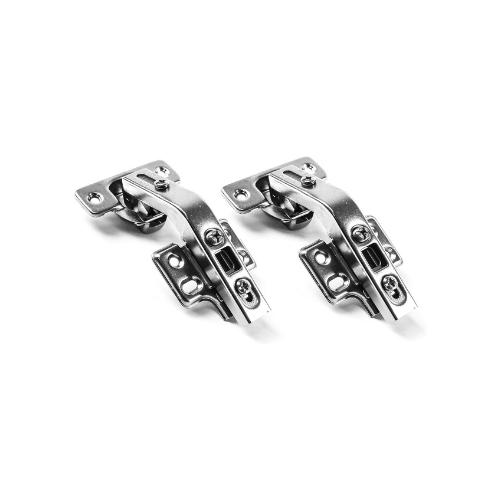
Browse the complete cabinet hinge selection across all types and applications.
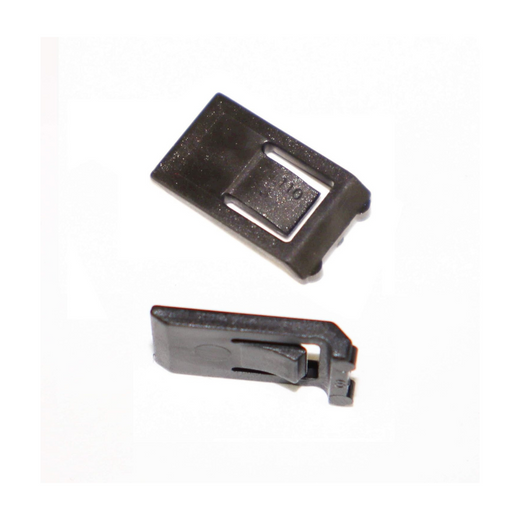
Shop opening restrictors, limiters and supporting hinge accessories.
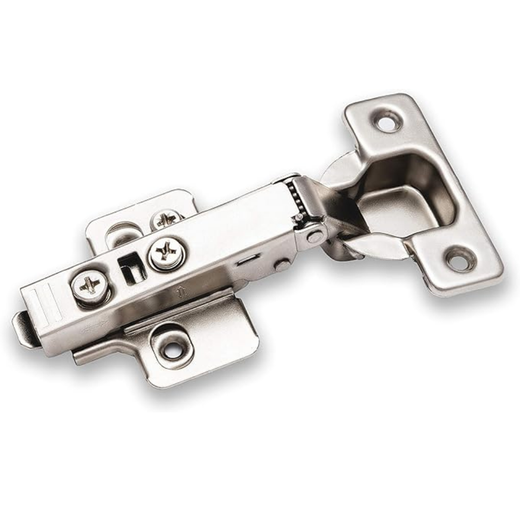
Browse hinges by quiet-closing feature across cabinet constructions.
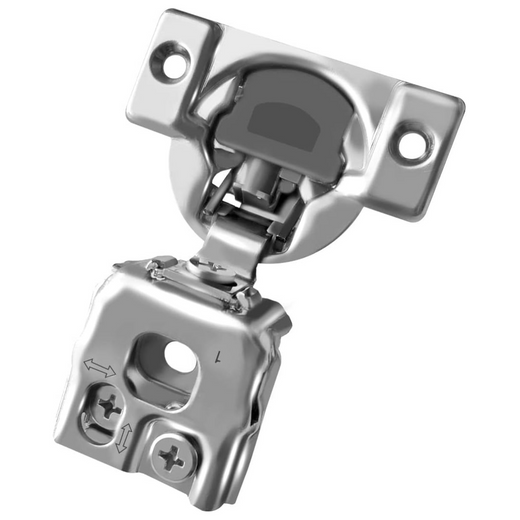
Hinge options made for cabinets with a front wood frame.
Specialty hinges for corner cabinets, folding doors and wide-angle access.
Overlay hinges position the closed door over the cabinet side or face-frame opening. Inset hinges position the door inside the cabinet opening so it sits flush or nearly flush with the cabinet front.
A full-overlay door covers its cabinet side as fully as the hinge design allows. Half-overlay hinges are used when two doors share one center partition and each door covers only part of that shared panel.
No. Inset describes the door position, not one universal cabinet construction. Choose a hinge specifically made for your cabinet style. Berta Store's 110° inset product on this page is designed for frameless inset cabinet doors.
Use 105° or 110° for many standard cabinet doors, 90° where the swing needs to be restricted and 165° where the door must move farther out of the way. Opening angle does not replace overlay and cabinet-construction matching.
Close the door and measure how far it overlaps the cabinet opening or face-frame edge. For frameless cabinets, also confirm whether the door covers a full side panel or shares a center partition. Compare the measurement with the exact product variant before ordering.
The quantity depends on door height, weight, material and hardware specifications. Use the Berta Store Hinge Quantity Calculator, then confirm the product guidance for large or heavy doors.
No. Also match the cabinet construction, overlay or inset position, cup diameter, cup depth, screw-hole spacing, mounting plate and door thickness. Small geometry differences can prevent proper alignment.
Soft-close hinges use damping to slow the door before it closes. Standard spring-closing hinges pull the door closed without hydraulic damping and can be a practical lower-cost option for some bulk cabinet projects.
Compare your cabinet construction, closed door position, current hinge measurements and required opening angle before ordering. For product help, contact Berta Store with clear photos and measurements.