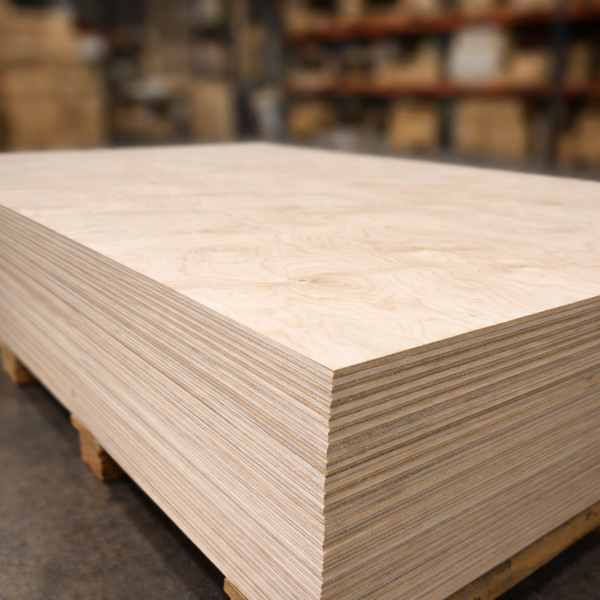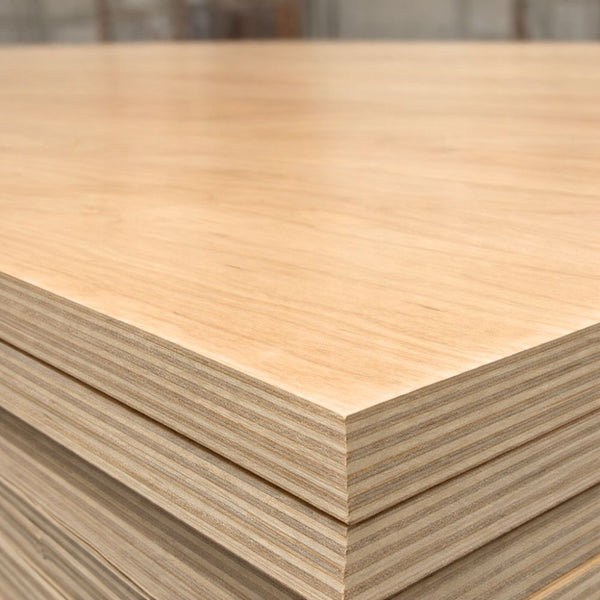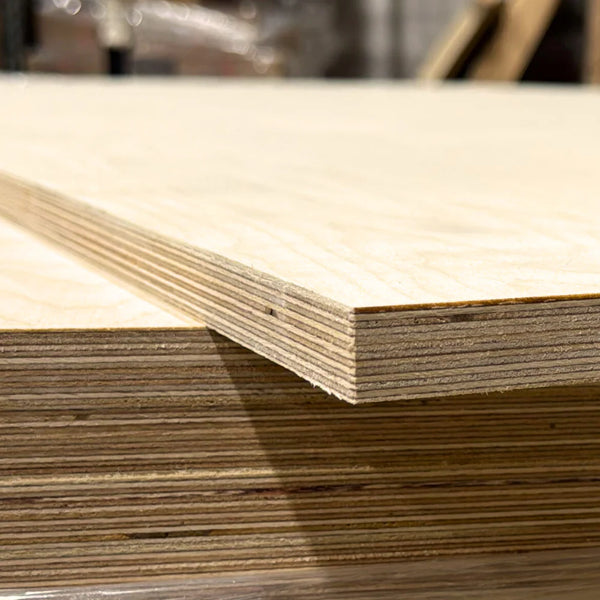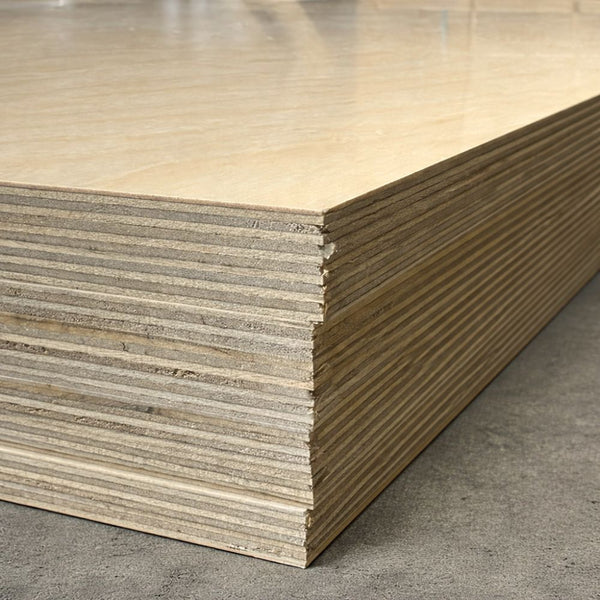

Medium density fiberboard (MDF) is a wood-fiber panel used for cabinet doors, furniture, trim and decorative surfaces. Its smooth, grain-free face is useful for painting and surfacing—but the right specification depends on the component, finish and exposure.
The practical answer: MDF can work well for doors, drawer fronts and fitted interiors. Cabinet boxes and shelves need a suitable panel grade, sound joints and a design that accounts for load and support. Standard interior MDF is not a wet-area or exterior panel.
What is medium density fiberboard?
MDF is made by bonding refined wood fibers with a resin system under heat and pressure. It is different from plywood, which uses bonded wood veneers, and from particleboard, which uses larger wood particles. The absence of a natural grain pattern is one reason MDF is chosen for painted and decorative surfaces.
“MDF” describes a material family, not one universal specification. Density, internal bond, moisture performance, machining quality and surface treatment vary by product. The Composite Panel Association’s MDF overview describes a range of grades and lists kitchen cabinets among its applications.
For a decision focused on finish quality, fabrication and cost, read why cabinet makers choose MDF instead of plywood. This guide focuses on where the material belongs in the cabinet itself.
What is MDF used for in cabinets?
Start with the part you are making. A door face, a loaded shelf and a sink-base panel have different requirements—even when they are in the same kitchen.
| Cabinet component | Where MDF can fit | What to check |
|---|---|---|
| Painted doors & drawer fronts | Raw, paint-grade MDF offers a grain-free surface for a solid-color finish. | Edge preparation, door construction, final weight and the coating system. |
| Factory-finished slab fronts | Acrylic-faced MDF provides a decorative matte or high-gloss face. | Color approval, cut quality, visible edges and hardware requirements. |
| Decorative panels & trim | A suitable grade can be routed or profiled for interior details. | Machining recommendations and how exposed fibers will be finished. |
| Cabinet boxes | Possible in an appropriately designed furniture or cabinet system. | Panel grade, joints, fasteners, handling weight and moisture exposure; compare plywood. |
| Shelves | Possible where the design provides adequate thickness and support. | Clear span, expected load, long-term deflection and reinforcement. |
| Sink bases & damp locations | Require particular attention to the specified moisture-rated product and assembly. | Leak risk and protection of all vulnerable edges; a decorative face is not proof of water resistance. |
This is a selection guide, not a load rating or approval for a particular panel. Use the manufacturer’s specifications and the cabinet or hardware design requirements.
Shop factory-finished acrylic MDF
These are factory-finished acrylic MDF options, not raw MDF boards for painting. Compare full sheets or order a sample before committing to a larger project.

White Matte Acrylic MDF
Factory-finished matte acrylic surface on an MDF core for modern slab doors, drawer fronts and visible panels.
See the product page for current price, availability, finish details and delivery options.
View White Matte
White High Gloss Acrylic MDF
Reflective acrylic face for contemporary cabinet fronts, furniture panels and modern interior projects.
See the product page for current price, availability, finish details and delivery options.
View White High Gloss
Premium Acrylic MDF Samples
Review color and surface in your project lighting before ordering full 4×8 sheets.
See the product page for current price, availability, finish details and delivery options.
Choose a SampleProduct prices and availability can change. Use the linked product pages for the current information before ordering.
Is MDF porous, and how does it handle moisture?
Raw MDF edges need attention
Cut and routed edges expose fibers that can absorb finishing materials differently from the face. For a painted component, plan an MDF-compatible edge-sealing and priming process rather than expecting one coat of paint to produce an even result.
Moisture-resistant is not waterproof
A moisture-resistant grade is different from standard interior MDF. It still needs the right installation and protection from wetting. MEDITE, for example, explicitly states that its MR panel is not waterproof.
On an acrylic-faced panel, the finished face does not establish the moisture rating of the core. Cut edges, drilled holes, joints and any exposed core still need an appropriate treatment. Do not assume Berta’s acrylic panels have a moisture-resistant core unless the product specification confirms it.
For kitchens and vanities: specify the panel for the actual exposure, plan the edges and joints, and keep the assembly away from standing water. A kitchen is not automatically too wet for every MDF product, but a leak-prone location is not the same as a dry door face.
Cabinet boxes, shelves and screws: design the assembly
Can MDF be used for cabinet boxes?
Yes, in a suitable cabinet system. It is too broad to say that MDF can never be used for a carcass. The useful question is whether the chosen panel and joinery suit the cabinet’s load, environment and hardware. For a project where panel weight, fastener performance or moisture risk drives the decision, compare cabinet plywood options rather than selecting by surface appearance alone.
Will an MDF shelf sag?
It can. Shelf performance depends on the panel, thickness, clear span, sustained load and how the shelf is supported. Avoid a universal “safe span” based only on the word MDF. A center support, a stiffer front edge or a different panel may be appropriate; check the design before loading the shelf.
Does MDF hold screws?
MDF can accept appropriate fixings, but screw choice and joint design matter. Use the panel and hardware manufacturers’ instructions for pilot holes, edge distances and tightening. Do not treat an edge fixing as equivalent to a face fixing, or rely on an overtightened screw for a heavily loaded connection.
For doors, confirm hinge suitability against the finished door’s dimensions and weight. Cutting a hinge cup or selecting the number of hinges should follow the actual hardware specification, not a rule based on the sheet material alone.
Raw MDF and acrylic MDF are different buying decisions
Choose raw MDF for a planned paint finish
The unfinished substrate lets you select the coating color and system. It still needs preparation, especially on cut and routed areas. Allow for priming, sanding, coating and curing in the project plan.
Choose acrylic MDF for its finished face
The decorative face already provides the selected appearance. Berta’s premium acrylic MDF panels are not raw painting blanks. Fabrication and edge finishing remain separate tasks.
Before choosing a surface, read Acrylic MDF vs Raw MDF: Which Cabinet Panels Need Painting? It explains the distinction between the core and the factory-applied decorative face.
What to confirm before ordering MDF
Define the component and environment. Record whether the panel will become a door, box, shelf or decorative surface, and identify humidity or water exposure.
Verify the exact product. Check actual thickness, sheet size, core specification, facing and fabrication guidance. Nominal inch labels are not a substitute for measured thickness when machining parts or setting hardware.
Plan the complete finish. Include edges, holes, joints and the reverse side wherever the assembly requires protection or a coordinated appearance. Approve a physical sample when color and reflection matter.
Plan the order. Confirm the cut list, quantity, current product availability and pickup or delivery arrangements. Compare the complete installed component, not only the sheet price.
MDF cabinet questions
Is MDF considered cabinet grade?
“Cabinet grade” alone is not a complete specification. MDF is used in cabinetry, but suitability depends on the manufacturer’s grade and the component’s requirements. Check the panel’s physical properties, exposure rating and finishing requirements.
Can MDF be used in a kitchen?
Yes, with an appropriate product and design. A dry painted door and a leak-prone sink base have different exposures. Use the specified grade, protect vulnerable areas and do not treat standard interior MDF as waterproof.
Is MDF better than plywood for cabinets?
Not for every component. MDF offers a grain-free base for decorative surfaces; plywood may be a better fit for other construction priorities. Compare the exact panels, finish, joints, load and exposure instead of declaring one material the universal winner.
Does acrylic MDF need painting?
The factory-applied decorative face does not need painting to obtain its intended finish. Cut edges and exposed core still need an appropriate treatment. Raw MDF, by contrast, is an unfinished substrate for a planned finishing system.
Technical references & specification note
For material properties and product-specific guidance, see the Composite Panel Association MDF overview, MEDITE PREMIER and MEDITE MR. These references explain MDF categories; they do not certify Berta’s products or imply that Berta sells those manufacturers’ panels. Always verify the specifications of the exact panel being ordered.