
OSB and plywood are often grouped together because they serve similar structural purposes, but they behave very differently once installed. Treating them as interchangeable leads to predictable problems—especially around moisture, edges, and fasteners.
Professionals don’t choose between OSB and plywood by price alone. They choose based on exposure conditions, load paths, edge treatment, and how the panel will be finished or left exposed. This guide explains the real differences and how those differences affect performance on the jobsite.
What OSB and Plywood Actually Are
Oriented Strand Board (OSB)
OSB is made from wood strands oriented in layers and bonded with resin under pressure. The strands provide directional strength, while the uniform mat creates consistent thickness and strength across the sheet.
Plywood
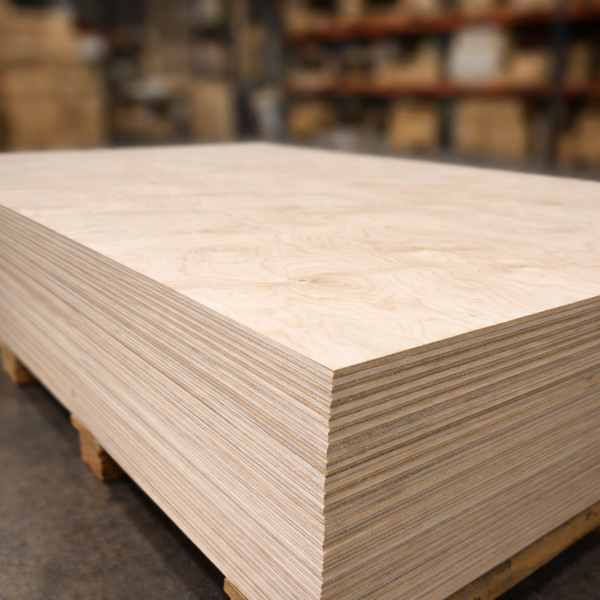
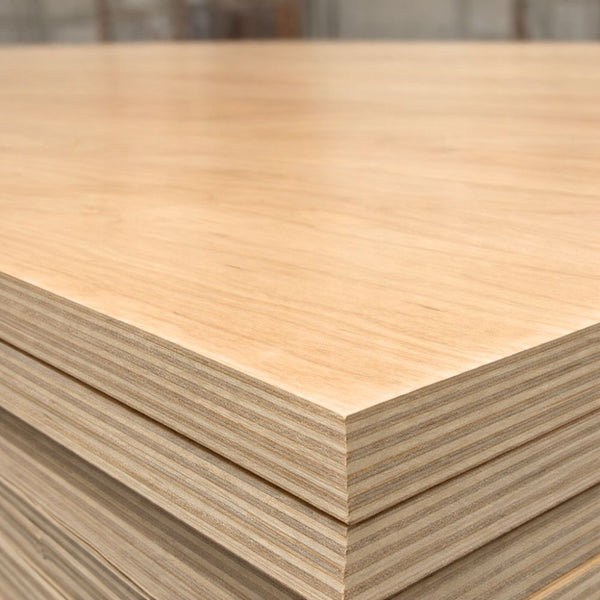
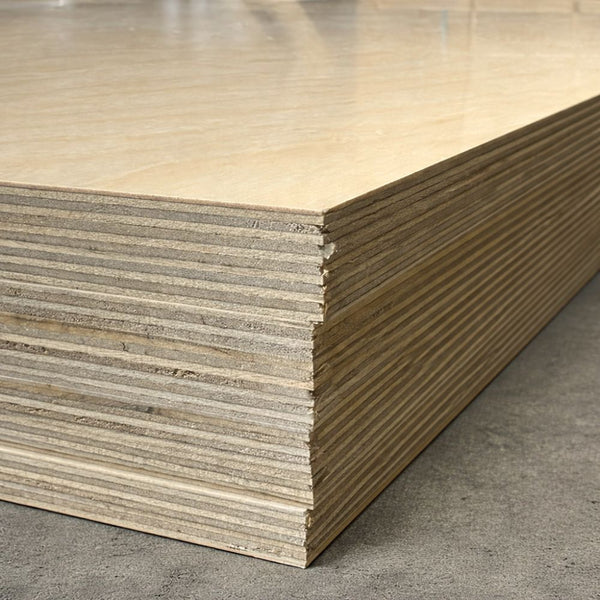
Plywood is made from thin wood veneers stacked with alternating grain directions. This cross-lamination improves dimensional stability and edge integrity. For the development of this layered construction, see the plywood invention and manufacturing timeline.
Both are engineered wood products, but their internal structure drives how they perform.
How Professionals Evaluate These Panels
Moisture behavior
OSB absorbs moisture more slowly than plywood, but when it does, it holds water longer and swells at the edges. Plywood may absorb water faster, but it typically dries more predictably and recovers better.
Edge durability
Plywood edges are layered veneers and tolerate machining, fastening, and minor exposure better. OSB edges are strand-based and prone to swelling and fraying when exposed or cut.
Fastener holding
Plywood generally provides better screw holding, especially near edges. OSB performs adequately for nails and structural fasteners but is less forgiving with repeated screw removal or edge fastening.
Where OSB Performs Well
OSB is designed for structural use in controlled assemblies.
- Wall sheathing: Uniform strength and consistent thickness.
- Roof decking: Cost-effective and structurally reliable when properly protected.
- Subflooring: Performs well when covered promptly and kept dry.
In these applications, OSB is efficient and predictable—provided exposure is limited during construction. For the floor layer specifically, review why plywood is used for subfloors instead of solid boards.
Where OSB Fails
- Extended moisture exposure: Edge swelling is difficult to reverse.
- Exposed applications: Not suitable where edges remain visible.
- Finish work: Poor candidate for cabinetry, shelving, or painted surfaces.
OSB is a structural panel, not a finish material.
Where Plywood Performs Well
Plywood’s layered construction makes it more versatile.
- Cabinet boxes and casework: Better screw holding and edge stability.
- Shelving: Resists sagging better when thickness is appropriate.
- Applications with exposed edges: Accepts edge banding and solid edging.
This versatility is why many professionals source from a dedicated plywood collection when the panel will be visible, machined, or finished.
Where Plywood Has Limits
- Cost-sensitive structural work: Often more expensive than OSB.
- Low-grade cores: Cheaper plywood with voids can underperform.
- Exterior exposure without rating: Requires correct grade and treatment.
Not all plywood is equal—core quality matters.
OSB vs Plywood in Common Use Cases
Subfloors
Both materials are used successfully. OSB is common for cost reasons, while plywood is often chosen where moisture exposure during construction is a concern. For a specific engineered-subfloor comparison, review AdvanTech versus plywood and the required floor-system specification.
Wall and roof sheathing
OSB dominates due to uniform strength and availability. Plywood is preferred when edges may be exposed or when fastener holding at edges is critical. For plywood sold as RTD, check the rated-sheathing stamp and exposure classification.
Cabinetry and interior work
Plywood is the correct choice. OSB is not intended for finish or cabinetry applications.
Common Buyer Mistakes
- Using OSB where edges will remain exposed
- Assuming all plywood is moisture resistant
- Choosing by price without considering exposure conditions
- Using low-grade plywood for cabinetry
Most failures come from using a structural panel as a finish panel—or vice versa.
When Each Material Is the Right Choice
Choose OSB when:
- The application is structural
- The panel will be covered quickly
- Edges are not exposed
Choose plywood when:
- Edges will be visible or machined
- Screw holding matters
- The panel will be part of cabinetry or interior work
FAQ
Is OSB stronger than plywood?
They are similar in structural ratings, but they fail differently under moisture and edge stress.
Can OSB be used for cabinets?
No. OSB is not intended for cabinetry or finish work.
Is plywood waterproof?
No. Some grades handle moisture better, but none are waterproof without treatment.
Why do plywood edges perform better?
The layered veneer structure resists swelling and holds fasteners more reliably.
Final Thoughts
OSB and plywood solve different problems. OSB excels as a cost-efficient structural panel. Plywood excels where durability, edge quality, and finishing flexibility matter.
Professionals who choose based on exposure, fastening, and finish requirements—rather than labels—avoid predictable failures and build assemblies that last.