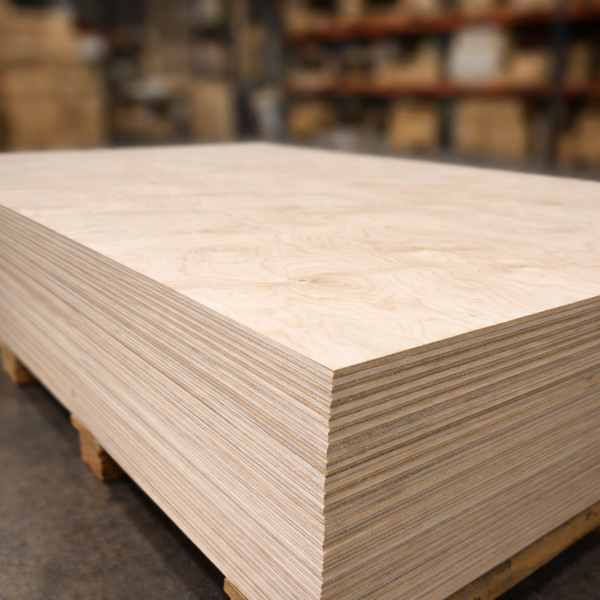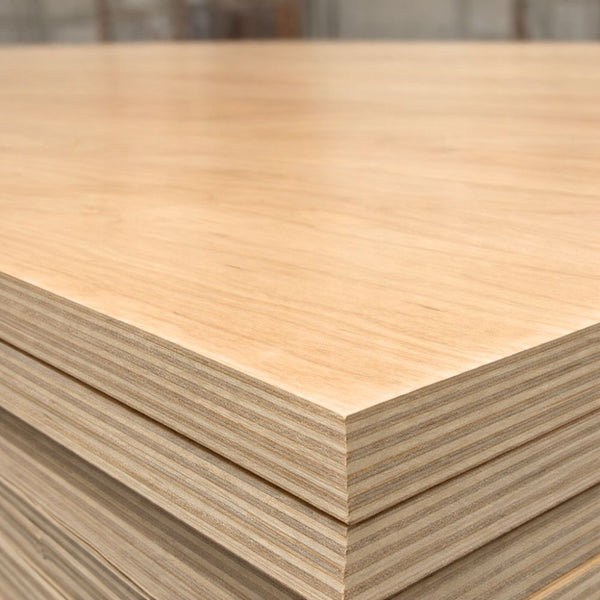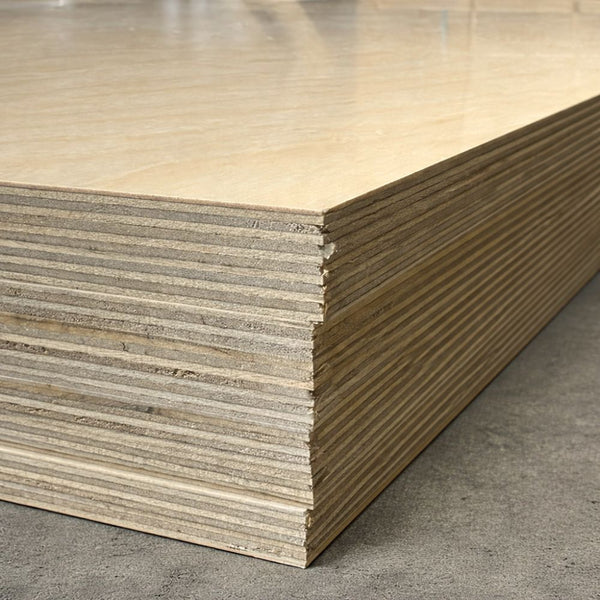

Use MDF instead of plywood when the component benefits most from a grain-free painted surface, consistent routing or a factory-finished decorative face. It is a different material choice—not an automatic downgrade and not a replacement for plywood in every part.
The useful comparison is the finished cabinet component: its appearance, machining, joints, load, exposure and complete cost. A single cabinet can use one material for the fronts and another for the box.
Why do cabinet makers use MDF?
MDF is a bonded wood-fiber panel with no natural grain pattern. That is the starting point for its finishing and machining advantages. For the detailed material definition, component guidance and moisture limitations, see our medium density fiberboard guide for cabinets.
1. A smooth starting point for a painted finish
A solid painted color does not need a decorative wood grain underneath it. Raw paint-grade MDF can provide an appropriate surface for that job. This does not mean it is ready for a perfect finish without preparation: faces, cut edges and routed profiles still need the specified sanding, sealing, priming and coating process.
2. Consistent machining for profiles and details
MDF can be useful for routed doors, decorative shapes and repeatable components. Choose a grade intended for the required machining depth and surface quality; not every MDF specification behaves identically. The MEDITE PREMIER product guidance, for example, describes a panel intended for machining, painting and surfacing.
3. A substrate for a factory-finished face
For a modern slab-front design, you may want a decorative surface rather than a painted raw panel. Acrylic-faced MDF combines an MDF core with a pre-applied decorative face. It moves the decision from “which paint system?” to “which color, reflection level and edge treatment?”
4. A different cost and production workflow
The lowest sheet price does not always produce the lowest finished-part cost. A material that fits your available tooling, finishing process and approved appearance may be more practical than a cheaper sheet that needs extra work.
When should you use MDF instead of plywood?
| Your priority | Start by comparing | Why / what to verify |
|---|---|---|
| A custom painted door | Raw paint-grade MDF and the proposed door construction. | Grain-free appearance; still budget for preparation and a complete coating system. |
| Routed decorative profiles | A machinable MDF grade. | Consistent cutting and shaping; confirm grade, tooling and the exposed-edge finish. |
| A finished matte or glossy front | Acrylic-faced MDF. | Decorative face without a paint-finishing step; edges and fabrication still need planning. |
| Visible natural wood grain | A suitable veneer-faced plywood or another specified wood-faced panel. | Choose the face species and grade for the intended appearance. |
| A cabinet box or loaded shelf | Suitable cabinet plywood and any proposed MDF assembly. | Compare actual stiffness, weight, joinery, fasteners, support and exposure requirements. |
| An area with moisture risk | A panel explicitly rated for the intended conditions. | Neither the label “MDF” nor “plywood” alone establishes waterproof performance. |
These are decision prompts, not universal performance rankings. Specify the actual product and assembly before fabrication.
Shop factory-finished acrylic MDF
These are factory-finished acrylic MDF options, not raw MDF boards for painting. Compare full sheets or order a sample before committing to a larger project.

White Matte Acrylic MDF
Factory-finished matte acrylic surface on an MDF core for modern slab doors, drawer fronts and visible panels.
See the product page for current price, availability, finish details and delivery options.
View White Matte
White High Gloss Acrylic MDF
Reflective acrylic face for contemporary cabinet fronts, furniture panels and modern interior projects.
See the product page for current price, availability, finish details and delivery options.
View White High Gloss
Premium Acrylic MDF Samples
Review color and surface in your project lighting before ordering full 4×8 sheets.
See the product page for current price, availability, finish details and delivery options.
Choose a SampleProduct prices and availability can change. Use the linked product pages for the current information before ordering.
Is MDF cheaper than plywood?
Sometimes—but a fair answer requires current quotes for comparable products. Raw MDF, factory-finished acrylic MDF and cabinet plywood are not equivalent purchases. A finished decorative MDF sheet may cost more than an unfinished plywood sheet and still change the amount of finishing work required.
Compare the cost of achieving the same usable component. Include what happens after the sheet leaves the warehouse.
| Cost item | Raw paint-grade MDF | Acrylic-faced MDF | Plywood |
|---|---|---|---|
| Sheet purchase | Quote the exact raw grade and thickness. | Quote the selected color and finish. | Quote the core, face grade and supplied finish. |
| Visible face | Allow for your paint or surface system. | The decorative face is supplied finished. | Depends on whether the sheet is unfinished or prefinished. |
| Cut edges | Plan sealing and the specified finish. | Plan a compatible, visually appropriate edge treatment. | Plan exposed-ply detailing, edging or another specified treatment. |
| Shop operations | Include preparation, coating and curing stages. | Include surface protection, fabrication and edging. | Include fabrication and whatever finishing remains. |
| Logistics | Compare cut-list yield, handling, damage allowance, pickup or delivery and the quantity you actually need. | ||
No fixed savings percentage applies to every job. Use Berta’s current acrylic MDF product options and a delivery estimate for the finished-panel side of your comparison. This is not a price quote for raw MDF.
Two different MDF workflows: paint it or choose a finished face
A painted, profiled door
Start with a suitable raw paint-grade panel and a door design. Plan machining, surface preparation, edge treatment, primer and topcoats. Test the complete finish on an offcut before committing to the full job.
The buying decision: the raw substrate and the finishing system work together.
A factory-finished slab front
Start with an approved acrylic surface sample. Confirm the finished front’s dimensions, cut quality, edge treatment and hardware. Preserve the factory face rather than treating it as a blank for painting or deep decorative routing.
The buying decision: color, finish and fabrication details must be resolved before cutting.
For the full finishing comparison, read Acrylic MDF vs Raw MDF: Which Cabinet Panels Need Painting? A finished face is not the same as a finished cabinet component: edges, holes and assembly details remain.
When plywood is the more practical starting point
Compare plywood first when the project prioritizes a particular structural design, hardware connection, panel weight or natural-wood appearance. That does not mean every plywood panel outperforms every MDF panel. Grade, thickness, face treatment and the assembly still matter. Compare MDF and plywood for boxes, doors and shelves before choosing one material for the whole cabinet.
For cabinet interiors, prefinished plywood can be worth comparing when you want a supplied finished surface. For a multi-ply construction or an exposed-edge design, review the specifications in the Baltic birch collection.
A useful project specification might pair acrylic MDF slab fronts with suitable plywood boxes. This is a design option—not a claim that MDF is prohibited in every cabinet box or shelf.
Keep surface and core decisions separate. Gloss describes appearance, not a waterproof core. Likewise, “plywood” by itself does not tell you the exposure rating, face quality or finished shelf capacity.
Make the decision before you order full sheets
Specify the result: painted profile, matte slab front, reflective drawer front or visible wood grain.
Check the construction: confirm actual panel thickness, door dimensions, hardware, joints, shelf support and exposure. Use the supplier’s fabrication guidance for the exact product.
Approve the finish: compare an acrylic MDF sample under the lighting where the project will be installed. Screen color alone is not a final approval.
Compare the complete order: review cut-list yield, edges, current volume pricing and pickup or delivery. Buy the panel that fits the workflow, not simply the material with the lowest starting price.
Questions about choosing MDF over plywood
Why use MDF instead of plywood for painted cabinet doors?
MDF provides a grain-free substrate that can suit a solid painted appearance and routed details. It still requires appropriate preparation and a coating system. Door construction, size, weight and hardware must also suit the panel.
Does MDF expand and contract?
MDF is not dimensionally inert. Moisture conditions can change its dimensions, so storage, acclimatization, finishing and clearances should follow the actual panel guidance. Do not assume it is more stable than every plywood product under every condition.
Is MDF always the cheaper cabinet material?
No. Compare the exact sheet specification and the finished-part cost. A raw MDF panel, a factory-finished acrylic MDF panel and a finished cabinet plywood panel can have very different purchase prices and remaining fabrication steps.
Is factory-finished acrylic MDF a paint-grade board?
It uses an MDF core, but its decorative face is already finished. Choose it for the supplied appearance, not as a raw substrate that needs painting. Review the raw-versus-acrylic guide before planning the finish.
Can I combine MDF fronts with plywood boxes?
Yes, that is a possible design approach. Specify the fronts, boxes, edge treatment and hardware as a complete assembly. Neither material choice removes the need to check dimensions, load and moisture conditions.
Technical references & specification note
For material properties and product-specific guidance, see the Composite Panel Association MDF overview, MEDITE PREMIER and MEDITE MR. These references explain MDF categories; they do not certify Berta’s products or imply that Berta sells those manufacturers’ panels. Always verify the specifications of the exact panel being ordered.