
Berta Store · Finished-panel workflow
Why laminated plywood can simplify cabinet production
A factory-finished face can remove a separate face-finishing step when that supplied surface is the intended final finish. This can simplify cabinet interiors, closets and built-ins—but it does not eliminate machining, edging, glue-joint preparation or installation checks.
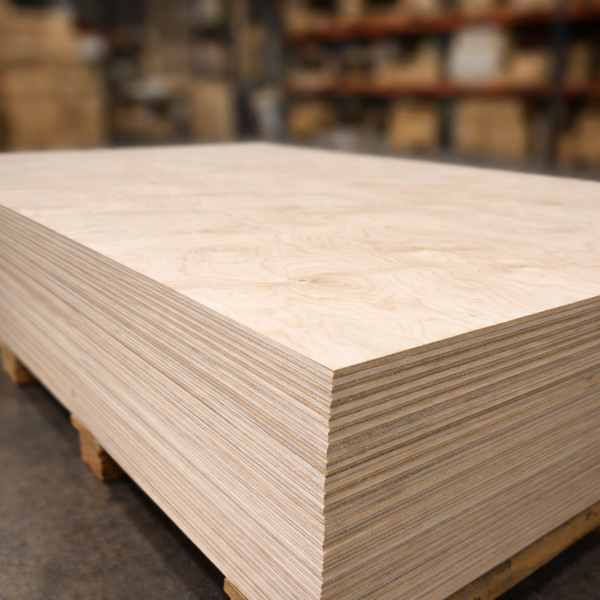
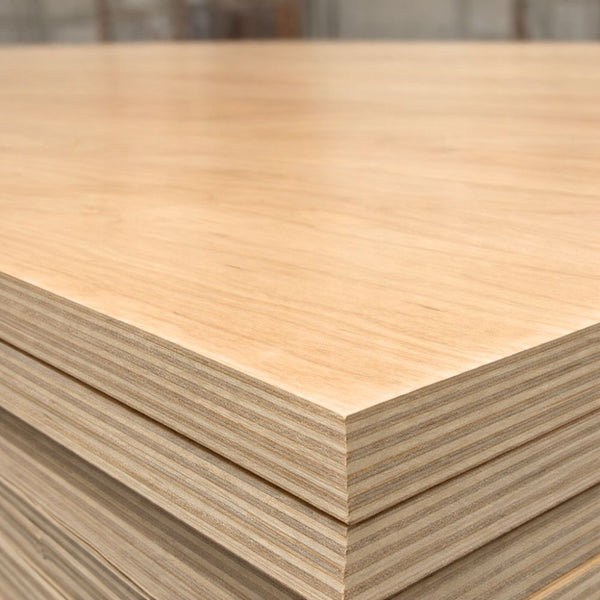
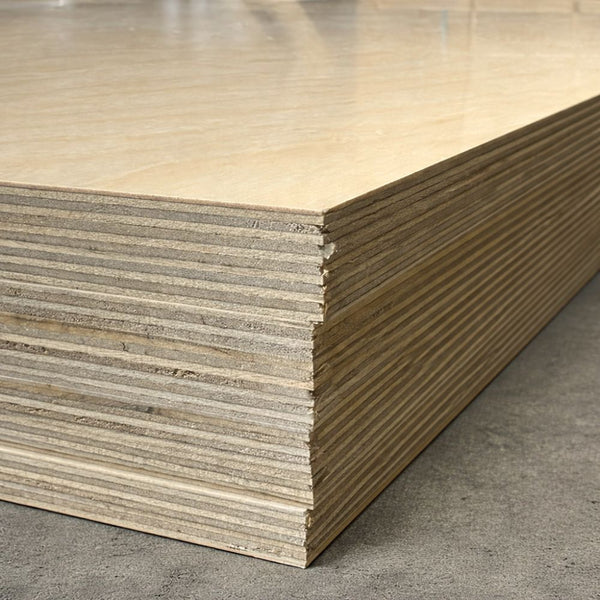
Start by defining laminated plywood. Plywood itself consists of bonded layers; in cabinet buying, the phrase often means plywood carrying a decorative facing. Melamine-faced plywood, a separately bonded laminate and UV clear-coated wood veneer are not identical surface systems.
Laminated plywood, UV-finished plywood and acrylic MDF
| Panel description | Visible surface | Important distinction |
|---|---|---|
| Melamine-faced plywood | A decorative melamine surface over plywood. | The facing does not tell you which species or layup form the core. |
| Laminate-faced plywood | A separately specified decorative laminate bonded to plywood. | Adhesive, balancing, edges and performance depend on the actual system. |
| UV-prefinished plywood | A clear coating over a wood veneer face. | A clear coating is not the same material as a decorative melamine or HPL facing. |
| Acrylic MDF | An acrylic surface over MDF. | It is a finished composite-core panel, not plywood. |
| Raw plywood | Unfinished wood veneer. | Finishing remains part of the project unless the design intentionally leaves it raw. |
For substrates, read melamine sheets on plywood versus MDF. For the broader finish decision, see clear, painted and melamine cabinet finishes.
Where the workflow advantage comes from
A supplied finished face can reduce the need to sand, seal, coat and cure that face in the shop. It can also make the desired interior finish easier to specify before assembly. The actual saving depends on the existing process, chosen panel and rework—not a universal labor percentage.
That benefit is strongest when the factory finish will remain visible. If the project requires a different paint or stain, covering the supplied finish may add preparation rather than save work. Compare the intended finished result, not the assumption that every prefinished sheet is automatically faster.
Plan the full operation sequence: receiving and inspection, cut list, protected cutting, machining, edge treatment, assembly and final inspection. A factory surface can still be damaged by handling, poor cutting support or unsuitable cleaning products.
Compare Berta’s finished plywood constructions
The following are distinct products. Their surface appearance does not make their core, sheet dimensions or available thicknesses identical.

White Melamine Baltic Birch
Listed 18 mm birch-core construction with white surfaces on both faces. Check the separate 1250 × 2500 mm format before finalizing sheet yield.
View white Baltic Birch
White Melamine Cabinet Plywood
This link selects the standard family’s 18 mm white option over a poplar plywood core. Confirm the finish details separately for thinner variants.
View the white cabinet panel
Wood-Tone Melamine Plywood
A decorative wood-look surface on both sides of the listed cabinet plywood. It is a printed/decorative finish, not an unfinished wood veneer ready for staining.
Compare wood-tone panelsThe finished face does not finish the cut edge
Cutting a panel creates new exposed edges. Decide which receive veneer banding, plastic banding, solid edging or another approved treatment. Include the edge material’s final thickness in the finished part dimensions.
Approve the face-to-edge match with samples, including color, sheen, edge profile and the visible glue line. A white banding and white panel can differ enough to show at the finished edge. The same applies to wood-look patterns and natural veneer.
Use PVC versus veneer edge banding to choose the approach, then use the edge-banding calculator to estimate the required length. Material quantity is a different question from adhesive and machine compatibility.
Glue, screws and machining need a finished-panel plan
Ordinary wood glue should not be assumed to form a dependable bond over every intact UV coating or melamine face. Titebond’s wood-glue guidance explains why clean, suitable bonding surfaces matter. Use exposed wood bonding areas where the design calls for them or an adhesive system explicitly approved for the actual finished surfaces.
Check screw type, pilot-hole guidance and installed penetration for the actual core and joint. A finished surface does not change the material available around a screw, groove or hinge bore. Refer to the plywood screw chart for cabinet joints.
Measure sheet thickness before routing dados or grooves. A nominal 3/4-inch label and an 18 mm specification are not exact equivalents. The actual plywood thickness chart helps interpret the labels; the delivered sheet is the machining reference.
Finished-panel production checklist
| Before production | Confirm |
|---|---|
| Surface approval | Color, sheen, decorative direction and the number of finished faces. |
| Core and dimensions | Actual thickness, usable sheet size, core construction and grade. |
| Cutting and machining | Suitable tooling, support and a sample cut without unacceptable face damage. |
| Edges and cutouts | Banding or other protection, final dimensions and appearance. |
| Joinery | Approved glue surfaces, fasteners and hardware depths. |
| Use and care | Installation environment and cleaning products approved for the supplied surface. |
For a white interior, read where white melamine plywood works and where it does not. For layer terminology, see wood plies versus decorative surface layers.
Frequently asked questions
Is all prefinished plywood laminated plywood?
The terms are often used loosely. Specify whether the surface is a decorative laminate, melamine or a clear coating over wood veneer; they are different systems.
Does factory-finished plywood need no additional work?
The supplied face may need no new coating when it is the intended final finish. Cut edges, joints, hardware, handling and installation still require a plan.
Can I glue directly onto a melamine or UV-coated face?
Only with an adhesive and joint design approved for the actual surfaces. Do not assume the behavior of ordinary bare-wood glue applies to intact coatings.
Product constructions are based on the linked Berta listings. Workflow benefits are conditional; no universal durability, waterproofing or labor-saving percentage is claimed.