
Quick answer
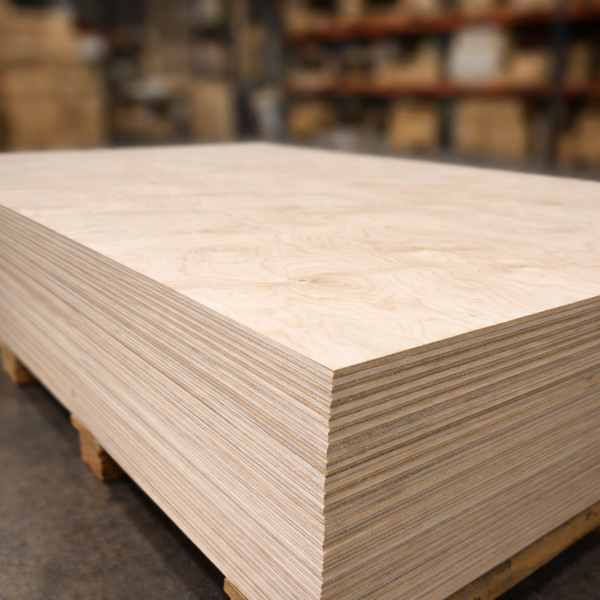
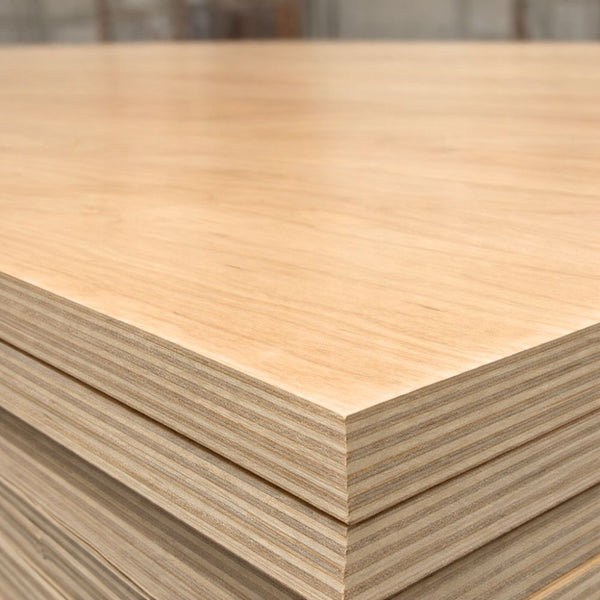
Hardwood plywood is identified by its decorative hardwood face, not automatically by a hardwood-only core. A 4×8 panel may have maple, birch, oak, walnut, or another appearance veneer over a veneer, MDF, particleboard, lumber, or combination core. For cabinets, choose the face for the visible finish and the core for machining, weight, edge appearance, fastener holding, and flatness.
A 48 × 96-inch sheet is common, but “4×8 hardwood plywood” does not tell you the actual thickness, face grade, back grade, core construction, finish, or bond classification. Those details belong on the purchase specification.
What counts as hardwood plywood?
The Decorative Hardwoods Association describes hardwood plywood as a panel with a hardwood face or back veneer over a core that can be built from veneers or other wood materials. That distinction matters: maple-faced plywood may use a multi-ply veneer core, while another maple panel may use MDF or a combination core. Both can be sold as hardwood plywood, yet they behave differently at the saw, edgebander, CNC, fastener, and finished edge.
The current ANSI/HPVA HP-1-2024 standard covers face, back, and inner-ply grades plus multiple core types. It also makes clear that decorative hardwood plywood is not the same specification system as construction sheathing. If a project is structural or exterior-exposed, use a panel expressly rated for that condition rather than assuming a decorative cabinet panel qualifies.
For a broader primer, compare Berta Store’s cabinet-grade plywood selection criteria, the practical explanation of plywood grades, and the actual-versus-nominal plywood thickness chart.
Choose the face first—then check what is behind it
| Specification | What it controls | Questions for a cabinet order | Common mistake |
|---|---|---|---|
| Face species | Color, grain, figure, stain response, visual match | Maple, birch, walnut, oak, or another species? Plain sliced, rotary, or another cut if appearance is critical? | Assuming the named face species describes every ply |
| Face/back grade | Permitted repairs and natural characteristics on each side | Will one or both sides remain visible? Is the back exposed inside a cabinet? | Buying a one-good-side panel for a two-sided part |
| Core | Weight, flatness, screw behavior, edge look, machining | Veneer, multi-ply, MDF, particleboard, lumber, or combination core? | Comparing sheets only by veneer species and price |
| Thickness | Joinery, dado fit, hardware clearances, stiffness | What does the actual sheet measure with calipers? | Cutting dados from the nominal label |
| Factory finish | Production time, cleanup, visible sheen, repair method | Raw, UV-clear, melamine-faced, or another system? One or two finished sides? | Assuming “prefinished” means both faces |
| Bond/use class | Suitability for dry interiors or more demanding exposure | What use environment does the manufacturer state? | Treating an interior decorative panel as exterior plywood |
Core types: where the sheet’s working behavior comes from
Veneer core
Alternating veneer layers keep weight comparatively low and give a recognizable plywood edge. The number and quality of inner plies affect flatness, voids, and machining—not merely the face species.
MDF or particleboard core
A smooth, uniform core can be useful where very flat faces or routing are priorities. It usually creates a heavier panel and a different fastener and moisture response than veneer core.
Combination or multi-ply core
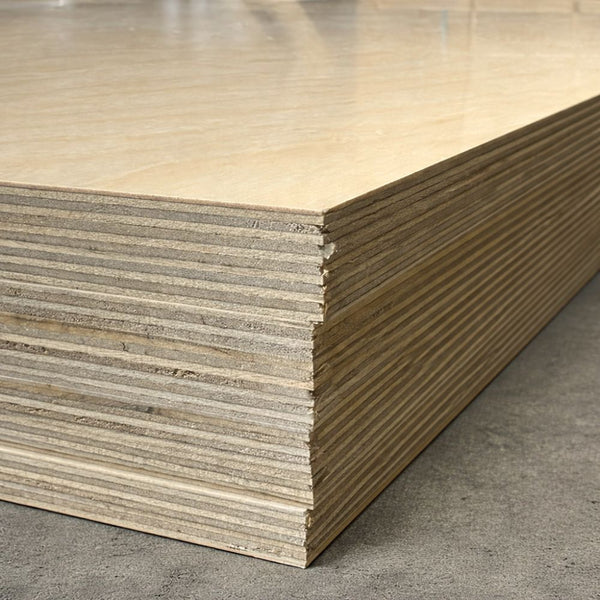
Combination constructions balance properties; multi-ply panels use many thin plies for strength, consistent edges, and cabinet-grade machining. Verify the exact product rather than treating the labels as interchangeable.
Core descriptions are selection guidance, not universal performance ratings. Species, adhesive, ply quality, thickness, and the manufacturer’s construction all matter.
A cabinet-shop buying sequence that prevents expensive surprises
Define the visible surfaces
List finished ends, open shelving, door faces, and cabinet interiors. Decide whether the back face will be seen.
Choose construction
Specify core, nominal thickness, and full-sheet format. Measure a sample before locking dados, rabbets, or CNC toolpaths.
Approve appearance
Check the actual face, color range, patch policy, grain direction, and sheen under the project lighting.
Plan yield and edges
Map part orientation, edge exposure, banding, and waste before ordering full sheets.
Use the plywood cut-list calculator to test part layouts, the panel quantity calculator for project coverage, and the delivery calculator when full-sheet logistics affect the order. The current plywood collection shows available panel families, while the prefinished plywood collection narrows the search to factory-finished cabinet interiors.
Cabinet applications: match the panel to the part
| Cabinet part | Prioritize | Practical panel direction | Verify before cutting |
|---|---|---|---|
| Visible end panel | Face consistency, grade, color, finish | Appearance veneer or factory-finished decorative panel | Grain direction and lot-to-lot match |
| Cabinet box | Flatness, joinery, interior cleanup | Veneer-core or prefinished cabinet plywood | Actual thickness, finished sides, edge plan |
| Drawer box | Clean machined edges, wear surface, hardware fit | Fine multi-ply or suitable prefinished plywood | Bottom-groove fit and slide clearances |
| Long shelf | Stiffness, span, front-edge reinforcement | Thickness/core selected from span and load—not appearance alone | Unsupported span and expected load |
| Painted decorative part | Smoothness, edge finishing, routing | MDF may be more efficient than decorative hardwood veneer | Edge sealing and moisture exposure |
For shelves, use the plywood shelf span and edge-stiffening guide. For a birch multi-ply alternative, review the Baltic Birch plywood collection and verify the face grade and thickness for the actual part.
Related Berta Store panels

Prefinished Maple Plywood 4×8
Useful when a maple appearance and factory-applied clear finish suit the cabinet. Berta currently lists nominal 3/4-inch and 1/2-inch versions with a cabinet-grade hardwood plywood core. Confirm the exact variant, measured thickness, and grain match.
Review maple plywood specifications
3/4-inch Prefinished Birch Plywood
A cabinet-box option when a clear birch face and ready-finished surfaces reduce finishing work. Berta lists this 4×8 variant with a multi-ply poplar plywood core and finish on both sides. Check the exact finish and actual thickness before machining.
Compare prefinished plywood variants
3/4-inch B/BB Baltic Birch
A multi-ply birch option when one cleaner face, a sound back, and a visible layered edge fit the project. Berta lists this 4×8 panel as unfinished, 18 mm nominal, and 13-ply. Confirm that its B/BB appearance criteria match every exposed face.
Check B/BB Baltic Birch detailsCommon hardwood-plywood buying mistakes
- Specifying only “maple plywood.” Add face/back grade, core, thickness, size, finish, and use environment.
- Treating a 4×8 label as a machining dimension. Measure actual thickness and verify sheet tolerances before sizing joints.
- Using a decorative panel as structural sheathing. Cabinet-grade and construction-rated panels answer different specifications.
- Ignoring the back. Open cabinets and glass-front units can expose both faces.
- Choosing by price per sheet. Include finishing labor, edge treatment, part yield, rejects, and delivery.
Hardwood plywood FAQ
Is all hardwood plywood made entirely from hardwood?
No. The hardwood name usually refers to at least one decorative face or back veneer. The core can be veneer, MDF, particleboard, lumber, OSB, or a combination, depending on the product.
Is 4×8 hardwood plywood exactly 48 × 96 inches?
It is a common nominal format, but verify the listed and measured dimensions. Fabrication tolerances, edge damage, and squaring allowance affect usable yield.
Which hardwood plywood core is best for cabinets?
There is no universal winner. Veneer and multi-ply cores suit many cabinet boxes and exposed plywood edges; MDF-core and combination panels can suit very flat faces or routed parts. Choose from the specific part, fastener plan, weight, edge treatment, and finish.
Can hardwood plywood be used outdoors?
Do not assume so. Decorative face species does not establish exterior bond performance. Use a product specifically rated by its manufacturer for the exposure and protect all faces and edges as the application requires.
Should I buy prefinished or unfinished hardwood plywood?
Prefinished sheets can save production time for cabinet interiors and shelving. Unfinished panels give more control over stain, paint, and sheen. Confirm whether one or both sides are finished and how cut edges will be treated.
Specify the whole panel
Hardwood plywood works best when the visual and structural decisions are separated. Select the face for the design, the core for the fabrication, the finish for the production workflow, and the thickness for the joinery and load. Then inspect a real sample and measure the sheet before a full run.
Technical scope: General classification and core guidance follows the Decorative Hardwoods Association’s ANSI/HPVA HP-1-2024 overview and hardwood plywood definition. Berta-specific product statements were checked against the live product pages on October 13, 2026. Product options and specifications can change; verify the selected variant before ordering.