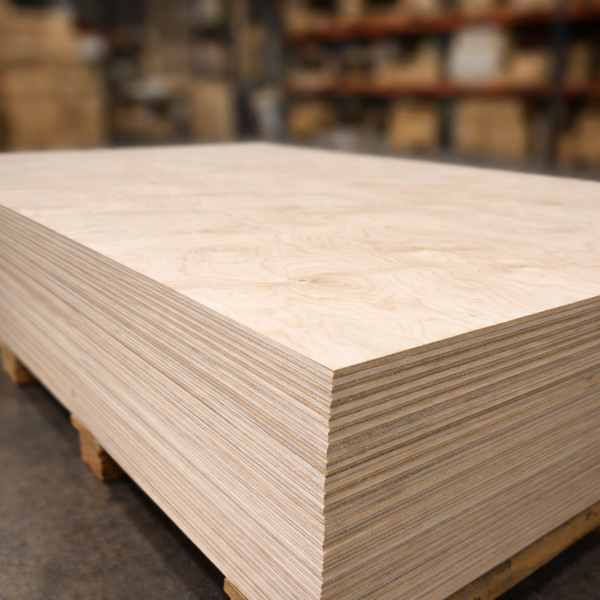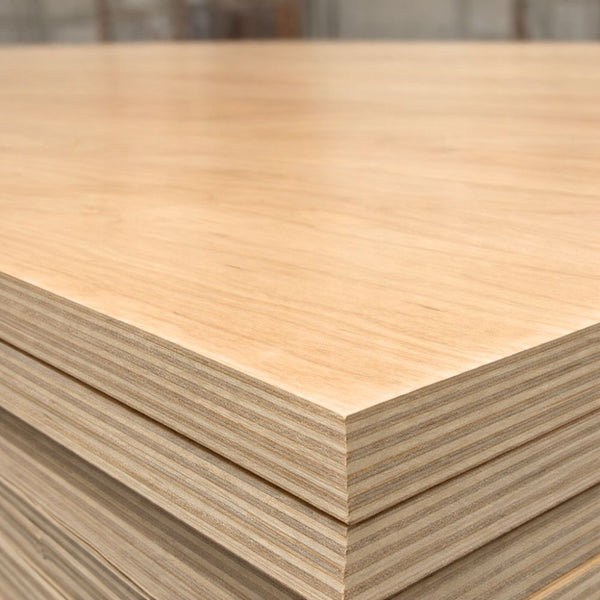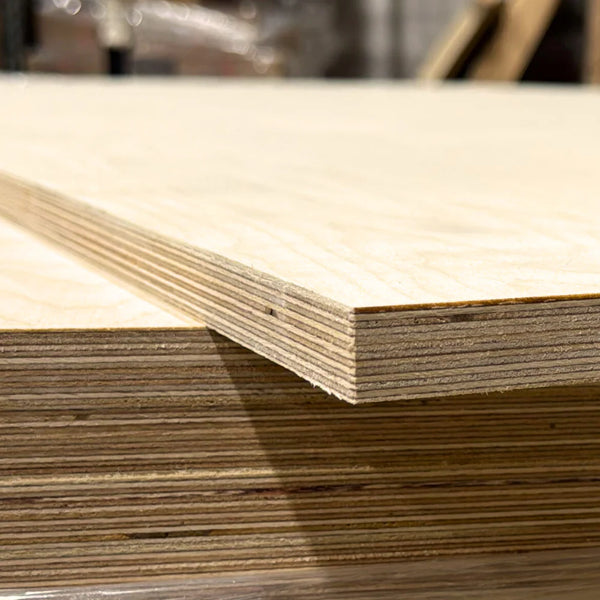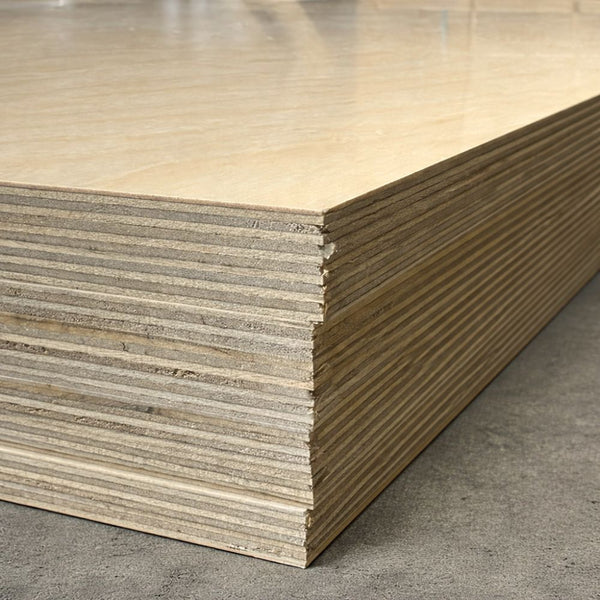

“Cabinet grade plywood” is one of the most frequently used—and misunderstood—terms in the lumber and cabinetry world. It appears in product listings, shop conversations, and job specifications, yet it rarely describes a single, consistent material.
For professionals, cabinet grade is not a marketing label. It’s a performance expectation. It means the panel machines cleanly, stays flat, holds fasteners, finishes predictably, and doesn’t create problems after installation. Understanding what qualifies—and what doesn’t—is how buyers avoid rework and callbacks.
What Cabinet Grade Plywood Is Actually Used For
Cabinet grade plywood is designed for interior, precision-built assemblies where tolerances matter.
Correct applications include:
- Cabinet boxes and carcasses
- Drawer systems and dividers (with proper material selection)
- Closet systems and built-ins
- Furniture components with controlled exposure
These uses require panels that remain square, accept joinery, and finish cleanly without telegraphing defects.
How Professionals Evaluate Cabinet Grade Plywood
Experienced buyers don’t rely on labels. They evaluate construction.
Core quality
The core determines structural behavior. Cabinet grade plywood typically uses:
- Veneer core (alternating hardwood layers)
- Multi-ply all-hardwood core
- Combination cores with engineered layers (in controlled uses)
Low-quality cores introduce voids, weak screw holding, and edge failures.
Ply count and balance
Higher ply count with thinner layers improves dimensional stability. Balanced construction reduces warping over time.
Face grading
Cabinet grade faces are selected for appearance consistency. Patches and mineral streaks may be acceptable in paint-grade panels but not in clear-finished work.
Where Cabinet Grade Plywood Performs Well
When properly specified, cabinet grade plywood is reliable in controlled interior environments.
- Kitchen and bath cabinetry: Stable boxes and predictable machining.
- Closet systems: Clean appearance with factory-finished options.
- Built-ins: Flat panels that integrate cleanly with millwork.
This consistency is why many shops standardize cabinet grade panels across entire projects.
Where Cabinet Grade Plywood Fails
Problems arise when cabinet grade plywood is pushed beyond its design scope.
- Moisture exposure: Not intended for wet environments without protection.
- Structural applications: Not a replacement for framing or subfloor panels.
- Uncontrolled spans: Shelves sag without proper thickness or reinforcement.
No face grade compensates for incorrect application.
Prefinished Cabinet Grade Plywood
Prefinished plywood is a subset of cabinet grade material where a factory-applied finish replaces on-site finishing.
Professionals choose prefinished panels when:
- Interior cabinet surfaces need durability and consistency
- Labor time must be reduced
- Finish uniformity is critical across large runs
Panels like prefinished plywood 4x8 for cabinets are commonly used for cabinet interiors, closet systems, and commercial casework where exposed interior surfaces must remain clean and durable.
Hardwood Species in Cabinet Grade Plywood
Species choice affects appearance more than structure, assuming comparable core construction.
Maple plywood
Maple offers a light, uniform face that accepts paint and clear finishes evenly. It’s widely used in modern cabinetry and commercial interiors.
Examples include maple plywood for cabinet construction, where face consistency and predictable machining are priorities.
Birch and other hardwoods
Birch provides a tighter grain with slightly more color variation. Performance differences are minimal when construction quality is comparable.
Common Buyer Mistakes
- Assuming “cabinet grade” guarantees quality
- Ignoring core construction in favor of face appearance
- Using paint-grade panels for clear-finished work
- Selecting thickness without considering span and load
Most cabinet failures trace back to misinterpretation of the term itself.
Comparison With Other Plywood Types
Baltic Birch Plywood
Baltic birch uses a multi-ply all-birch core with minimal voids. It outperforms standard cabinet grade panels in exposed-edge applications and drawer construction. This is why suppliers like BertaStore only stock Baltic birch in multi-ply construction for cabinet and drawer uses.
Construction-grade plywood
CDX and similar panels are structurally rated but lack face quality and consistency. They are not suitable for cabinetry.
When Cabinet Grade Plywood Is the Right Choice
Cabinet grade plywood is appropriate when:
- The application is interior and climate-controlled
- Precision joinery and flatness matter
- Appearance must meet cabinet-level standards
When edge exposure, drawer performance, or long-term dimensional stability are critical, higher-grade multi-ply panels may be the better decision.
FAQ
Is cabinet grade plywood the same as hardwood plywood?
Often, but not always. Cabinet grade refers to performance expectations, not species alone.
Is prefinished plywood considered cabinet grade?
Yes, when the core and face quality meet cabinet construction standards.
Can cabinet grade plywood be used for drawers?
It can, but Baltic birch is typically preferred for durability and edge strength.
Does cabinet grade plywood resist moisture?
No. It is intended for interior use unless otherwise specified.
Final Thoughts
Cabinet grade plywood is not a single product—it’s a category defined by how the panel behaves in real cabinetry work.
Professionals who evaluate core construction, face quality, and application limits—not just labels—build cabinets that stay square, finish cleanly, and perform long after installation.