
Berta Store · Thin cabinet panels
3/16 plywood is a thin-panel size—not a load rating
A true 3/16 inch is 4.7625 mm. A panel sold in the 3/16-inch class may instead be specified as 5 mm. Those dimensions are close, but not identical, and the difference matters in a fitted groove or a replacement back.
Thin plywood can be useful for supported cabinet backs, selected drawer-bottom designs, liners and decorative components. It is not a general replacement for thicker cabinet sides, shelves, structural subflooring or hanging rails.
3/16-inch, 5 mm and 1/4-inch plywood compared
| Dimension | Equivalent | Fit implication |
|---|---|---|
| True 3/16 in | 4.7625 mm | Do not assume every nominal 3/16 sheet measures this exactly. |
| 5 mm | Approximately 0.1969 in | 0.2375 mm thicker than a true 3/16 inch. |
| 6 mm | Approximately 0.2362 in | Not the same thickness as 5 mm or a true 1/4 inch. |
| True 1/4 in | 6.35 mm | A groove sized to this dimension may be too loose for a 5 mm panel. |
Use the actual-versus-nominal plywood thickness chart for other fractions. The Baltic Birch thickness guide in millimeters helps interpret the metric options without pretending they are exact inch equivalents. Compare quarter-inch panel options separately, because they are not direct substitutes for 5 mm stock.
3/16 plywood 4x8 sheets: what Berta’s option actually is
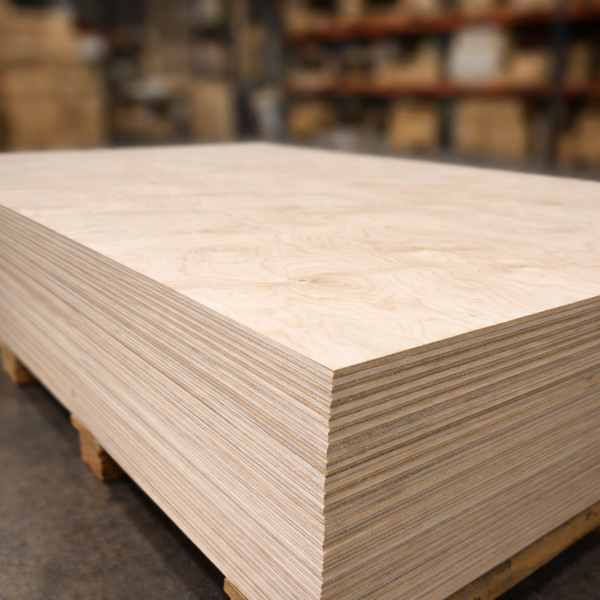
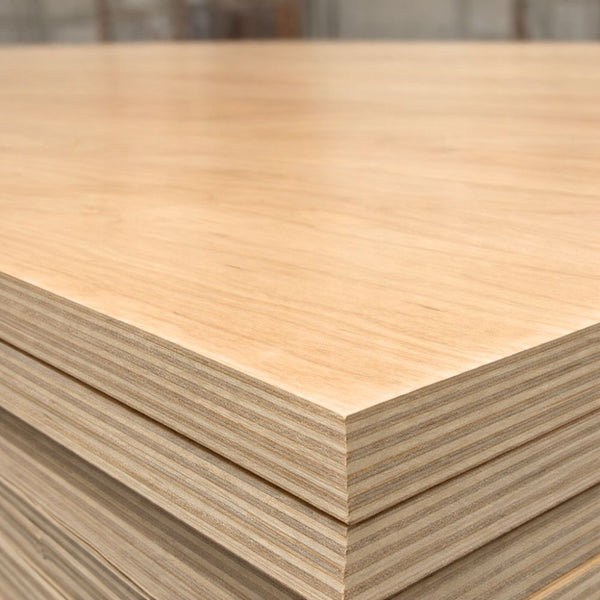
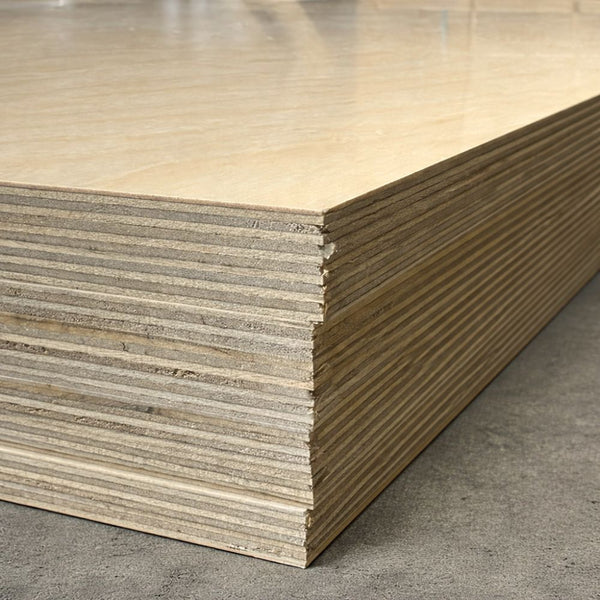
Berta’s reviewed BB/BB Baltic Birch selector includes a 3/16-inch-class / 5 mm option. The product lists 1220 × 2440 mm sheets, commonly described as 4x8, with unfinished faces and a birch core. These are product specifications, not a claim that all thin plywood uses the same construction.
Specify the selected thickness on the order. Do not choose a thicker variant because the product photograph looks the same, and do not infer the exact number of plies from the title. BB/BB permits the appearance characteristics described by the supplier; it is not a capacity rating.
For the layer terminology, read what plywood ply count means. For a painted or natural visible face, check the grade and sample before laying out the parts.
Where thin plywood can work—and what must support it
| Component | A possible role | Required check |
|---|---|---|
| Cabinet back | A captured or appropriately attached back panel. | Perimeter engagement, fixing detail and whether the cabinet design relies on the back for racking resistance. |
| Drawer bottom | A candidate in a small, lightly loaded, adequately supported design. | Unsupported dimensions, contents, groove engagement and hardware constraints; no generic load rating. |
| Decorative insert or liner | A light panel supported by another component or frame. | Attachment, movement, finish and edge protection. |
| Cabinet side, shelf or hanging rail | Not a default thin-panel application. | Use the complete structural and fastening design rather than substituting 5 mm stock. |
A back panel can contribute to a cabinet’s stiffness only through its intended attachment and construction. A thin back is not automatically a wall-mounting rail. For a drawer, read the drawer-bottom thickness and support chart before substituting 5 mm for another panel.
Groove, rabbet and replacement-panel fit
Measure the original panel and the available groove at several points. A nominal groove dimension does not reveal how much clearance, engagement or remaining wall material the original design provides. Check both width and depth; they control different parts of the joint.
Make a trial groove in scrap from the actual cabinet material and fit an offcut of the supplied panel. Do not force a thicker sheet into an existing groove or rely on a loose fit to be repaired automatically by glue. Decide whether the panel must be bonded, retained or allowed movement according to the construction.
Fasten a thin back with the specified head style and fixing arrangement into suitable supporting material. Do not assume its narrow edge provides adequate screw engagement. The cabinet-joint screw-size guide explains why the receiving member and installed path matter.
Compare thin panel options for the actual job

5 mm Baltic Birch BB/BB
The link selects the listed 3/16-inch-class / 5 mm variant. Measure the supplied sheet for fitted backs, grooves and approved drawer-bottom designs.
View the 5 mm Baltic Birch option
6 mm Prefinished Birch
A different thickness and finish choice, not an exact 3/16 replacement. The reviewed thin birch option is finished on one face; verify the selected variant.
Compare the prefinished thin panelHandling and finishing a thin sheet
Support the panel during transport and cutting so it does not bend unpredictably or tear at the end of a cut. Use a cutting setup appropriate to thin plywood and protect the face. Do not assume ordinary 5 mm plywood is approved for a tight bend simply because it is more flexible than a thicker sheet.
For unfinished panels, test the finishing system on the actual veneer and plan both faces and cut edges as the application requires. A clear finish or paint is not an exterior rating. Use the cabinet plywood finish guide to separate the appearance decision from the underlying panel requirements.
Frequently asked questions
Is 5 mm exactly 3/16 inch?
No. A true 3/16 inch is 4.7625 mm. Five millimeters is approximately 0.1969 inch, so check fitted joints rather than treating the labels as identical.
Can 3/16 plywood be used for every drawer bottom?
No. The drawer’s size, load, supports, joints and slide requirements determine suitability. A thickness label alone does not establish a load capacity.
Can I replace a 1/4-inch back with 5 mm plywood?
Only after checking the construction, fit and required performance. A thinner panel can be loose in an existing groove and may change how the cabinet behaves.
Product dimensions come from the linked Berta listings. Conversions and fit examples are calculations, not tested load limits.