

What do plywood grades mean?
Plywood grades describe the appearance and permitted characteristics of a panel’s face and back veneers. For cabinets and furniture, the grade helps you judge visible repairs, natural variation and finishing expectations. It does not, by itself, specify the core, actual thickness or suitability for outdoor use.
The first step is identifying the grading system. A1, AC and B/BB are not interchangeable labels. Read the face and back grades, then check the construction and finish against the part you are building.
Hardwood plywood grades: A1, B2 and C3 explained
In the North American decorative hardwood system, the letter identifies the face grade and the number identifies the back grade. A1 is also written A-1; B2 is B-2. The number is not a ply count or a thickness measurement.
Face grades range from AA through E. AA and A emphasize appearance; B and C allow more natural variation. D and E allow increasingly pronounced characteristics and repairs. Back grades run from 1 through 4, with 1 the most restrictive. Exact allowances depend on the species and grading rules.
On a small screen, swipe the table sideways to see every column.
| Grade | What the label means | Practical selection guidance |
|---|---|---|
| AA1 | AA face; grade 1 back. | Consider for demanding decorative work where face appearance is a priority. |
| A1 | A face; grade 1 back. | A starting point for visible cabinet and furniture parts. Confirm grain and color expectations. |
| B2 | B face; grade 2 back. | Consider when natural characteristics are acceptable. Inspect both faces against the intended finish. |
| C3 | C face; grade 3 back. | Useful where greater variation is acceptable and the back is less visible. Confirm whether open back defects are repaired. |
| D3 | D face; grade 3 back. | Evaluate for concealed or appearance-tolerant parts rather than assuming a show-face finish. |
A1 vs. B2 plywood
A1 has more restrictive appearance requirements for both sides. Pay for that difference where it improves the visible result; do not assume it guarantees a stronger core.
C3 vs. B2 plywood
B2 has the more restrictive face and back grades. A C3 panel may be economical when its back is concealed, but inspect repairs before planning paint or clear finish.
B2 vs. D3 plywood
Compare both surfaces, not just the face letter. For finished cabinetry, weigh the lower sheet price against sorting, filling and lost usable material.
Important: a decorative hardwood D face is not the same thing as a softwood construction D veneer. “Cabinet grade” is also not a substitute for a stated face/back grade and a product specification.
Baltic Birch grades: B/BB vs. BB/BB
Baltic Birch uses a different appearance-grading convention. B/BB means a B face and a BB back; BB/BB means BB on both sides. Do not translate these labels directly into A1 or B2.
For Berta’s unfinished panels, choose B/BB when one cleaner show face matters. Choose BB/BB when sound patches on either side are acceptable. A clear finish can leave repairs visible, so review the appearance before planning exposed cabinet ends or furniture panels.
Both options below are unfinished. Their grade describes the face selection; check each product’s core and thickness separately.
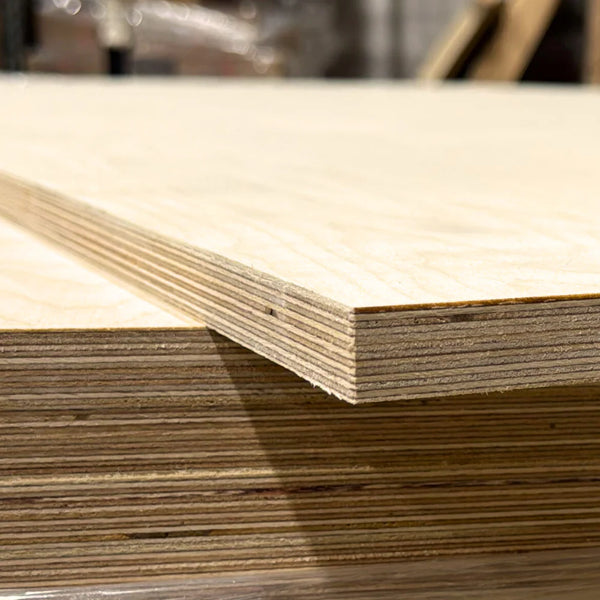
B/BB Baltic Birch Plywood
A cleaner B face with a BB back for visible cabinet ends, furniture panels and built-ins. Both sides are unfinished so you can choose the final finish.
View B/BB plywood ↗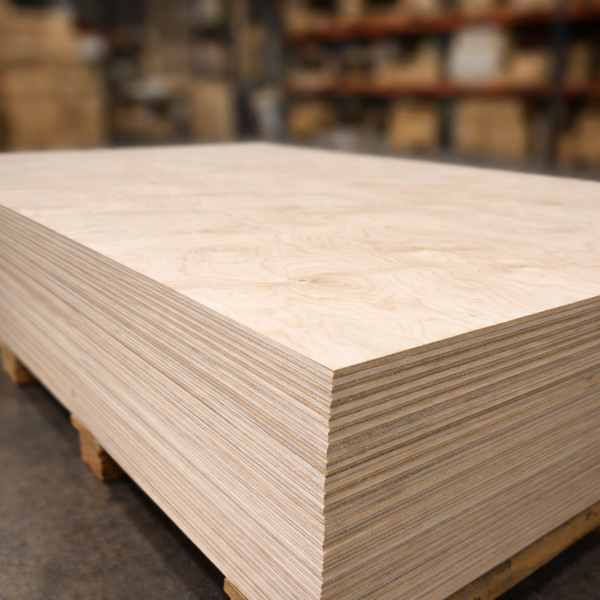
BB/BB Baltic Birch Plywood
BB-grade faces on both sides for cabinet boxes, drawers and shop projects where sound patches are acceptable. Choose the thickness to suit the component.
View BB/BB plywood ↗Product photos show the listed panels, not a guarantee of the grain or patch pattern on every sheet. For more detail, read our BB/BB vs. B/BB Baltic Birch comparison.
What about A, B, C and D softwood plywood grades?
For common softwood plywood, A–D veneer grades describe surface characteristics and allowed repairs. A two-letter label such as AC identifies an A face and a C back. Structural panels also carry information about their intended use, thickness or performance category, and exposure classification. The Grade A softwood cabinet guide applies that distinction to cabinet components.
| Veneer | General appearance | Buyer takeaway |
|---|---|---|
| A | Smooth, paintable surface; repairs may be permitted. | Check the opposite side and panel rating as well. |
| B | Solid surface with permitted knots and repairs. | Inspect the face against your finishing expectations. |
| C | More visible knots, defects and repairs. | Do not expect a decorative cabinet show face. |
| D | Larger permitted defects and openings. | Typically a utility appearance rather than finish cabinetry. |
Appearance is not an exposure rating. Read “Exterior” or “Exposure 1” on the panel stamp. APA identifies panels commonly called CDX as Exposure 1, not a promise of suitability for permanent weather exposure.
What is shop-grade plywood?
Shop-grade plywood usually refers to discounted or downgraded panels with imperfections that keep them from meeting the grade originally intended. “Shop plywood” is not a reliable one-to-one equivalent of B2, C3 or BB/BB. Ask the supplier what caused the downgrade.
A localized face defect may be easy to cut around for a jig, small shelf or drawer component. A panel with separation, severe bow or unsuitable thickness is a different problem. Inspect the actual sheet and calculate how much usable material remains.
Buying rule: compare the cost per usable part, not just the price per sheet. A cheaper panel that requires extra cutting, filling or replacement may not be the lower-cost choice.
Which plywood grade should you choose for cabinets and furniture?
Start with what will remain visible after assembly. Then decide whether the surface will be painted, clear finished or left with its existing factory finish. The following are selection starting points, not structural ratings.
| Application | Prioritize | Practical direction |
|---|---|---|
| Visible cabinet ends | A face that meets the final appearance standard. | Compare cleaner unfinished faces, including B/BB Baltic Birch, or a suitable factory-finished panel. |
| Painted cabinet parts | A smooth unfinished face and manageable repairs. | Test the face, edge treatment and primer together. Grade alone does not promise a smooth painted result. |
| Cabinet interiors | The visible inside surface and your finishing workflow. | Compare clear prefinished plywood or a finished white surface when you do not plan to paint it. |
| Drawers and exposed edges | Core quality, actual thickness and joinery requirements. | Inspect the layered edge as well as the face. Choose unfinished or prefinished Baltic Birch to match the design. |
| Furniture and shelving | Face appearance plus span, support and load requirements. | Choose the appearance grade separately from the thickness and construction needed for the design. |
| Hidden parts and shop fixtures | Sound material and usable area. | Lower appearance grades can make sense where their permitted defects do not interfere with the job. |
When prefinished plywood is the better fit
Prefinished describes the surface treatment, not a separate face grade. For cabinet interiors, closets and shelving, a factory-finished surface can remove an additional finishing step. Compare these options when you want to retain their existing finish—not as substitutes for raw paint-grade plywood.
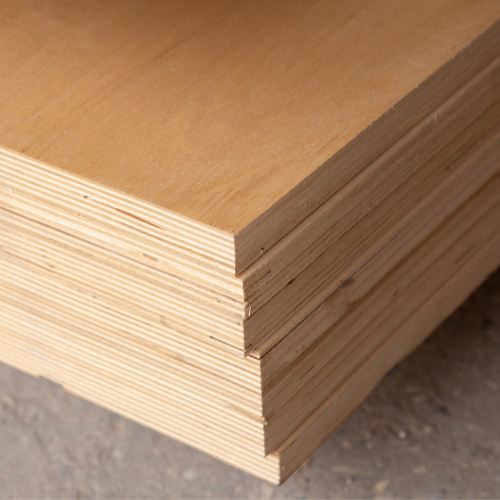
Prefinished Birch / White Melamine
Choose a natural birch or white melamine surface for cabinet interiors, closets and shelving. Check the selected thickness for finish and finished-side details.
Choose finish & thickness ↗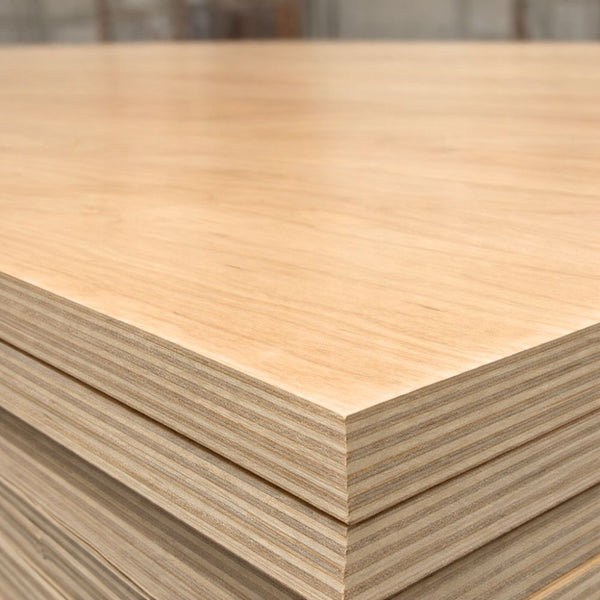
Prefinished Maple Plywood
Maple-faced sheets with a factory UV-cured clear finish on both sides. Compare this option when the finished maple appearance is part of your interior design.
View maple plywood ↗
Prefinished Baltic Birch
A clear prefinished Baltic Birch panel for cabinets, shelving and drawer components. This is a finished interior panel, not brown or black concrete-form plywood.
View prefinished Baltic Birch ↗Open each product page for current pricing, available thicknesses, finished sides and stock status. The birch photo represents the natural-finish option; the linked product page also offers white melamine variants.
Four checks before you buy a sheet
Both faces
Mark the show side in your cut list. Check grain, color, repairs and whether the back will also be visible once the part is assembled.
Core and edges
Inspect the construction, edge condition and any visible gaps. Veneer, composite and combination cores serve different applications; do not judge the whole panel by its face or ply count alone.
Actual thickness
Measure a representative sheet before machining dadoes or grooves. Nominal inch labels and metric manufacturing sizes are not necessarily exact equivalents.
Finish and environment
Confirm whether the surface is unfinished, clear coated or overlaid. Check the stated use and bond classification instead of assuming a cabinet panel is suitable outdoors. For a fire-related requirement, review fire-rated plywood terminology and documentation separately from the appearance grade.
For measurement terminology, see the plywood thickness chart and actual-vs.-nominal guide. Always use the product specification and the sheet you measure for your final machining setup.
Plywood grade FAQs
What is the highest plywood grade?
There is no single answer across all plywood systems. AA is the highest decorative hardwood face grade in the system discussed here, while A is the highest common softwood veneer appearance grade. Baltic Birch labels follow a different convention. Specify the grading system before comparing letters.
Is B2 plywood cabinet grade?
B2 identifies a B face and a grade 2 back in the decorative hardwood system. It can be suitable for cabinetry, depending on the required appearance, core, thickness and finish. It does not automatically make every part suitable for a highly visible painted or clear-finished surface.
Can you paint BB/BB plywood?
Unfinished BB/BB plywood can be prepared and painted, but sound patches and grain may still affect the finished appearance. Inspect the faces and test the preparation on an offcut. A cleaner face may reduce the work needed on visible parts.
Does a higher face grade mean stronger plywood?
Do not use decorative face grade as a load rating. Performance also depends on the panel’s construction, thickness and application. Structural plywood must be selected using its applicable panel markings and design requirements, not appearance alone.
Is prefinished plywood better than unfinished plywood?
It serves a different workflow. Choose unfinished plywood when you need to control painting, staining or clear finishing. Choose a suitable prefinished panel when its existing surface is the finish you want for the completed project.
Compare the surface. Confirm the specifications. Then order.
Choose unfinished Baltic Birch when you want control over the finish, or compare factory-finished panels for cabinet interiors and shelving. Need a closer look first? A material sample can help you compare the face, surface and layered edge before a full-sheet order.
Planning pickup or delivery? Check the delivery calculator before finalizing your order. Delivery availability depends on your location and order.


