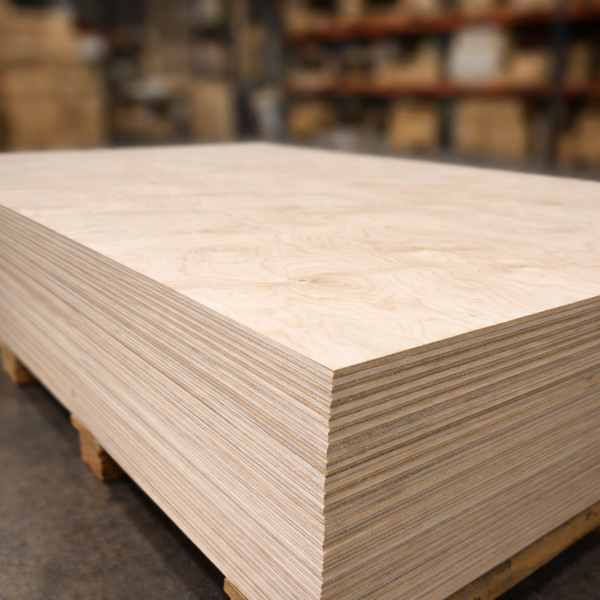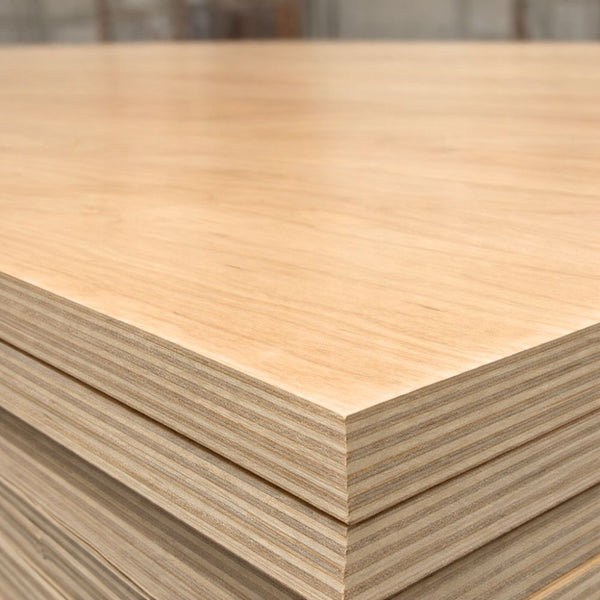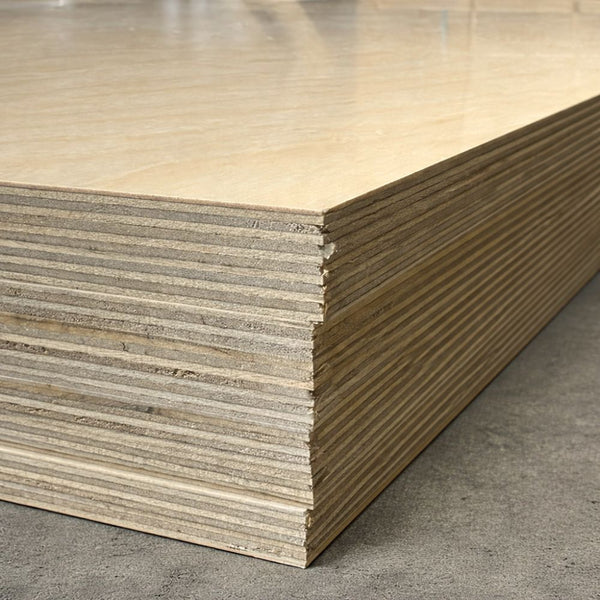

“Birch plywood” gets used as a catch-all term, and “sande plywood” often gets picked because it looks clean and prices can be attractive. On a jobsite, those shortcuts create problems: rough drawer action, fast denting, telegraphing seams, and boxes that rack over time. For the common full-sheet cabinet format, compare 3/4 birch plywood 4x8 specifications and buying checks.
This guide is written for buyers who need the sheet to behave predictably—during cutting, fastening, finishing, delivery, and after a season of humidity swings. The goal is simple: pick the panel that matches how the part will actually be used, not how it looks on the rack.
What Sande Plywood and Birch Plywood Actually Are?
Sande plywood
Sande plywood is typically a tropical hardwood plywood sold for general interior building and shop use. It’s often chosen because the face can be smooth and light, making it look “clean” at first glance. The core is commonly veneer-based, but the number of plies, glue type, and core quality can vary widely by mill and grade.
Birch plywood
“Birch plywood” in U.S. retail usually means a hardwood plywood with birch face veneers over a veneer or combination core. It’s used for cabinets, built-ins, and furniture parts because the face tends to be more uniform than many utility hardwood options, and it machines well when the core is stable.
How Pros Should Evaluate These Sheets Before Buying
Don’t start with species name. Start with what fails first in the application. These are the checks that matter in cabinet and shop work:
- Core consistency: Look for voids, overlaps, and soft interior plies that collapse under fasteners.
- Stiffness (panel feel): Same thickness does not mean same rigidity. Some sheets “oil can” and telegraph fastener lines.
- Face veneer thickness: Thin faces sand through quickly and don’t tolerate patching or refinishing.
- Edge quality: If the project has exposed edges (drawers, modern boxes), void-free multi-ply matters more than face beauty.
- Moisture behavior: Panels that move or cup will show as door reveals drifting, drawers binding, and seams opening.
Comparison Table: Sande vs Birch for Cabinet and Shop Use
Use this table as a first pass. Then verify grade/core details with the supplier, because both categories vary by mill.
| Decision Factor | Sande Plywood | Birch Plywood |
|---|---|---|
| Best use | Shop fixtures, utility panels, interior parts with hidden edges | Cabinet boxes, drawer parts, built-ins, paint-grade furniture |
| Face consistency | Can be smooth, but color/patch variation is common | Usually more uniform for paint and clean interiors |
| Dent resistance | Often dents easier; faces can be softer | Typically harder face; holds up better in use |
| Screw holding | Varies; weaker cores show strip-out sooner | More reliable when core is veneer/combination and well-pressed |
| Edge performance | Not ideal for exposed edges; voids/soft plies show | Better, but still not the same as multi-ply Baltic birch |
| Paint-grade results | Can work, but telegraphing and patch show-through is more common | More predictable surface for primer/paint systems |
| Stability | Can vary by batch; watch for cupping in wide panels | Generally more stable when stored and acclimated correctly |
Where Sande Performs Well
- Shop furniture and jigs: Work tables, router sleds, templates, and fixture panels where appearance matters less than flatness.
- Interior cabinet parts that won’t be abused: Toe-kick backs, stretchers, dust frames, and hidden partitions.
- Quick paint-grade utility builds: When you’re okay sealing and painting and the part isn’t edge-exposed.
What to watch on sande
Sande becomes frustrating when the core has soft sections. You’ll see it as screws that feel tight, then strip suddenly; edges that crumble during dadoing; or faces that dent during assembly. If you’re building a run of cabinets, inconsistency costs more than the sheet saved.
Where Birch Performs Well
- Cabinet boxes: Better stiffness and more consistent machining for dados, rabbets, and assembly.
- Drawer components: Cleaner joinery, better wear at edges, and better tolerance of hardware loads.
- Painted built-ins: More predictable face for primer, sanding, and finish build.
What to watch on birch
“Birch” doesn’t automatically mean “cabinet-grade.” You still need to confirm the core type and grade. Some birch plywoods have thin face veneers and mixed cores that don’t like exposed edges. If edges will show, step up to a multi-ply panel.
Grades and Core Construction That Change the Outcome
Species gets buyers in the door. Grade and core decide whether the job stays square.
Face grade
For cabinet interiors and paint-grade work, look for a cleaner face with fewer open defects and patches. The more patchwork you see, the more likely you’ll be chasing telegraphing under paint or clear coat.
Core type (why it matters more than most people admit)
- Veneer core: Usually stronger and machines better than particle cores, but voids vary by mill.
- Combination core: Can be stable, but watch the inner layers—some are soft and don’t hold fasteners well.
- Multi-ply core (Baltic birch style): More uniform edge, better for exposed edges and drawer boxes.
Comparison Table: Choosing by Application
If you’re buying by project type, this table is a faster filter than staring at faces under warehouse lighting.
| Application | Pick This First | Why | Avoid If… |
|---|---|---|---|
| Cabinet boxes (dados/rabbets) | Birch plywood | More consistent machining and stiffness | Core is soft or voidy; edges will be exposed |
| Drawer boxes (exposed edges) | Baltic birch multi-ply | Uniform edge + strong joinery performance | You’re relying on thin face veneers or mixed cores |
| Shop jigs / utility shelving | Sande plywood | Smooth face works fine; cost control makes sense | Shelves are long spans with heavy loads (sag risk) |
| Paint-grade built-ins | Birch plywood | More predictable finishing surface | Faces are patchy or too thin to sand safely |
Thickness and Spec Guidance for Cabinets
Common thickness choices
- 3/4" (18–19mm): Cabinet sides, bottoms, fixed shelves, and partitions.
- 1/2" (12mm) plywood: Cabinet backs (when captured), drawer bottoms (depending on design), lighter partitions.
- 1/4" (6mm) plywood: Back panels in dadoes and skins; not a structural panel.
Jobsite reality checks
- Long shelves sag: If you’re spanning wide, choose a stiffer panel or add edge banding / stiffeners.
- Screw holding is not equal: If you’re hanging boxes or using heavy hardware, weak cores show fast.
- Acclimation is not optional: Store panels flat, sticker if needed, and let them settle before final cuts.
Common Mistakes Buyers Make With Sande and Birch
- Assuming species = grade: “Birch” can still be thin-faced and voidy. “Sande” can vary dramatically by batch.
- Using the wrong sheet for exposed edges: If the edge is visible, pick a panel designed to look good on edge.
- Skipping a core inspection: One ripped strip from the sheet edge tells you more than the face does.
- Over-sanding thin faces: If you sand through, you can’t “fix” it—only paint and hide it.
How This Compares to Baltic Birch and Prefinished Plywood
Baltic birch plywood
Baltic birch is the “different category” option when edge quality and uniform plies matter. For drawers, exposed edges, CNC parts, and repeated joinery, multi-ply construction reduces void surprises and holds up better during assembly. This is why we only stock multi-ply Baltic birch for cabinet applications where edge performance is part of the finish standard.
Prefinished plywood
Prefinished plywood solves a different problem: finishing time and surface durability. If you’re building cabinet interiors, shelves, or carcasses where the inside surface is visible, a factory-applied UV finish saves labor and helps avoid inconsistent on-site clear coating. It doesn’t replace a good core; it replaces a finishing step.
Other common alternatives (only when they make sense)
- Maple plywood: Often chosen for clear finishes, but performance still depends on grade and core.
- Poplar plywood: Can work as paint-grade, but check dent resistance and core quality for cabinets.
For cabinet builds where edge quality and consistent plies matter, see baltic birch plywood for cabinets. If you’re comparing interior surfaces and want factory-finished panels, reference 4×8 prefinished cabinet grade plywood. For a broader spec reference on panels, see plywood thicknesses explained.
FAQ
Is sande plywood cabinet-grade?
Sometimes it’s used in cabinets, but it’s not a reliable default. If the job depends on screw holding, stiffness, and consistent machining, birch (or a multi-ply panel) is usually the safer choice.
Is birch plywood the same as Baltic birch?
No. Baltic birch is typically multi-ply with more uniform interior layers. “Birch plywood” often refers to birch-faced hardwood plywood that may use different core constructions.
Which is better for painted cabinets?
Birch plywood is usually more predictable under primer and paint because face veneer and patching tend to be more consistent. Still inspect the face—thin veneers sand through easily.
Which one holds screws better?
It depends on the core. In practice, birch plywood with a solid veneer core tends to be more consistent. If you need strong holding on edges and repeat fastening, multi-ply Baltic birch is more reliable.
Can I use sande for drawers?
You can, but it’s not the first choice. Drawer parts take hardware loads and edge wear. If you want fewer failures and cleaner joinery, use a multi-ply panel designed for drawer construction.
What should I check in the store before buying sheets?
Rip a narrow strip (or inspect an exposed edge) to look for voids and soft layers. Check if the face veneer looks thin, and flex the sheet to compare stiffness across options in the same thickness.
Final Thoughts
Sande and birch can both be useful sheets, but they win in different jobs. If you’re building cabinets, drawer systems, and painted built-ins where machining and durability matter, birch is usually the better baseline—provided the core is decent. If you’re building shop fixtures or interior parts where edge exposure and long-term wear aren’t the priority, sande can be a practical choice. When edge quality and repeatable joinery are part of the finish standard, step up to multi-ply Baltic birch and avoid fighting the material later.