
Quick answer
18 mm plywood is about 0.709 inch—not a true 3/4 inch
18 mm ÷ 25.4 = 0.7087 inch. True 3/4-inch material is 19.05 mm, so an 18 mm panel is about 1.05 mm (0.041 inch) thinner. That difference is small enough to disappear in casual conversation and large enough to matter in dados, paired parts, cabinet openings and hardware layouts.
Treat “3/4 inch (18 mm)” as a product label, not a machining dimension. Measure the delivered sheet, cut a test joint and use the measured thickness in your cabinet drawings.
18 mm plywood conversion table
| Label | Metric thickness | Decimal inches | Difference from 18 mm | Planning use |
|---|---|---|---|---|
| 18 mm | 18.00 mm | 0.7087 in | — | Use as the design value when the panel is specified as 18 mm |
| 23/32 in | 18.256 mm | 0.71875 in | +0.256 mm | A common U.S. performance-category label; not identical to 18 mm |
| 3/4 in | 19.05 mm | 0.7500 in | +1.05 mm | True fractional conversion, not the measured thickness of every nominal sheet |
| 19 mm | 19.00 mm | 0.7480 in | +1.00 mm | Very close to true 3/4 inch, but still a separate specification |
For the broader nominal-versus-actual problem, use Berta’s plywood actual-thickness chart. The Baltic Birch thickness chart separates common metric options, while the 3/4 birch plywood checklist covers core and face questions beyond thickness.
Where the 1.05 mm difference changes a cabinet
| Decision | Why thickness matters | Practical check |
|---|---|---|
| Dados and grooves | A cutter labeled 3/4 inch makes a 19.05 mm groove, leaving excessive play around an 18 mm panel. | Measure the sheet and cut a test groove in scrap from the same batch. |
| Overall box width | Two 18 mm sides total 36 mm; two true 3/4-inch sides total 38.1 mm. | Dimension the inside opening and outside width from one consistent value. |
| Drawer and shelf fit | Small thickness differences accumulate with reveals, edge banding and hardware clearances. | Model the finished part, including surface layers and edge treatment. |
| Fastener layout | A centerline based on 3/4 inch is not the centerline of an 18 mm edge. | Lay out from the measured face or use a setup block made from the panel. |
| Mixed panel systems | Raw, UV-finished and melamine-faced panels may share a nominal label but require separate verification. | Record actual thickness by SKU and finish before nesting parts. |
A shop workflow that prevents cumulative errors
1. Confirm the exact panel
Choose the face, core, finish and 18 mm option. Do not copy a measurement from a different product.
2. Measure representative points
Use a calibrated caliper away from damaged edges. Check more than one location and sheet when tolerances are tight.
3. Update the drawing
Put the measured value into dados, cabinet width, shelf length and hardware offsets before cutting production parts.
Use the plywood thickness calculator for fraction and metric planning, then send the measured part list through the plywood cut-list calculator. The broader plywood and MDF calculator estimates sheet quantity, and the delivery calculator helps plan transport without treating a nominal thickness as a measured shipping value.
Choose an 18 mm panel by job—not by thickness alone
An 18 mm label tells you one dimension. It does not tell you the face grade, core species, ply count, finish, moisture classification or whether both faces are finished. Start with the application, then confirm construction.
| Project need | Panel direction | Check before ordering |
|---|---|---|
| Exposed multi-ply edges | 18 mm all-birch multi-ply panel | Face grade, actual edge quality and the exact 18 mm variant |
| Finished cabinet interiors | 18 mm factory-finished birch or melamine-faced plywood | Finish on one or both faces, surface protection and matching edge treatment |
| Clear-finished maple look | 18 mm prefinished maple-faced cabinet plywood | Face appearance, core construction and finish compatibility |
| General cabinet boxes | Cabinet-grade 18 mm or nominal 3/4-inch plywood | Flatness, core, face quality and measured thickness |
Browse the verified 3/4-inch plywood collection, compare Baltic Birch panel options, or narrow the search to prefinished plywood for cabinet interiors.
Current Berta 18 mm options

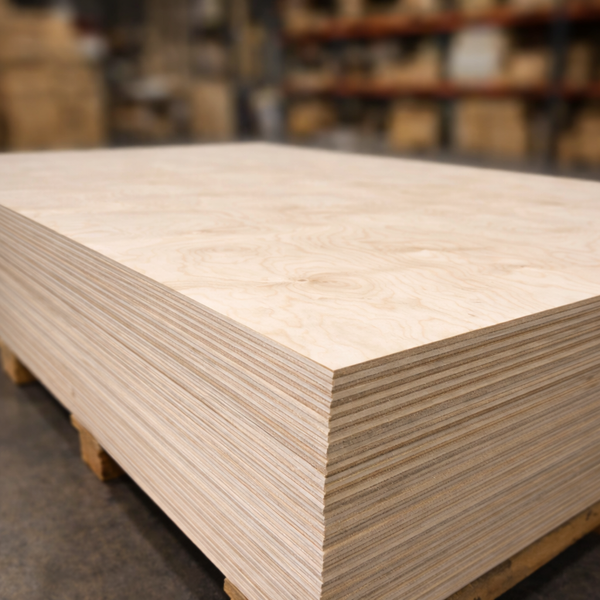
BB/BB Baltic Birch, 18 mm
Current product data lists a 4×8 sheet, unfinished BB/BB faces, solid-birch multi-ply construction and a 3/4-inch (18 mm) variant. Use it when both faces and exposed edges matter.
Check the 18 mm BB/BB panel
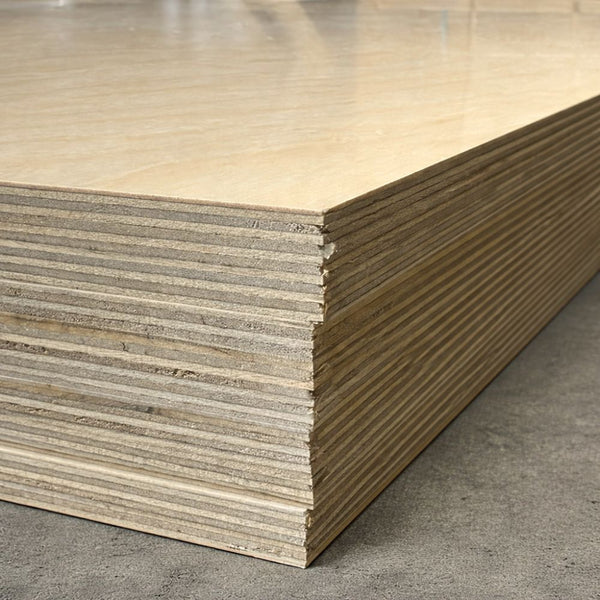
Prefinished birch, 18 mm
The selected Birch / 3/4-inch (18 mm) variant uses a factory UV-cured clear finish over a multi-ply poplar core. It fits visible interiors where eliminating a finishing step is valuable.
Review the 18 mm birch finish
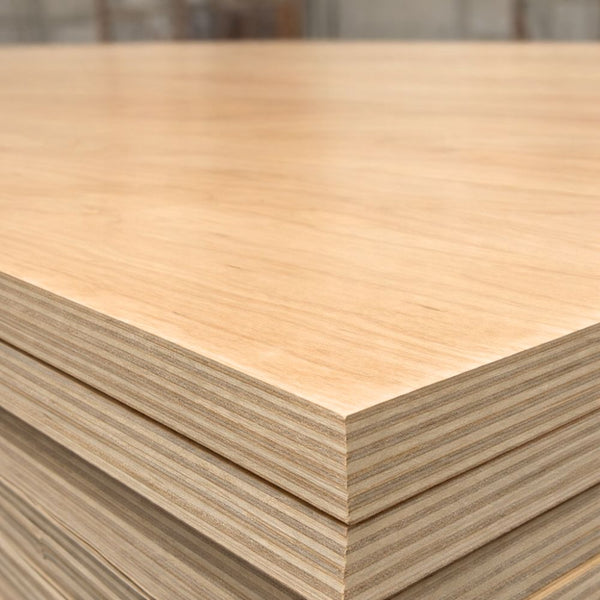
Prefinished maple, 18 mm
Berta lists this 4×8 variant as nominal 3/4 inch (18 mm), with a Grade A maple appearance veneer, UV-cured clear finish on both sides and an 11-ply cabinet-grade hardwood core.
Review the 18 mm maple panelSpecifications were checked against current Berta product records on October 19, 2026. Confirm the selected variant and current product page before ordering.
Common mistakes
- Cutting a 3/4-inch dado without a test: 18 mm material can rattle in a true 3/4-inch groove.
- Mixing measured and nominal dimensions: use one system throughout the box calculation.
- Ignoring finish thickness: a surface layer can affect a tight groove, edge-band match or visible reveal.
- Assuming every 18 mm panel has the same core: thickness does not identify core species or ply count.
- Using a single caliper reading: check representative locations and production sheets when fit is critical.
For handling and freight planning, use Berta’s 4×8 plywood weight chart; it explains why equal-size sheets can weigh differently by construction.
Frequently asked questions
Is 18 mm plywood the same as 3/4 inch?
No. 18 mm is 0.7087 inch; true 3/4 inch is 19.05 mm. Sellers may pair the labels as a nominal convention, so the product’s listed metric dimension and your own measurement control precision work.
What router bit should I use for an 18 mm plywood dado?
Choose the bit or multi-pass setup from the measured panel, not the name on the sheet. A test groove is safer than assuming an 18 mm cutter or 3/4-inch cutter will produce the desired fit.
Can I combine 18 mm and nominal 3/4-inch plywood in one cabinet?
Yes, if the drawing accounts for each measured thickness. Do not swap them in paired sides, captured backs or repeated dados without updating dimensions.
Is 18 mm plywood suitable for cabinet boxes?
It is a common cabinet-box thickness, but suitability also depends on core quality, flatness, face or surface finish, supports, joinery and load. Verify the actual panel construction.
How many square feet are in a 4×8 sheet?
A full 4×8 face covers 32 square feet before kerf and waste. Thickness does not change face area. Use the cut-list calculator for usable yield.
Source and scope note
The metric conversion uses the NIST definition that one international inch equals exactly 25.4 mm. Product-specific construction, finish, variant and image details come from the linked Berta Store product records checked October 19, 2026. Panel tolerances and measured thickness can vary; this article does not replace a project drawing, engineering requirement or measurement of delivered stock.