
Material selection
Quick answer
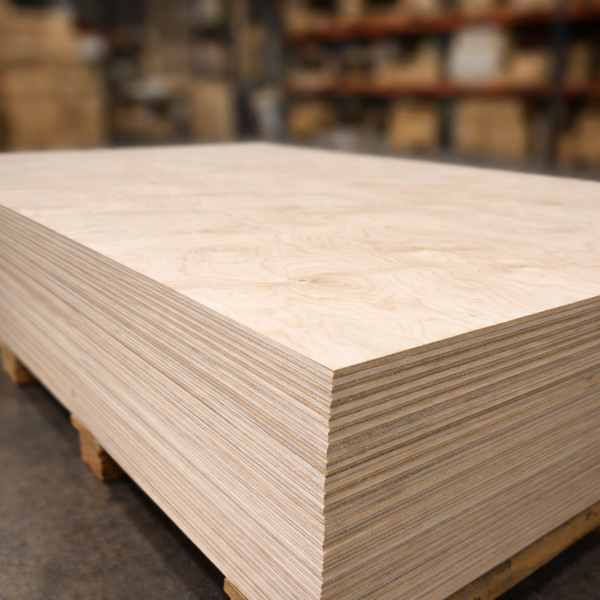
A 1/2-inch 4×8 plywood sheet is a useful cabinet panel, but “1/2 inch” does not identify one universal material. Berta Store’s current matching options include 12 mm BB/BB Baltic Birch with a solid-birch core and unfinished faces, plus 12 mm prefinished Birch plywood with a multi-ply poplar core and UV-finished faces. Both are nominal half-inch panels; their cores, faces and finishing requirements are different.
Twelve millimeters converts to approximately 0.472 inch, so do not machine a 0.500-inch groove from the label alone. Measure the delivered sheet, choose the face system for the part, and test joinery before production.
Current Berta options
Two 12 mm panels, two different jobs
| Decision point | BB/BB Baltic Birch | Birch prefinished plywood | What to check |
|---|---|---|---|
| Current listed thickness | 1/2 in. (12 mm) | 1/2 in. (12 mm) | Measure the actual sheet before setting grooves or dados. |
| Current core | Solid birch core | Multi-ply poplar core | Core construction changes edge appearance, machining feel and weight. |
| Current face condition | BB/BB; unfinished both sides | Birch UV finish on both sides for the 1/2-in. variant | Confirm which faces will remain visible and whether a shop-applied finish is planned. |
| Good starting uses | Unfinished cabinet parts, drawer components, shop furniture, jigs and parts with exposed multi-ply edges | Cabinet interiors, dividers, backs and components where a factory-finished face saves finishing steps | Part size, support and service conditions still control the final choice. |
| Edge plan | Leave the multi-ply edge visible, sand/finish it, or apply edge treatment | Plan edge banding or another edge treatment where the poplar core should be concealed | Finish the edge strategy before nesting parts. |
| Not established by label | No universal span, load rating, screw capacity or finished dimension follows from “1/2 inch.” | Use a project-specific structural and fastening check. | |
Cabinet part map
Where half-inch plywood works—and where to pause
Drawer boxes
Half-inch plywood is a common starting point for drawer sides and ends, but the drawer width, height, joint, slide system and load matter. Check the drawer-box plywood thickness chart before treating one thickness as a universal answer.
Cabinet backs and dividers
A 12 mm captured back or divider can provide more substance than a thin back. Prefinished Birch is useful when the interior face should arrive ready for assembly; unfinished Baltic Birch preserves finishing flexibility.
Shelves and wide panels
Do not infer a safe unsupported span from thickness alone. Shelf depth, width, load, grain direction, edging and support placement all change deflection. Use the plywood shelf selection reference for the broader design decision.
The actual plywood thickness chart explains nominal labels across the full thickness family. This page narrows the decision to current 12 mm, 4×8 cabinet panels and their different face/core systems.
Joinery setup
Why a nominal half inch is not a 0.500-inch cutter setting
The exact mathematical conversion is simple: 12 ÷ 25.4 ≈ 0.472 inch. That is about 0.028 inch below 0.500 inch. Manufacturing tolerance, coatings and measurement location can also affect the sheet you actually receive.
measured sheet thickness + intended fit allowance = test-groove target
There is no single correct allowance for every joint. A sliding panel, glue joint and press fit need different behavior. Measure several positions without compressing the faces, cut a test groove in scrap and assemble a sample. For nesting, include blade or cutter loss using the plywood kerf and cutting-allowance method.
Weight and takeoff
Plan handling from the exact panel, not a generic chart row
Two 4×8 sheets with the same nominal thickness can have different weights because core species, construction, face material and moisture content differ. The plywood weight chart is useful for planning, but it does not replace a current product specification or a measured shipment.
Sheet count
Use the plywood cut-list calculator to estimate layout, then add realistic kerf, trim and defect allowances.
Shop handling
Confirm personnel, panel cart, saw capacity and storage before delivery. A full sheet’s size can be the main handling constraint even when thickness is moderate.
Delivery planning
Use the plywood delivery calculator as a planning resource and verify site access, unloading and receiving requirements.
Matched panel choices
Choose the finish system before fabrication

1/2-inch (12 mm) BB/BB Baltic Birch
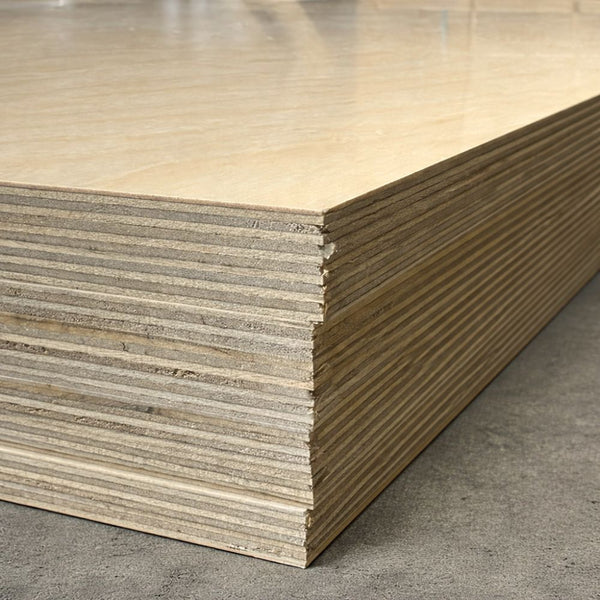
This current 4×8 option is listed with a solid-birch core and unfinished faces on both sides. It fits projects that need an all-birch construction, a visible multi-ply edge or a custom shop-applied finish. Inspect face expectations and measure actual thickness before machining.
Check 1/2-inch Baltic Birch details
1/2-inch (12 mm) Birch prefinished plywood
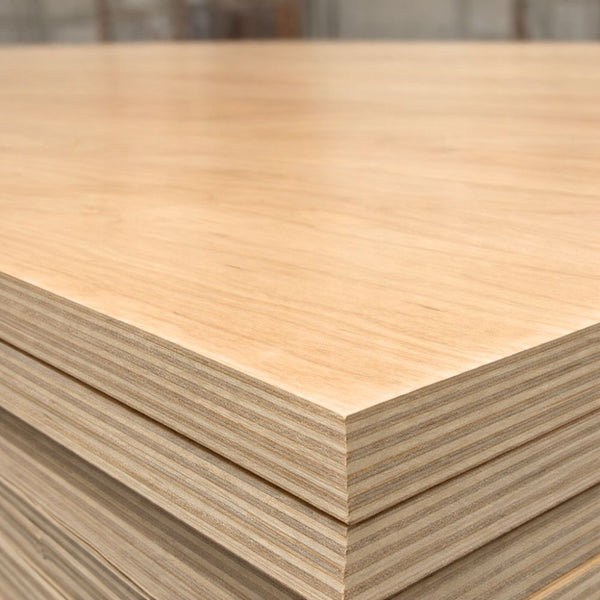
This current 4×8 option is listed with a multi-ply poplar core and Birch UV finish on both sides. It fits interior parts where a factory-finished face can reduce sanding and coating work. Confirm edge treatment, color compatibility and the selected variant before ordering.
Check 1/2-inch prefinished detailsFrequently asked questions
Half-inch plywood questions
Is 12 mm plywood actually 1/2 inch thick?
Not mathematically. Twelve millimeters is approximately 0.472 inch, while one-half inch is 12.7 mm. “1/2 inch” is a nominal product label in the Berta options described here; measure the actual sheet for joinery.
Which half-inch plywood is better for cabinet interiors?
Prefinished Birch can reduce finishing work when its current UV-finished faces suit the design. Unfinished BB/BB Baltic Birch is better when you need a solid-birch core, a custom finish or a deliberate exposed-ply edge. Neither is automatically best for every cabinet part.
Can half-inch plywood be used for drawer boxes?
It is a practical starting thickness for many drawer-box parts, but verify drawer dimensions, joinery, bottom capture, slide clearances and expected load. A nominal thickness is not a load rating.
Should a half-inch groove be cut with a 1/2-inch bit?
Do not select the cutter from the nominal label alone. Measure the sheet, account for the required joint behavior and run a test cut with the production setup.
Does prefinished plywood need edge banding?
The factory-finished face does not finish the cut edge. Use edge banding, solid edging or another deliberate edge treatment where the core should be concealed or protected.
Planning resources
Continue the 4×8 sheet takeoff
- 1/2-inch 4×8 plywood collection
- complete plywood collection
- plywood cut-list calculator
- cabinet and sheet-goods calculators
- plywood delivery calculator
- plywood pallet calculator