
Material selection
Quick answer
“Furniture-grade plywood” is a useful shopping category, not a complete technical specification. A sheet earns its place in furniture work by combining the face appearance, core quality, dimensional consistency, finish and edge treatment the piece actually needs. Two panels carrying the same broad label can machine, finish and look very different.
Compare the exact face and back grades, core construction, nominal and actual thickness, factory finish, sheet size and compliance documentation. Then match those facts to the visible surfaces, joinery and production method in your cut list.
A label versus a specification
What furniture-grade plywood should tell you
Plywood is made from cross-laminated wood veneers. Formal grade designations normally describe defined attributes such as the face and back veneer grades or an intended end use. “Furniture grade,” by contrast, is commonly used by sellers to group smoother, more decorative or better-core panels. It does not, by itself, tell you which wood species is on the face, how many plies are in the core, how repairs are handled or whether a finish has been applied.
That distinction is why a buying decision should move from the label to a written specification. Berta’s plywood grade terminology reference explains what face letters can communicate, while the cabinet-grade plywood selection article focuses on cabinet construction. Furniture work overlaps with both, but places extra emphasis on show faces, edge presentation and consistency across adjacent parts.
| Specification | Why it matters in furniture | Question to ask | Do not assume |
|---|---|---|---|
| Face and back | Controls visible grain, color range, patches and which side can face outward. | What is the stated face/back grade and appearance species? | Both sides are presentation faces. |
| Core construction | Affects exposed edges, void risk, fastener placement and machining behavior. | Is the core solid birch, hardwood veneer, softwood veneer or engineered core? | A decorative face guarantees a premium core. |
| Thickness | Dados, hardware clearances and flush reveals depend on the measured panel. | What is the listed metric thickness and acceptable tolerance? | Nominal 3/4 inch measures exactly 0.750 inch. |
| Factory finish | Changes workflow, glue preparation, touch-up and final sheen. | Is the panel raw, UV clear finished or laminated on one or both sides? | “Prefinished” means the same coating system across suppliers. |
| Sheet size | A small change in usable width can change the entire nesting plan. | Is it a true 48 × 96 inch sheet or a metric format? | All “4×8” panels share identical dimensions. |
| Documentation | Commercial projects may require emissions, bond or origin information. | Which current declarations or test documents apply to this exact panel? | A certificate for another brand applies automatically. |
Technical scope: APA explains that formal panel grades are generally identified by face/back veneer grade or an intended-end-use designation. For U.S. regulated composite wood products, use the exact product’s current TSCA Title VI documentation rather than a category assumption.
Selection framework
Choose the panel from the finished piece backward
Natural exposed edges
Start with a consistent multi-ply or solid-birch core. Cut a sample, ease the edge and apply the intended clear coat before committing to the visible edge treatment.
Clear-finished faces
Choose the appearance species first. Birch is light and versatile; maple offers a different grain and color character. Compare full-sheet photographs and a physical sample, not species names alone.
Painted or concealed parts
Spend less on decorative figure only when the face is truly hidden or painted. Do not trade away the flatness, thickness consistency or core quality needed by your joinery.
A practical workflow is: identify every show face on the cut list; mark visible edges; choose raw versus factory-finished surfaces; set the actual thickness used by dados and hardware; then calculate sheet yield. The plywood cut-list calculator helps test the yield before ordering, and the broader sheet-material calculator provides a second planning route.
Application table
Panel priorities by furniture part
| Part | Highest priority | Useful panel direction | Check before machining |
|---|---|---|---|
| Bookcase side | Flatness, face match, shelf joinery | Clear prefinished birch or maple for a natural interior | Actual thickness, grain orientation and finished-face protection |
| Table or desk panel | Face appearance and balanced construction | Decorative hardwood face; plan a solid edge or banding system | Support span, underside appearance and finishing schedule |
| Drawer box | Clean edges and repeatable thickness | Multi-ply birch where exposed plies are part of the design | Slide clearance for the exact hardware model |
| Case back | Flatness and groove fit | Thinner plywood sized to the design—not automatically the cheapest sheet | Measured thickness and captured-panel expansion clearance |
| Painted built-in | Smooth substrate and stable joinery | Plywood where screw holding, lower weight or edge structure is valuable | Primer compatibility and how every exposed edge will be filled |
For thickness planning, use Berta’s actual plywood thickness chart. If the plywood edge remains visible, compare the methods in the plywood edge-banding reference. Neither step should wait until assembly.
Common buying errors
Five mistakes that show up after the first cut
Buying from a nominal name
A 3/4-inch callout is not a promise of exact thickness. Measure the actual panel and size dados, rabbets and reveals from that dimension.
Judging only the top face
Inspect the back, edges and corners. A strong presentation face does not answer whether the back can remain visible or whether the edge suits a clear finish.
Ignoring sequence matching
If adjacent doors, sides or shelves must read as one surface, plan grain direction and color grouping before nesting parts.
Adding finish too late
Raw plywood requires sanding, coating, cure time and handling space. Prefinished plywood changes glue preparation and touch-up but can remove several shop steps.
Ordering from square footage alone
Kerf, grain direction, defects and part geometry reduce usable yield. Build a cut map and add a risk allowance appropriate to the project.
Skipping a sample
Screen color cannot confirm sheen, grain, patch appearance or exposed-edge quality. Use a current sample for client approvals and finish tests.
Current Berta options
Three panel directions worth comparing
These products solve different furniture requirements. Confirm the current product page, exact variant and documentation before ordering; the best choice is the one that matches the finished piece, not the broadest grade label.

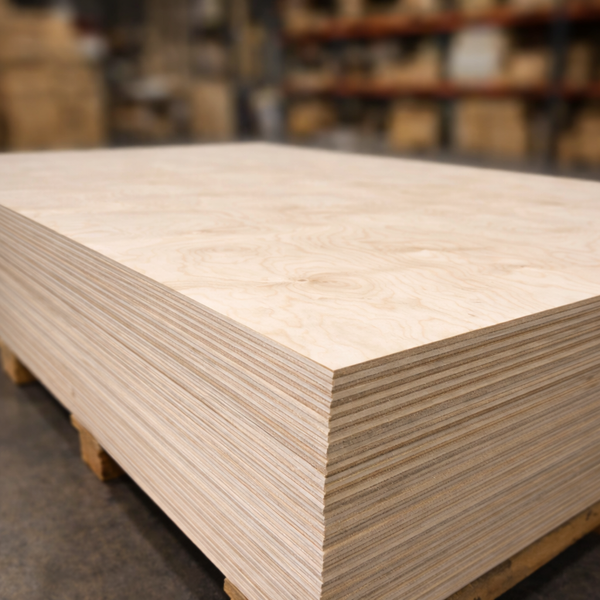
BB/BB Baltic Birch
Useful when an unfinished birch face, dense multi-ply edge and shop-applied finish fit the design. Berta’s current 3/4-inch listing specifies 18 mm, 4×8, 13 plies and a solid-birch void-free core. Verify the exact variant and finish plan.
Review the 3/4-inch BB/BB panel
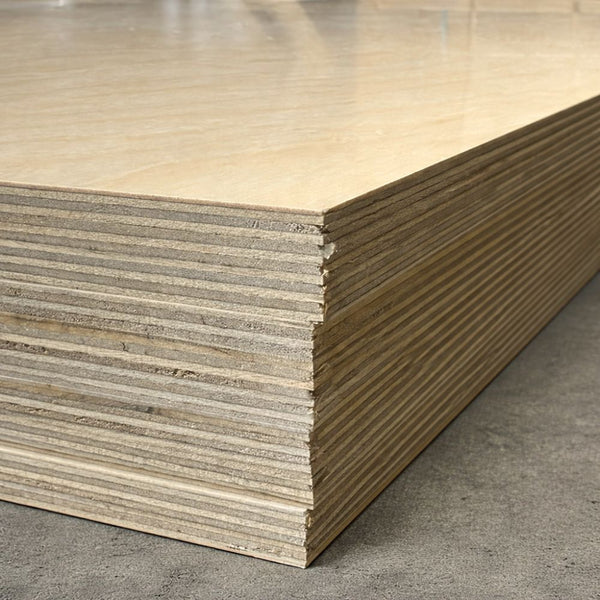
3/4-inch prefinished Birch
A workflow-focused option for cabinet or furniture parts that need a light birch face and a factory-applied UV clear finish on both sides. The current Berta variant is listed as 18 mm, 48×96 inches, Grade A face and multi-ply poplar core.
Review prefinished Birch specifications
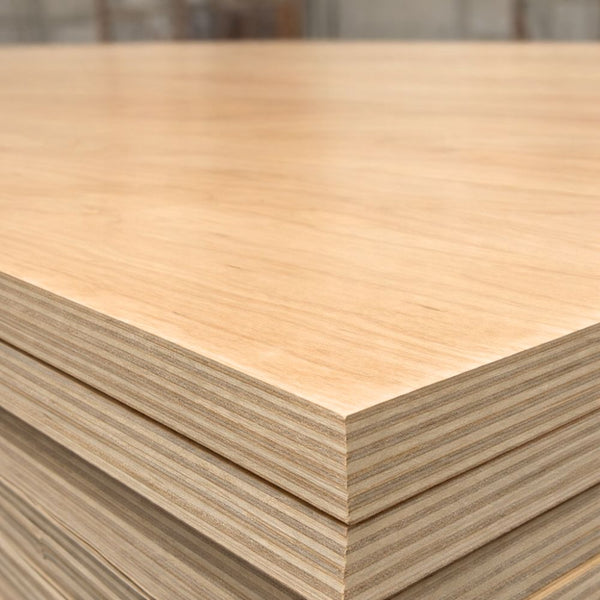
Prefinished Maple
Choose maple when its grain and color are the desired show surface. Berta’s current 3/4-inch variant is listed as 18 mm, 48×96 inches, an A-grade maple appearance veneer, clear UV finish on both sides and an 11-ply hardwood construction.
Compare the prefinished Maple panelFor broader browsing, compare Berta’s current plywood collection and Baltic Birch panel collection. Use the delivery estimator only after confirming sheet count, size and unloading requirements.
Frequently asked questions
Furniture-grade plywood FAQ
Is furniture-grade plywood the same as cabinet-grade plywood?
Not automatically. The terms overlap, but neither phrase alone replaces a specification. Cabinet work may prioritize case strength, hardware compatibility and finished interiors; furniture may put more weight on show-face matching and exposed edges. Compare the exact face, back, core, thickness and finish.
What plywood face is best for clear-finished furniture?
Choose the species and face grade that produce the appearance you want, then approve a current sample. Birch and maple are both common light-toned choices, but grain, color, repairs and finish sheen vary by product.
Is more ply always better?
No. Ply count can help describe construction, especially at a visible edge, but it does not independently prove face quality, bond performance, flatness or fitness for a specific span. Evaluate the full specification.
Can I leave plywood edges exposed?
Yes, if the core is consistent enough for the desired look and the edge is prepared and finished. Make a sample with the same saw blade, sanding sequence and coating before using exposed plies across a finished piece.
Should I buy unfinished or prefinished plywood?
Buy unfinished when you need a custom stain, dye or coating system. Choose prefinished when a verified factory surface matches the design and saving sanding, coating and curing time has value. Account for glue preparation and edge touch-up in either workflow.
Specify the sheet, not the adjective
Furniture-grade plywood is useful shorthand only until the project reaches the cut list. At that point, replace the adjective with measurable requirements: face and back, core, actual thickness, finish, size, edge treatment and required documentation. That short specification protects appearance, joinery and yield far better than a category name.
Reference scope: Berta product facts and links were checked against current product pages on October 10, 2026. Panel standards context: APA panel trademark guidance. U.S. composite-wood compliance context: EPA TSCA Title VI overview. Requirements and product specifications can change; confirm the exact item and current documents before purchase.