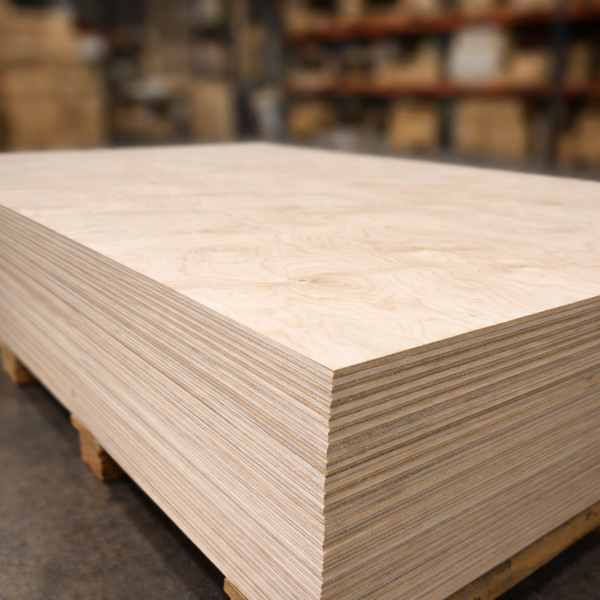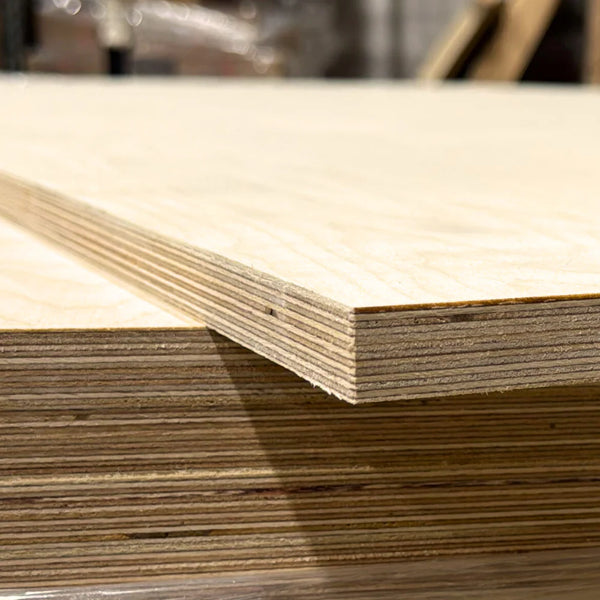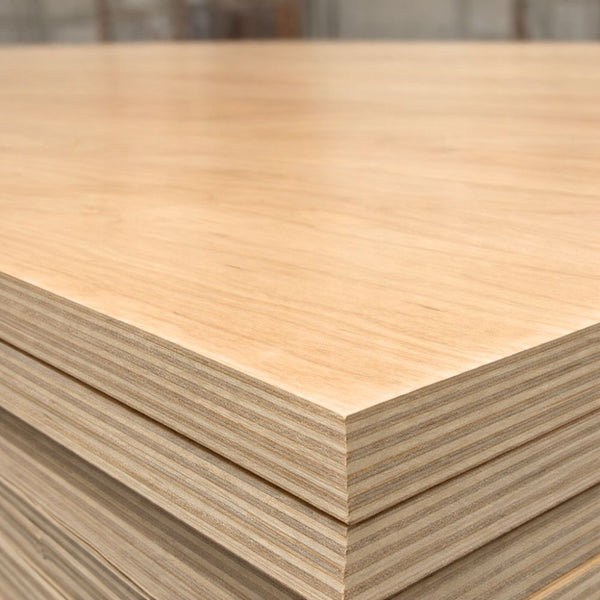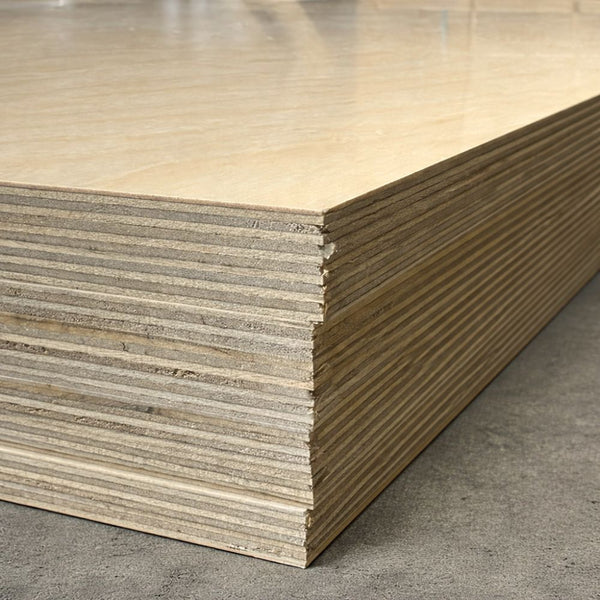

CDX plywood stands for C-grade face, D-grade back, and exterior-type glue (Exposure 1). It is commonly used for roof sheathing, wall sheathing, and subfloors. While strong and affordable for construction, it is generally not recommended for cabinets, furniture, or other finished visible surfaces.
What Is CDX Plywood?
If you’ve ever walked through a construction site or lumber yard, you’ve likely seen stacks of plywood stamped with CDX in bold black letters. It’s one of the most common structural plywood types in the U.S., yet few people truly understand what those three letters mean.
In simple terms, CDX plywood is a type of softwood plywood made for structural use — strong, affordable, and resistant to short-term moisture. It’s the sheet that builders trust for roof decking, wall sheathing, and subflooring — the layers you don’t see once the project is finished but that hold everything together.
At Berta Store, we think of CDX as the “workhorse” of construction panels — built for performance, not for looks. For cabinets, furniture, drawers, and visible interiors, higher-grade plywood options such as Baltic Birch and prefinished plywood are usually the better choice.
What Does “CDX” Actually Stand For?
Each letter in “CDX” carries a specific meaning:
C-Grade Face
The “C” refers to the grade of the front veneer. A C-grade face is structurally sound, but it may include knots, patches, repairs, or color variation.
D-Grade Back
The “D” refers to the back veneer. A D-grade back is rougher than C-grade, with more natural imperfections, because it is not intended to remain visible.
Exterior-Type Glue
The “X” refers to Exposure 1 or exterior-type glue. It helps the panel resist temporary moisture during construction, but it does not make CDX suitable for continuous outdoor exposure.
So when you read “CDX,” think of it as C-grade face, D-grade back, and exterior-type glue. It can handle occasional rain before siding or roofing goes on, but it should not stay exposed for months.
How CDX Plywood Is Made
The strength of CDX plywood comes from its layered structure — thin sheets of wood called veneers glued together with alternating grain directions. This cross-laminated construction helps the panel hold nails securely, resist bending, and distribute loads evenly.
Log Selection and Peeling
Softwood logs, often pine, fir, or spruce, are soaked and peeled into thin veneer sheets.
Drying and Grading
Veneers are dried to a consistent moisture level, then graded for appearance and structural quality.
Lay-Up Process
Veneers are stacked crosswise, with each grain direction running perpendicular to the layer below.
Adhesive Bonding
Moisture-resistant phenolic adhesive is applied between the veneer layers.
Hot Pressing
The stack is pressed under heat and pressure, bonding the veneers into one rigid panel.
Trimming and Stamping
Panels are cut to standard sizes, usually 4 × 8 ft, and stamped with grade and exposure information.
Benefits of CDX Plywood
Structural Strength
CDX plywood is designed to handle heavy loads and provide shear strength to walls, floors, and roofs. Its multi-layered build helps support weight without splitting or warping under pressure.
Cost-Effective
Compared to cabinet-grade plywood, CDX is far more affordable. It delivers structural performance without paying for perfect veneers that will be hidden after installation.
Moisture Resistance
Exterior-type glue helps prevent delamination from brief rain or humidity exposure during construction. CDX should still be covered and protected after installation.
Dimensional Stability
The alternating grain pattern helps minimize expansion and contraction, keeping panels flatter and more stable once installed.
Readily Available
Because it is a standard construction material, CDX plywood is commonly found at lumber yards, hardware stores, and building material suppliers.
Common Applications
Roof Sheathing
CDX plywood is often used for roof decks. It provides a solid surface for shingles, underlayment, or other roofing systems and can handle short-term exposure before the roof covering is installed.
Wall Sheathing
Builders use CDX as the structural layer beneath siding or brick veneer. It ties wall studs together, adds rigidity, and helps resist racking in high winds.
Subflooring
When installed under carpet, tile, or hardwood, CDX plywood forms a stable, load-bearing base. For visible flooring or moisture-heavy areas, a smoother or more moisture-rated grade may be preferred.
Temporary Surfaces
CDX is frequently used for concrete forms, ramps, job-site platforms, and other short-term construction surfaces where appearance is not the priority.
DIY and Workshop Projects
Although not as smooth as cabinet-grade plywood, CDX can work for utility shelves, workbenches, storage enclosures, and shop projects where appearance is less important.
How CDX Compares to Other Plywood Grades
CDX Plywood vs Other Plywood Types
CDX plywood is best for hidden structural work, but it is not always the right choice for cabinets, furniture, or finished interiors. Use this comparison to choose the right plywood for your project.
| Material | Best For | Not Best For | Berta Store Path |
|---|---|---|---|
| CDX plywood | Roof sheathing, wall sheathing, subfloors, and hidden structural work. | Cabinets, furniture, painted finishes, or visible interior panels. | Use this guide to understand CDX before choosing a project material. |
| BCX plywood | Utility projects where one smoother face is helpful. | Fine cabinetry, premium drawers, and finished furniture. | Read the BCX plywood guide |
| ACX plywood | Paintable or semi-visible work where a smoother A-grade face is needed. | Premium cabinet interiors or projects that need a factory-finished surface. | Use as a comparison point when choosing between structural and finish-grade plywood. |
| OSB | Budget roof sheathing, wall sheathing, and general construction panels. | Fine woodworking, cabinetry, furniture, and visible finished projects. | Read the OSB plywood guide |
| Baltic Birch plywood | Drawers, cabinets, furniture, shelving, and precision woodworking. | Hidden structural sheathing where appearance and edge quality do not matter. | Shop Baltic Birch plywood |
| Prefinished plywood | Cabinet interiors, finished panels, closets, shelving, and time-saving cabinet builds. | Rough construction use, roof decking, or wall sheathing. | Shop prefinished plywood |
| Maple plywood | Visible cabinet faces, furniture, shelving, and interior projects with a clean wood appearance. | Exterior sheathing, roof decking, or hidden rough construction work. | Shop maple plywood |
CDX vs. RTD Plywood
Both are used in structural applications, but RTD plywood is manufactured with sensors that improve glue curing, creating fewer voids and better consistency. CDX remains the more economical choice for standard construction needs.
CDX vs. ACX Plywood
ACX uses an A-grade face and a C-grade back, giving it a smoother surface suitable for painted or semi-visible areas. CDX focuses on structure, not looks, which makes it more practical when the panel will be covered.
CDX vs. OSB
OSB is another sheathing material made from wood strands pressed with resin. It is often cheaper and used in similar ways, but CDX plywood is commonly preferred by some builders for nail-holding strength, stiffness, and moisture recovery.
CDX vs. Cabinet-Grade Plywood
CDX is made for structural framing and hidden layers. Cabinet-grade plywood is designed for interior projects where surface quality, edge appearance, finish consistency, and precision matter.
When Appearance Matters, Choose Cabinet-Grade Plywood
While CDX plywood is popular in structural framing, Berta Store focuses on sheet goods designed for cabinetry, furniture making, and interior finishing rather than raw structural work.
Prefinished plywood is ideal for cabinet interiors and visible panels that need a clean, durable surface straight from the box. Each sheet comes factory-finished, saving time on sanding and sealing.
Baltic Birch plywood is a premium, multi-ply hardwood panel valued for stability, edge strength, and fine grain appearance — making it a strong choice for drawers, furniture, and architectural applications.
Tips for Working with CDX Plywood
Store Flat and Dry
Keep panels off the ground and covered until you are ready to install them.
Seal Edges
If edges will face moisture, coat them with primer or sealant to help reduce swelling.
Use the Smooth Side Out
The C-grade face is smoother than the D-grade back and typically faces outward when sheathing.
Pre-Drill When Needed
Pre-drilling can help create cleaner edges and reduce surface splits, especially near corners.
Fasten Properly
Use appropriate galvanized nails or screws and follow spacing recommendations from local building codes.
Do Not Leave It Exposed Too Long
CDX resists temporary moisture, but prolonged exposure to rain or snow can still cause warping and surface damage.
When to Choose CDX vs. Another Type
Choose CDX Plywood When:
- The panel will be covered under siding, roofing, or flooring.
- You need strong, load-bearing sheathing at an affordable price.
- The environment has occasional, not constant, moisture exposure.
- The project is structural and appearance is not the priority.
Avoid CDX Plywood When:
- The surface will remain visible.
- You need a smooth painted finish.
- The project involves cabinets, furniture, drawers, or finished interiors.
- The area will face continuous wetness or outdoor exposure.
Why Professionals Still Prefer CDX
Even with the introduction of newer engineered panels, many builders continue to rely on CDX because of its predictable performance. It cuts cleanly, holds screws and nails securely, and flexes less than some particle-based materials. It is time-tested, field-proven, and compatible with many framing systems.
The combination of affordability, strength, and availability makes CDX plywood a common structural panel in residential and light commercial construction.
CDX Plywood FAQs
What is CDX plywood?
CDX plywood is a construction-grade softwood plywood panel commonly used for structural applications such as roof sheathing, wall sheathing, and subfloors. It is strong, affordable, and designed for areas that will usually be covered by roofing, siding, flooring, or another finish layer.
What does CDX stand for?
CDX stands for C-grade face, D-grade back, and exterior-type glue. The “C” refers to the front veneer grade, the “D” refers to the back veneer grade, and the “X” means the panel uses moisture-resistant adhesive for short-term exposure during construction.
Is CDX plywood exterior grade?
CDX plywood is often described as exterior-rated because it uses exterior-type glue, but it is better understood as an Exposure 1 panel. That means it can handle temporary moisture during construction, but it should not be left permanently exposed to rain, snow, or standing water.
What is CDX plywood used for?
CDX plywood is most often used for roof decking, wall sheathing, subfloors, temporary construction surfaces, utility shelving, and other hidden structural applications. It is valued for strength and cost efficiency rather than appearance.
Is CDX plywood good for cabinets?
CDX plywood is usually not recommended for cabinets. Its rough C/D veneer faces may contain knots, patches, voids, and surface imperfections. For cabinets, drawers, furniture, and visible interior projects, a smoother cabinet-grade plywood, Baltic Birch plywood, or prefinished plywood is a better choice.
Can CDX plywood be used for subfloors and roofing?
Yes. CDX plywood is commonly used for subfloors and roof sheathing because it provides structural strength and holds fasteners well. However, it should be properly installed, covered, and protected from prolonged moisture exposure.
What is the difference between CDX and BCX plywood?
The main difference is veneer quality. CDX plywood has a C-grade face and D-grade back, making it rougher and better suited for hidden structural work. BCX plywood has a smoother B-grade face and C-grade back, so it is a better option when one side of the panel may be painted, finished, or partially visible.
CDX vs OSB: which is better for sheathing?
Both CDX plywood and OSB are used for roof and wall sheathing. OSB is often more affordable and widely used in modern construction, while CDX plywood is generally preferred by some builders for better nail-holding strength, stiffness, and moisture recovery. The best choice depends on project requirements, budget, and local building codes.
CDX vs Baltic Birch plywood: which should I use for cabinets?
For cabinets, Baltic Birch plywood is the better choice. CDX is made for structural construction and hidden applications, while Baltic Birch offers a smoother face, stronger multi-ply core, cleaner edges, and better stability for drawers, cabinets, furniture, and finished interior work.
When should you not use CDX plywood?
You should avoid CDX plywood when the panel will remain visible, when you need a smooth painted finish, when the project requires cabinet-grade quality, or when the material will face continuous outdoor exposure. For finished interiors, use cabinet-grade plywood, prefinished plywood, Baltic Birch, maple plywood, or another higher-grade panel instead.
Building Cabinets or Furniture? Consider These Higher-Grade Plywood Options
CDX plywood is designed for structural applications such as roof sheathing, wall sheathing, and subfloors. If your project involves cabinets, furniture, shelving, closets, or visible interior panels, these cabinet-grade plywood options provide smoother faces, better appearance, and more consistent finishing results.

4x8 Baltic Birch Plywood
Baltic Birch plywood is commonly used for drawer boxes, furniture panels, shelving, and cabinet components where stable, balanced sheet construction matters.
Shop Baltic Birch plywood →
4×8 Prefinished Plywood
Standard 4×8 prefinished plywood sheets are ready for cabinets, closets, built-ins, wall panels, shelving, and commercial millwork applications.
Shop prefinished plywood →Final Thoughts
CDX plywood serves a specific purpose in framing and construction — strength over aesthetics. But when your project moves indoors and appearance matters, Baltic Birch and Prefinished Plywood step in to deliver better surface quality, cleaner edges, and a more finished result.
At Berta Store, we specialize in materials that combine beauty with durability — plywood that is meant to be seen, not hidden behind drywall.