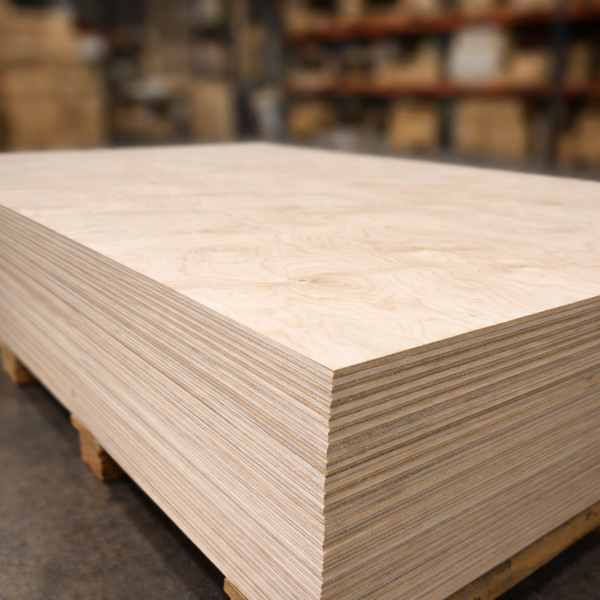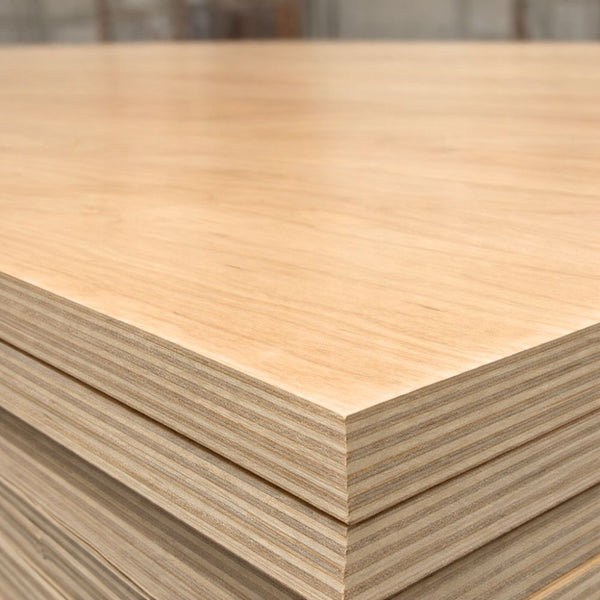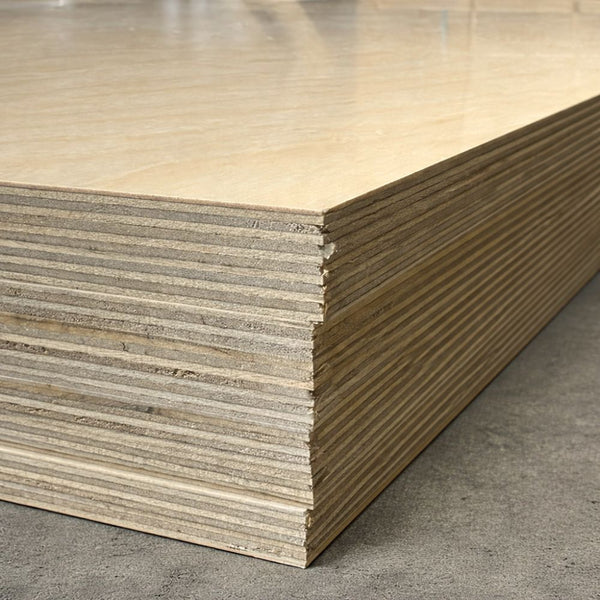

Cherry plywood is a hardwood panel known for its warm tone, smooth grain, and refined appearance. It is widely used in cabinetry, furniture, and architectural millwork where a traditional, high-end look is desired. For a different visible grain, compare white oak plywood veneer cuts and finishes.
Cherry plywood is most commonly available in 4×8 sheets, with typical thicknesses including 1/2″ and 3/4″ for cabinet and furniture applications.
Thicker panels are generally used for doors, end panels, and load-bearing cabinet components, while thinner sheets are used for drawer parts and decorative panels.
Unlike many lighter hardwoods, cherry changes noticeably over time. That natural aging process is part of its appeal, but it also requires planning. Understanding how cherry plywood behaves helps builders and cabinet makers avoid surprises after installation.
Cherry plywood is a hardwood plywood panel with cherry veneer faces bonded to a stable core. It is commonly used for cabinets and furniture and is known for its smooth grain and natural darkening over time.
What Is Cherry Plywood?
Cherry plywood is manufactured using cherry wood veneer on the face and back, combined with a multi-ply wood core, combination core, or MDF core. The face veneer provides the color and grain character, while the core determines strength, flatness, and fastening performance.
Most cherry plywood uses American black cherry veneer. This species is valued for its fine, closed grain and ability to accept clear finishes exceptionally well.
Compared to solid cherry lumber, cherry plywood offers better dimensional stability. This makes it suitable for wide cabinet panels, case sides, shelving, and doors where wood movement must be controlled.
How Cherry Plywood Is Made
Cherry plywood performance depends on both veneer quality and panel construction.
Face Veneer Selection
Cherry veneer is typically sliced rather than rotary-cut to preserve grain clarity. Veneers are graded based on color uniformity, grain pattern, and the presence of natural characteristics such as small pitch pockets or mineral marks.
Higher grades minimize color variation, but natural differences are part of cherry’s character.
Core Construction
Cherry plywood is available with veneer core, MDF core, or combination core. Veneer core panels provide better screw-holding for cabinetry, while MDF core panels offer exceptional flatness for doors and large panels.
Adhesives and Pressing
Panels are bonded using industrial adhesives under controlled heat and pressure. Most cherry plywood is intended for interior use and uses interior-grade adhesives.
Types of Cherry Plywood
| Type | Core | Typical Use |
|---|---|---|
| Cherry Veneer Core | All-wood plies | Cabinet boxes, shelving |
| Cherry MDF Core | MDF center | Doors, flat panels |
| Cherry Combo Core | MDF + veneer layers | Architectural millwork |
Benefits of Cherry Plywood
Cherry plywood is selected primarily for its appearance and finishing qualities.
- Warm, refined color with fine grain
- Smooth surface suitable for clear finishes
- Predictable machining with sharp tooling
- Improved stability compared to solid cherry
- Widely accepted in high-end cabinetry
For builders producing premium interiors, cherry plywood offers a traditional look that remains popular across design trends.
Common Uses of Cherry Plywood
Cherry plywood is most often used in visible, finished interior applications.
- Kitchen and bathroom cabinetry
- Furniture panels and components
- Wall paneling and built-ins
- Office and library casework
- Residential and commercial millwork
Because of its appearance, cherry plywood is typically paired with high-quality hardware and concealed fasteners.
Important Considerations Before Choosing Cherry Plywood
Natural Color Change Over Time
Cherry darkens when exposed to light. This process begins immediately after installation and continues gradually for years. Parts covered by objects or trim may appear lighter when first uncovered.
Color Matching and Layout
Careful panel sequencing is important. Panels from different lots may vary in tone, and layout planning helps maintain a consistent appearance.
Machining and Tear-Out
Cherry machines cleanly but can tear if tools are dull. Sharp blades and proper feed rates are essential.
Interior Use Only
Standard cherry plywood is intended for interior applications. It is not suitable for exterior exposure.
Cherry Plywood vs Other Berta Store Materials
Cherry plywood fills a different role than lighter, more neutral, or more structural plywood panels. It is typically chosen for visible surfaces where color, grain, and long-term appearance matter more than maximum strength or efficiency. For a more varied natural face, compare hickory plywood character and cabinet uses before approving the visible panels.
| Material | Primary Strength | Best Application |
|---|---|---|
| Cherry Plywood | Appearance and natural aging | High-end cabinetry and furniture |
| Maple Plywood | Light color and uniform appearance | Modern cabinetry, painted finishes |
| Baltic Birch Plywood | Strength and uniform core | Cabinet boxes and structural parts |
| Prefinished Plywood | Factory-finished interior surface | Cabinet interiors and shelving |
In practice, these materials are often used together. Cherry plywood is commonly reserved for doors, panels, and visible ends, while maple or Baltic birch handles structure and consistency. Prefinished plywood is frequently used inside cabinet boxes to reduce finishing time.
When paired with quality hinges and drawer slides, cherry plywood supports refined cabinetry systems designed to age gracefully while maintaining long-term functionality.
How Cherry Plywood Compares to Other Common Plywood Types
Cherry plywood is often selected for its appearance and aging characteristics, but it is not interchangeable with other plywood types. Each panel category serves a different purpose, and understanding those differences helps avoid misapplication.
Compared to maple plywood, cherry offers a warmer tone and more traditional look. Maple is lighter, more neutral, and better suited for painted finishes or modern interiors. Cherry, on the other hand, is usually chosen for clear finishes where natural color development is part of the design intent.
When compared to sapele plywood, cherry has a finer, more uniform grain. Sapele provides a deeper reddish-brown color and a more pronounced grain pattern, often used in bold architectural millwork. Cherry tends to feel softer visually and is commonly used in classic cabinetry and residential interiors. For related trade names, review mahogany plywood face-species and grade checks before treating every reddish-brown veneer as the same species.
Against Baltic birch plywood, the difference is structural versus visual. Baltic birch is selected for its uniform core, strength, and clean edges, making it ideal for cabinet boxes and load-bearing components. Cherry plywood is typically reserved for visible surfaces rather than structural elements.
Cherry plywood should not be confused with bendable plywood, which is a specialty substrate designed strictly for curved forms. Bendable plywood provides flexibility but no finished appearance. Cherry plywood, by contrast, is a finished-facing material and is not intended to bend.
Finally, compared to exterior panels like T1-11 plywood or fire resistant plywood, cherry plywood is strictly an interior product. T1-11 and fire-rated panels are chosen for structural or code-driven reasons, while cherry plywood is chosen for aesthetics and finish quality.
In practice, professional builds often combine multiple plywood types. Cherry plywood may be used for doors, panels, or visible ends, while Baltic birch or prefinished plywood handles structure and interiors. Matching the material to its role is what produces durable, high-quality results.
FAQ
Does cherry plywood darken over time?
Yes. Exposure to light causes cherry to deepen in color naturally.
Is cherry plywood good for cabinets?
Yes. It is widely used in high-end cabinetry.
Can cherry plywood be stained?
It can be, but many builders prefer clear finishes to highlight natural color.
Is cherry plywood harder than maple?
No. Maple is harder, but cherry machines more smoothly.
Is cherry plywood suitable for exterior use?
No. It is intended for interior environments only.
Final Thoughts
Cherry plywood is a material chosen for its visual warmth, smooth grain, and ability to develop character over time. It is not a structural panel or a budget option, but it remains a favorite for refined interior work.
When its natural aging and color variation are understood and planned for, cherry plywood delivers long-lasting, professional results that continue to improve with age.