
Berta Store · Structural versus cabinet panels
AdvanTech is not a species of plywood
AdvanTech subflooring is a proprietary engineered strand-based wood panel from Huber Engineered Woods, rather than plywood made from continuous veneer sheets. “AdvanTech plywood” is a common search phrase, but it can blur the distinction between construction and product type.
Compare an exact AdvanTech subfloor panel with an appropriately rated plywood subfloor—not with an unspecified sheet or cabinet-grade decorative plywood. The relevant questions are the floor design, panel rating, moisture conditions and installation requirements.
Is AdvanTech waterproof?
Moisture-resistant does not mean a permanently waterproof finished assembly. Huber describes resin technology and jobsite moisture resistance in its AdvanTech subflooring. That should not be read as permission to use the panel as an exposed outdoor finish, ignore a leak or omit a required wet-area waterproofing system.
Temporary construction wetting, long-term exterior exposure and a bathroom’s finished waterproofing requirements are different conditions. Follow the exact product manual, panel markings, building design and finish-floor requirements. A warranty against a particular form of swelling or sanding work is not an unlimited waterproofing warranty.
The AdvanTech subflooring specification and the separate X-Factor product specification describe different products. Do not attribute X-Factor’s protective surface to every standard AdvanTech panel.
AdvanTech versus plywood subfloor: what to compare
| Decision | AdvanTech subfloor | Structural plywood subfloor |
|---|---|---|
| Construction | Proprietary strand-based engineered panel. | Wood veneers arranged and bonded as a plywood panel. |
| Strength and stiffness | Use the published values and rating for the exact thickness/product. | Use the applicable grade, thickness, rating and design values. |
| Moisture exposure | Check the exact product’s exposure limitations and installation requirements. | Check the actual panel exposure classification; plywood is not one universal moisture class. |
| Panel edges | Match the specified tongue-and-groove product and installation details. | Confirm edge profile and any required edge support. |
| Floor finish | Confirm suitability for the complete finish-floor system. | Confirm underlayment, flatness and finish-system requirements separately. |
| Cost | Compare actual local material, adhesive, labor and handling costs. | Compare the same completed floor scope, not just a cheaper sheet label. |
Huber publishes product-specific performance information; that is not evidence that every AdvanTech thickness exceeds every plywood product in every test. A thicker or differently rated plywood panel is not a controlled comparison. Use the exact product documentation when a structural decision depends on the result.
For panel construction rather than brand selection, see OSB versus plywood. For the role of the structural layer, read why plywood is used in subfloor systems.
Match thickness and rating to the floor—not to a rule of thumb
Record the joist or support spacing, design loads, panel orientation, edge support and the finished flooring assembly. Select the product category and rating that satisfy that design. A nominal “3/4-inch” label alone does not supply an installation schedule.
Huber lists several AdvanTech subfloor thickness categories and distinguishes them in its specifications. Read the net coverage, edge profile and applicable rating for the selected item; a tongue-and-groove panel’s effective face coverage can differ from its nominal sheet description.
For dimension terminology, use the actual-versus-nominal plywood thickness chart. For construction-panel labels, see CDX plywood and its use limitations. Neither reference replaces the engineer’s floor design or the manufacturer’s installation manual.
Installation and exposure checks that matter more than the name
Follow the selected manufacturer’s directions for storage, orientation, panel spacing, adhesive, fastener type and fastening pattern. Do not combine a gap from one system with an adhesive or nail schedule from another without approval. Fasteners, framing and panel attachment operate as a complete assembly.
Check level and support before installation, and inspect the completed substrate before flooring is applied. Squeaks or movement can result from the assembly, not only the sheet. An adhesive warranty may depend on the named products and installation conditions; confirm the actual terms rather than assuming a brand name covers every installation.
Roof and wall sheathing are also separate applications. Huber has a dedicated AdvanTech sheathing range. Do not infer that a subfloor SKU is the right roof panel or that all products in the family share the same surface treatment.
Choose a different panel for the cabinet portion of the project
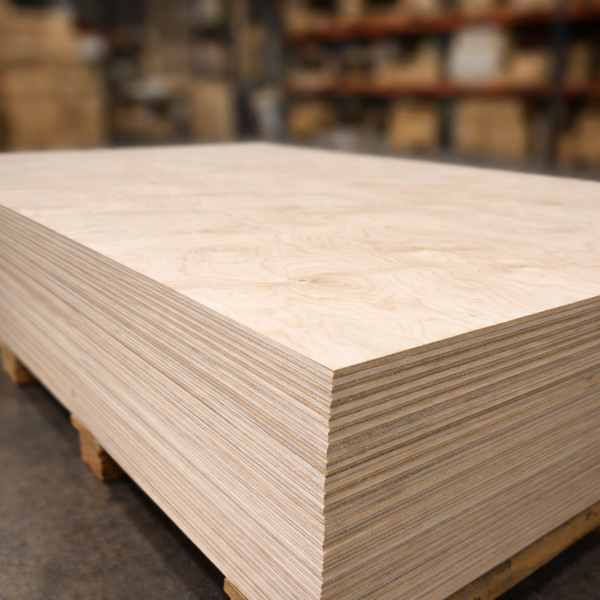
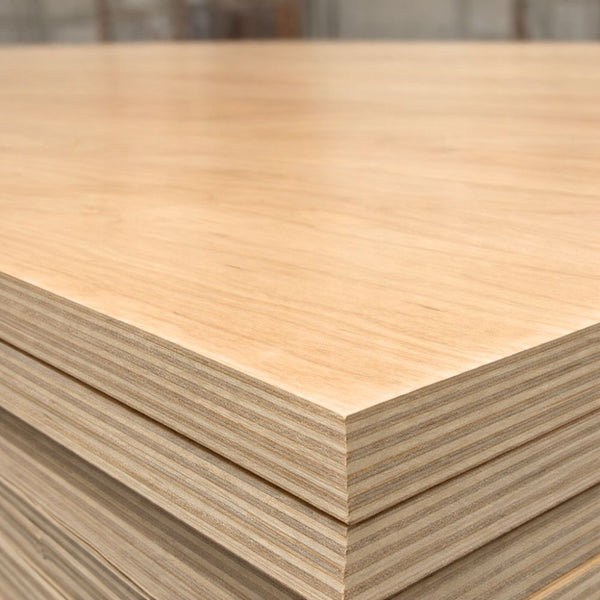
Berta’s reviewed catalog did not include AdvanTech. The products below are for suitable indoor cabinet and furniture work, not substitutes for a specified structural subfloor, roof deck or waterproofing assembly.

Prefinished Cabinet Plywood
Compare factory-finished birch and white melamine options for cabinet interiors after the floor system has been specified separately.
View interior cabinet panels
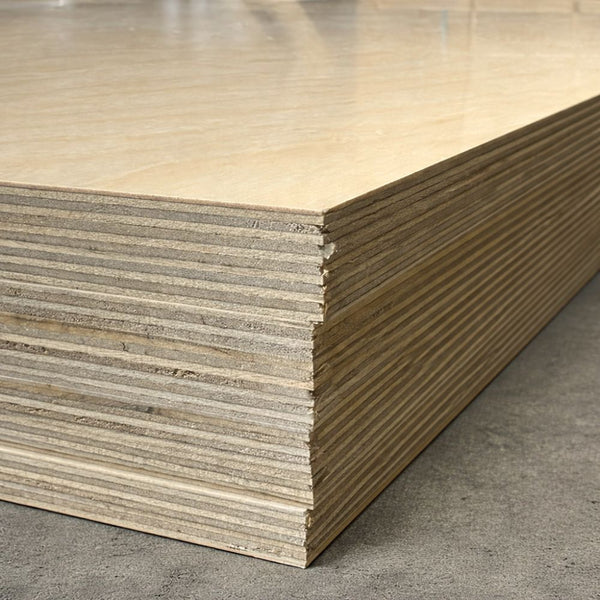
Unfinished Baltic Birch
Review for cabinet joints, drawers and furniture where the selected construction is appropriate. No subfloor compatibility is implied.
Compare Baltic Birch cabinet plywoodFor that separate material choice, use the cabinet plywood guide.
Frequently asked questions
Is AdvanTech plywood or OSB?
It is a proprietary strand-based engineered wood panel in the OSB category, not continuous-veneer plywood. The specific product has its own published properties and installation requirements.
Can AdvanTech replace plywood in every application?
No. Match the exact subfloor or sheathing product to the structural design and environment. Cabinet appearance and machining requirements are a separate material-selection problem.
Can I leave it permanently exposed because it resists moisture?
Do not infer permanent exterior suitability from jobsite moisture resistance. Follow the product’s exposure limitations and the complete weather-protection design.
Primary references are Huber’s product specifications linked above. No independent side-by-side material test or universal cost advantage is claimed.