
Materials for curved cabinetry
What is bendable plywood?
Bendable plywood is specialty plywood made to flex primarily in one direction for curved cabinet skins, column wraps and furniture panels. Also called bending plywood, flexible plywood or bendy plywood, it must be selected by construction, bend direction and the supplier’s radius limits—not thickness alone.
Plan the curved surface and the supporting cabinet separately. A flexible skin creates the shape; the cabinet box, ribs, joints and finished assembly must provide the support required by the design.
How bendable plywood works
Its veneer arrangement favors bending in one direction instead of the balanced stiffness expected from ordinary cabinet plywood. Construction varies: some flexible panels use a thin inner veneer between thicker outer veneers. Do not assume every product uses the same ply count, species or adhesive.
Standard plywood can also be formed into curves in suitable designs; it is not automatically interchangeable with specialty bending plywood. A thin sheet that flexes in your hands is not proof that it will survive the finished project’s radius.
Column bend vs. barrel bend: check the sheet direction
Before ordering flexible plywood sheets, identify which dimension follows the curve and which runs along the straight axis. Rotating a cut layout cannot change the sheet’s manufactured bending direction.
On a phone, swipe the tables sideways to see every column.
| Supplier label | Dimension that curves | Straight-axis dimension |
|---|---|---|
| 4×8 long-grain / column bend | The 4-foot dimension | The 8-foot dimension |
| 8×4 cross-grain / barrel bend | The 8-foot dimension | The 4-foot dimension |
These labels describe orientation, not two different sheet areas. See the manufacturer’s bend-direction examples. Long-grain and cross-grain terminology can differ between suppliers: request a marked bending arrow or diagram rather than relying on the name alone.
For layout and panel dimensions, compare our plywood sheet size guide. Allow for joints and trimming; a sheet’s width does not guarantee it will wrap a complete circle at your chosen radius.
Bendable plywood thickness: published examples
There is no universal flexible-plywood thickness range. The examples below show why the product name and construction must accompany the measurement.
| Product / supplier | Published thicknesses | Ordering check |
|---|---|---|
| FEACO bending board | 8 mm; 3.0, 5.2 and 9.0 mm on request | Confirm thickness availability and column/barrel orientation. |
| Columbia Radius | 3/8 inch; other thicknesses by inquiry | Confirm the local mill’s current construction and specification. |
Sources: FEACO bending-board specifications and Columbia Radius specifications. An inch label and a nearby metric size are not necessarily identical. See nominal vs. actual plywood thickness when planning joints and finished dimensions.
What is the minimum bend radius?
Use the minimum radius published for the exact panel, thickness and direction. Do not transfer one manufacturer’s radius to another product. Moisture condition, veneer construction, added layers and the finishing system can affect the result.
Check the complete assembly: confirm whether the stated radius refers to the inside face or another reference surface. Test the intended panel, adhesive and finish on a representative form. Adding layers does not make an individual sheet safe to bend below its own limit.
Where it works—and where it fails
Suitable projects include curved island ends, reception-desk fronts, decorative column covers and rounded furniture skins. For a cabinet with a curved end, think in three parts: the shaped skin, the supporting carcass or ribs, and the finish.
Common mistakes are ordering the wrong bend direction, forcing an undersized radius, or treating a decorative skin as a load-rated panel. A laminated shell may become self-supporting in a designed assembly, but that does not give it a structural rating. Follow the product specification and the project’s support requirements.
Choose materials for the flat portions with our guide to plywood for cabinet boxes and interiors.
Bendable plywood vs. standard plywood, kerf bending and MDF
| Material / method | Project role | Important limitation |
|---|---|---|
| Specialty bending plywood | A shaped wood-veneer substrate or skin | Direction, radius and support are product-specific. |
| Standard cabinet plywood | Flat boxes, shelves and supporting parts | Do not treat ordinary panels as bending-plywood equivalents. |
| Kerf-bent plywood | A panel made more flexible by cutting grooves | The cuts change its section; the original uncut panel’s capacity cannot simply be assumed. |
| Purpose-made flexible MDF panels | An alternative substrate for curved work | Not the same as ordinary flat MDF; follow the specific backing, adhesive and surfacing instructions. |
Engineered grooved panels and shop-cut kerfs are not interchangeable systems. Kerfkore’s fabrication guidance illustrates why core, backing and finish sequence must be checked for each product.
How to build a curved cabinet panel
This is a planning sequence for a supported interior panel, not a substitute for the panel and adhesive manufacturers’ instructions.
- Build the form or frame. Establish the required curve, consistent supports and finished dimensions, including the skin and decorative surface.
- Confirm the bending direction. Mark the sheet before cutting and condition it as the supplier requires.
- Dry-fit the assembly. Check the curve, seams and clamping access. Stop if the panel cracks, separates or needs excessive force.
- Prepare and bond. Use an adhesive compatible with the panel, substrate and service conditions. Follow its surface-preparation and working-time requirements.
- Clamp progressively. Use suitable cauls, straps, clamps or a specified pressing system to hold the curve without distorting the surface. Maintain the required pressure through curing.
- Trim and finish in the specified sequence. Apply veneer, laminate or an approved paint system as required. Some engineered panels are surfaced while flat; others are surfaced after forming.
For bonding principles, see WEST SYSTEM’s laminating and clamping guidance. Its epoxy instructions do not replace the directions for a different adhesive.
Complete the cabinet build
Plywood for the flat parts of your curved project
Use the appropriate bending material for the radius skin, then select cabinet plywood for the rest of the assembly. The Berta Store products below are flat companion panels—not bendable-plywood products.
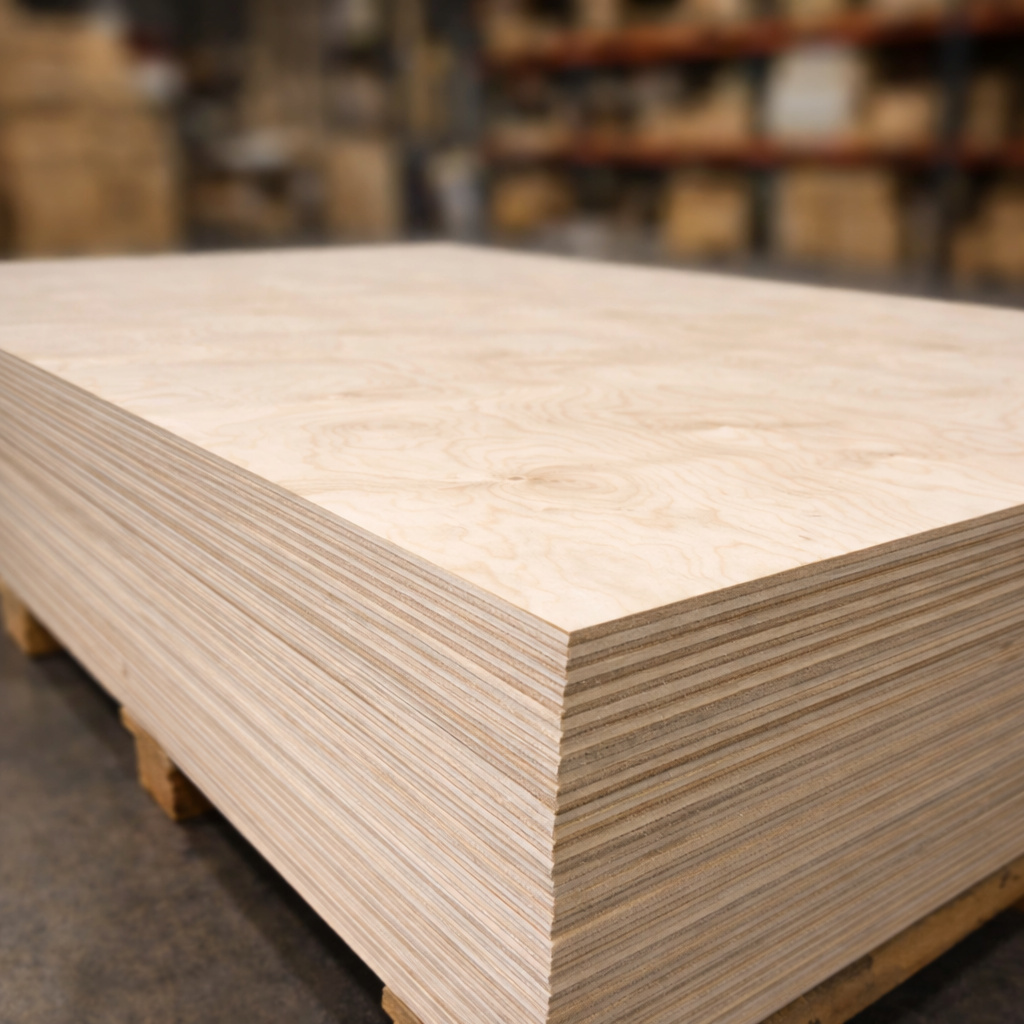
Baltic Birch BB/BB Plywood
Unfinished plywood for flat cabinet components and shaped supporting parts. Select thickness, spans and joinery for the assembly’s requirements.
View Baltic Birch BB/BB
Prefinished Cabinet Plywood
For flat cabinet interiors and shelves. The product page offers birch and white melamine finishes; the image shows the birch option.
View Prefinished Plywood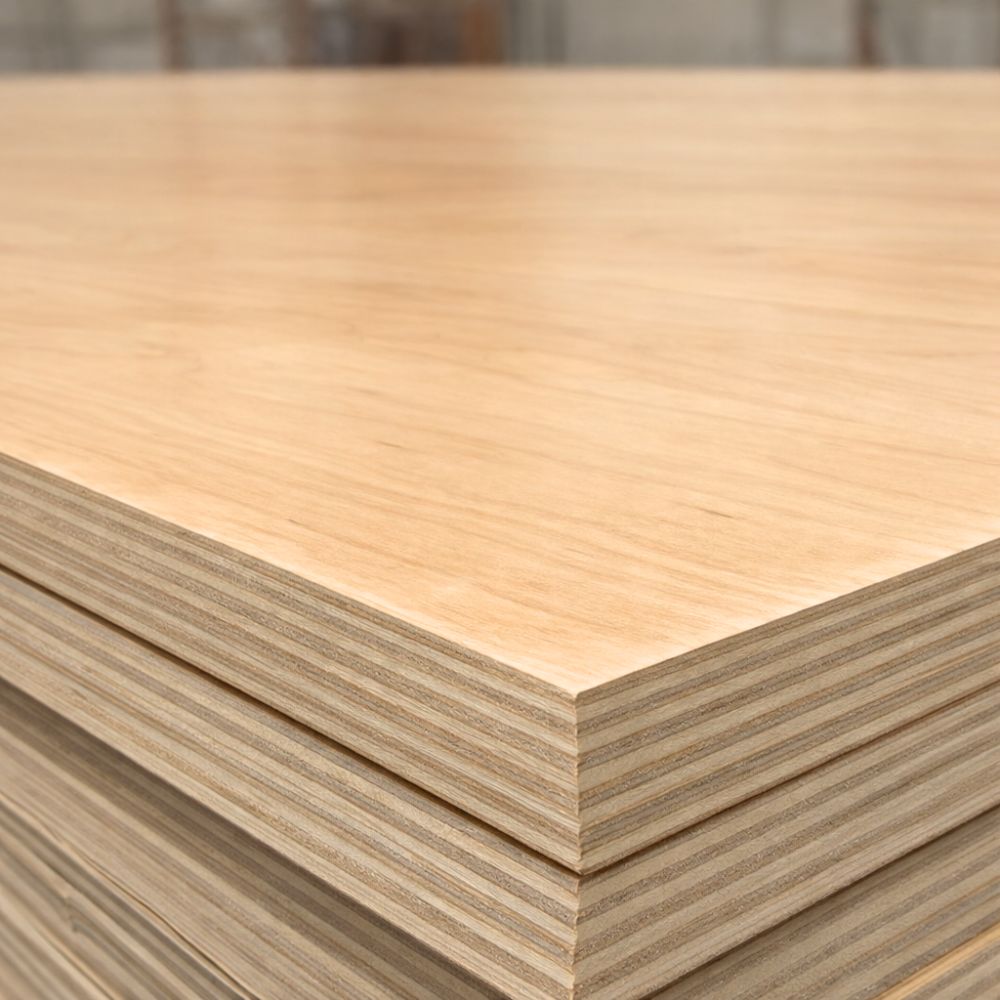
Prefinished Maple Plywood
A finished maple surface for visible flat cabinet and furniture panels. This is a rigid sheet, not a veneer wrap for a curved skin.
View Maple PlywoodCheck each product page for current options, availability and ordering details.
Bendable plywood FAQ
Can you buy bendable plywood in 4×8 sheets?
Yes, suppliers list this nominal format. Confirm orientation: 4×8 and 8×4 may identify different bend directions rather than different amounts of material.
Does bending plywood need water or steam?
Not necessarily. Products such as Multiflex are intended for cold forming without water or heat. Follow the exact product instructions; do not assume soaking will safely tighten the permitted radius. See the Multiflex technical overview.
Will the sheet stay curved by itself?
Do not assume an unbonded sheet will retain the final shape. A supported installation or a properly designed laminated assembly holds the curve. Self-supporting does not mean approved for a load-bearing building application.
Can bendable plywood be used outdoors?
Only when the exact product and complete assembly are specified for that exposure. Columbia Radius, for example, is not designed for exterior use. A decorative finish alone is not evidence of an exterior rating.
Where should I buy bending plywood?
Look for a specialist plywood supplier that can confirm construction, thickness, bend direction, minimum radius and exposure suitability. Do not order ordinary cabinet plywood as a substitute solely because it is thin. The Berta Store cards above are for the flat parts of the project.