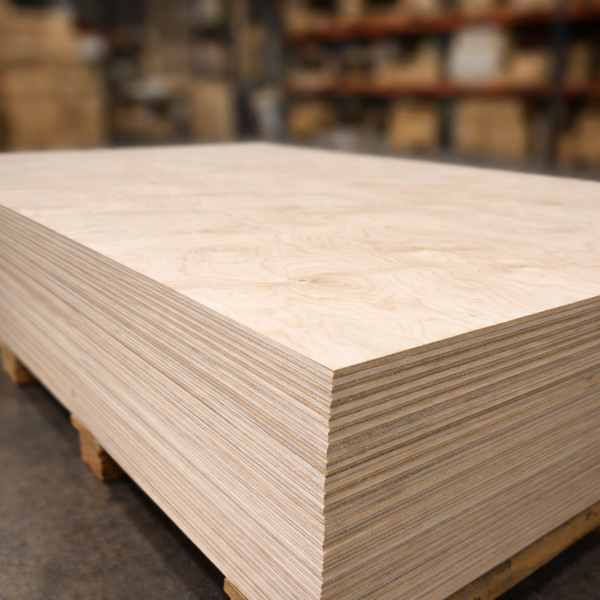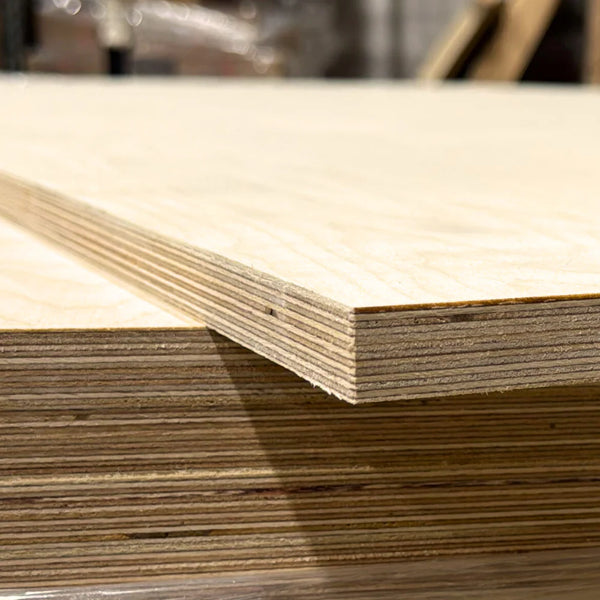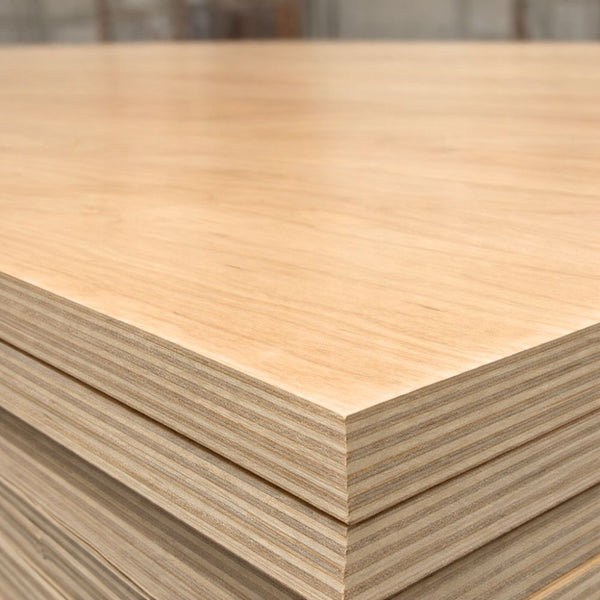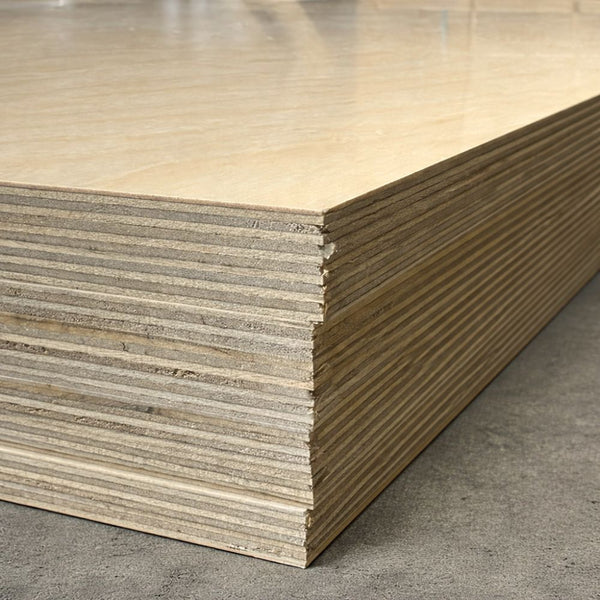

Plywood is often seen as the default choice for cabinets, but it’s not the only material professionals rely on. In many shops, MDF is still used daily—not as a cheaper substitute, but as a deliberate material choice for specific applications.
The difference comes down to how materials behave in real conditions. Cabinet makers choose MDF or plywood based on finish quality, machining consistency, and how the material performs once installed—not just on strength alone.
What MDF Is Actually Used For in Cabinet Work
MDF (medium-density fiberboard) is an engineered wood product made from fine wood fibers bonded under pressure. It behaves differently than plywood, especially in finishing and machining.
In professional cabinet shops, MDF is commonly used for:
- Painted cabinet doors and panels
- Decorative wall panels and feature boards
- Closet systems and interior components
- Machined or routed designs where consistency is critical
These are applications where surface quality matters more than structural strength.
Why MDF Is Still Preferred in Certain Applications
Perfect surface for paint
MDF has no grain pattern, which means paint finishes come out smooth and uniform without extra preparation. Plywood requires more sanding and sealing to achieve the same result.
Consistent core with no voids
Unlike plywood, MDF has no internal gaps or voids. This makes it ideal for CNC machining, routing, and detailed cuts where consistency is required.
Dimensional stability
MDF does not expand and contract as much as solid wood or some plywood panels, making it more predictable in controlled interior environments.
Where MDF Performs Better Than Plywood
| Application | Better Material | Reason |
|---|---|---|
| Painted cabinet doors | MDF | Smooth, grain-free surface |
| CNC machining | MDF | No voids, consistent cuts |
| Decorative panels | MDF | Clean finish without grain variation |
| Structural cabinet boxes | Plywood | Higher strength and screw holding |
Where MDF Fails (And Plywood Is Better)
MDF is not a universal solution. It has clear limitations.
- Moisture exposure: MDF swells quickly when exposed to water
- Screw holding: weaker than plywood, especially on edges
- Heavy structural use: not ideal for load-bearing cabinet parts
This is why cabinet makers rarely use MDF for full cabinet boxes or high-load applications.
MDF vs Plywood: Real-World Decision
In practice, most professionals don’t choose one material over the other—they use both.
- MDF for painted doors and visible surfaces
- Plywood for cabinet structure and durability
This combination balances finish quality and strength in real projects.
Where Premium MDF Products Fit
Not all MDF is the same. Higher-end products combine MDF core with finished surfaces to reduce labor.
For example, builders working on modern interiors may use premium acrylic MDF panels, which come with a high-gloss or matte surface already applied.
This eliminates the need for painting and provides a consistent finish across all panels.
Common Buyer Mistakes
- Using MDF in moisture-prone areas
- Expecting MDF to replace plywood structurally
- Choosing plywood for painted surfaces without proper prep
- Assuming MDF is only a budget material
FAQ
Is MDF cheaper than plywood?
Not always. Standard MDF can be cheaper, but higher-end MDF panels can cost the same or more than plywood. Professionals choose it for finish quality and consistency, not just price.
Is MDF good for cabinets?
Yes, for doors and panels, but not for full structural cabinet boxes.
Can MDF be painted?
Yes, it is one of the best materials for smooth painted finishes.
Why not use MDF everywhere?
Because it lacks moisture resistance and structural strength compared to plywood.
Final Thoughts
MDF continues to be used by cabinet makers because it solves problems that plywood does not. It’s not a replacement—it’s a complementary material.
Choosing between MDF and plywood depends on the application. Understanding where each material performs best leads to better builds, cleaner finishes, and fewer issues over time.