
Quick Answer
- Cabinet boxes: Plywood
- Painted cabinet doors: MDF
- Long shelves: Plywood
- Sink bases & bathrooms: Plywood
- Decorative painted panels: MDF
If you build cabinets long enough, you learn a simple rule: MDF and plywood are not “better or worse.” They fail in different ways. The right pick depends on where the panel lives — inside a dry kitchen wall cabinet is one thing, under a sink is another.
This breakdown is written for cabinet boxes, doors, shelves, and painted vs wood-grain finishes. The goal is to help you choose with fewer surprises after install.
What matters most in real cabinet work
Most “MDF vs plywood” articles stop at generic pros and cons. In cabinet construction, you care about four things:
- Moisture behavior: what happens when the panel sees humidity, a leak, or wet mopping.
- Screw-holding: especially hinges, drawer slide screws, and confirmat/Euro fasteners.
- Edge durability: corners, toe kicks, and exposed edges that get bumped.
- Finish requirements: painted doors vs stain/clear coat vs prefinished interiors.
Quick decision: use MDF here, plywood there
If you want the short answer for typical cabinet builds:
- Cabinet boxes: choose plywood most of the time.
- Painted doors and panels: MDF is often the cleanest finish.
- Long shelves / spans: plywood performs better with less sag.
- Wet zones (sink base, bath vanities): plywood is the safer default.
Side-by-side comparison (cabinet-focused)
| Factor | MDF | Cabinet-grade plywood |
|---|---|---|
| Paint finish | Excellent (no grain telegraphing) | Good, but needs more prep for a perfect paint |
| Moisture tolerance | Low unless moisture-rated; edges are the weak point | Better overall (especially good cores and proper grade) |
| Screw holding | Fair; pre-drill helps; can strip if over-tightened | Strong; better long-term for hinges and slides |
| Shelf sag | Can sag on long spans | Typically better stiffness-to-weight |
| Weight | Heavier | Usually lighter for similar thickness |
| Edges | Needs sealing/edgebanding; dents easier | Exposed plies need edgebanding for a finished look |
Where MDF is the right choice in cabinets
1) Painted doors and drawer fronts
MDF shines when the finish is paint. If you want a dead-smooth shaker door without wood grain telegraphing through the paint, MDF is hard to beat. It machines cleanly for profiles, and it stays consistent across panels.
2) Decorative panels and end panels
For panels that are painted and not living in a wet zone, MDF gives you the cleanest surface. The key is protecting edges — most MDF problems start at the edges.
3) High-gloss modern looks (pre-finished MDF)
If you’re building modern kitchens and want a factory-smooth surface without spraying, pre-finished options like Acrylic MDF can be a practical shortcut — just treat it like a finish product and protect it during fabrication.
Where plywood is the safer choice
1) Cabinet boxes (especially sink bases)
Cabinet boxes get racked, transported, screwed into, leveled, and then live for years. Plywood’s screw-holding and moisture tolerance make it the default for boxes. If you’ve ever repaired a swollen sink base, you already know why.
Plywood vs MDF for Cabinet Boxes
For cabinet boxes, plywood is usually the better choice because cabinet boxes need to stay square, hold screws, support shelves, carry drawer slides, and tolerate everyday kitchen or bathroom moisture. Even small leaks, humidity changes, or wet mopping can create problems when the wrong panel is used.
MDF cabinet boxes can work in dry, low-impact applications, especially when the panels are fully sealed and not exposed to water. However, MDF is heavier than plywood and less forgiving if screws are over-tightened, if cabinet hardware is adjusted repeatedly, or if exposed edges absorb moisture.
For sink bases, bathroom vanities, laundry rooms, pantry cabinets, garage cabinets, and contractor-grade cabinet builds, cabinet-grade plywood is usually the safer default. It gives better screw-holding strength, better stiffness, and better long-term durability for the cabinet structure.
- Use plywood for cabinet boxes, sink bases, drawer slide mounting, adjustable shelves, and structural cabinet parts.
- Use MDF only for dry cabinet boxes where smooth paint finish matters more than strength or moisture resistance.
- Use both materials when you want plywood strength for the box and MDF smoothness for painted doors or drawer fronts.
Building cabinet boxes? Use our Cabinet Box Estimator or Plywood Cut List Calculator before ordering sheets.
2) Shelves and wide spans
Long shelves punish weak panels. Even when MDF starts flat, it can creep over time under constant load. Plywood typically holds up better for span and stiffness.
3) Bathrooms, laundry rooms, and any “maybe wet” environment
Even with good ventilation, these rooms swing humidity. Plywood is simply more forgiving.
Plywood vs MDF for Shelves
For cabinet shelves, plywood is usually the safer choice when the shelf is wide, adjustable, or expected to hold heavy items. MDF starts flat and paints well, but it can sag over time under constant load, especially on longer spans.
MDF can still work for short painted shelves, display shelves, and low-load storage if the edges are sealed and the shelf is properly supported. For kitchen cabinets, pantry cabinets, closets, garage storage, and wide built-ins, cabinet-grade plywood is usually the better default.
- Use plywood for long shelves, heavy dishes, pantry goods, books, and adjustable shelf-pin systems.
- Use MDF for short painted shelves where smooth finish matters more than stiffness.
- Add edge banding or a solid front lip to improve appearance and stiffness.
The cabinet-builder detail most people miss: screws, hinges, and drawer slides
In real cabinets, performance often comes down to fasteners.
- Hinges: MDF can hold hinge screws, but you must pre-drill and avoid over-tightening. If you expect repeated adjustments or heavy doors, plywood is more forgiving. See cabinet hinge options here: hinges.
- Drawer slides: Slide screws and side loads are a long-term stress test. Plywood side panels generally keep their bite longer. See slide options here: drawer slides.
Choosing by cabinet part (what pros actually do)
A lot of successful builds use a hybrid approach:
- Boxes: plywood
- Doors (painted): MDF
- Door frames (stained): hardwood / hardwood plywood face
- Shelves: plywood for longer spans
- Back panels: depends on design; plywood is stiffer, MDF is flat but heavier
3/4 MDF vs 3/4 Plywood for Cabinets
In cabinet work, 3/4 MDF gives a very flat, smooth surface for paint, but it is heavier and less forgiving around screws and moisture. 3/4 cabinet-grade plywood is usually the better choice for cabinet boxes, shelves, and parts that need stronger fastening.
If the part will be painted and is not structural, MDF may be the cleaner finish. If the part carries weight, holds hinges or drawer slides, or sits near moisture, plywood is the safer option.
MDF vs Plywood Cost for Cabinets
When comparing MDF vs plywood cost, many buyers focus only on the sheet price. In reality, the total cabinet cost also includes finishing, edge treatment, hardware installation, labor, durability, and long-term maintenance.
MDF is often selected for painted cabinet doors and decorative panels because it provides a smooth surface that requires less preparation before painting. For projects where appearance is the priority and structural strength is less critical, MDF can be a cost-effective solution.
Plywood typically costs more per sheet, but it often delivers better long-term value for cabinet boxes, shelves, sink bases, and other structural components. Stronger screw-holding, improved moisture resistance, and reduced shelf sag can help prevent repairs and replacements later.
For many professional cabinet shops, the most cost-effective approach is not choosing one material exclusively. Instead, plywood is used where strength matters, while MDF is used where a smooth painted finish is the priority.
| Cabinet Factor | Better Choice | Why |
|---|---|---|
| Cabinet boxes | Plywood | Better screw holding, stiffness, and moisture tolerance. |
| Painted cabinet doors | MDF | Smoother paint finish with no wood grain telegraphing. |
| Long shelves | Plywood | Better stiffness and less sag risk on wider spans. |
| Sink bases | Plywood | More forgiving around leaks, humidity, and wet mopping. |
| High-gloss modern panels | Acrylic MDF | Factory-smooth surface for modern cabinet faces. |
| Drawer slide mounting | Plywood | Better long-term screw bite for drawer slide screws. |
| Budget painted panels | MDF | Smooth and cost-effective for non-structural painted parts. |
| Cabinet interiors | Prefinished plywood | Clean factory-finished surface that saves finishing time. |
| Strong drawers and shop cabinets | Baltic birch plywood | Consistent multi-ply core for strength, machining, and durability. |
Before ordering material, use the Plywood & MDF Sheet Calculator to estimate sheet requirements and compare total project costs more accurately.
MDF vs plywood vs Baltic birch vs prefinished plywood
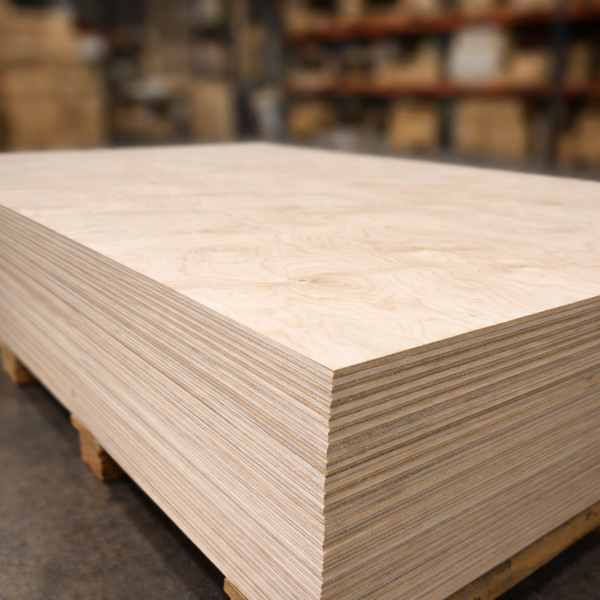
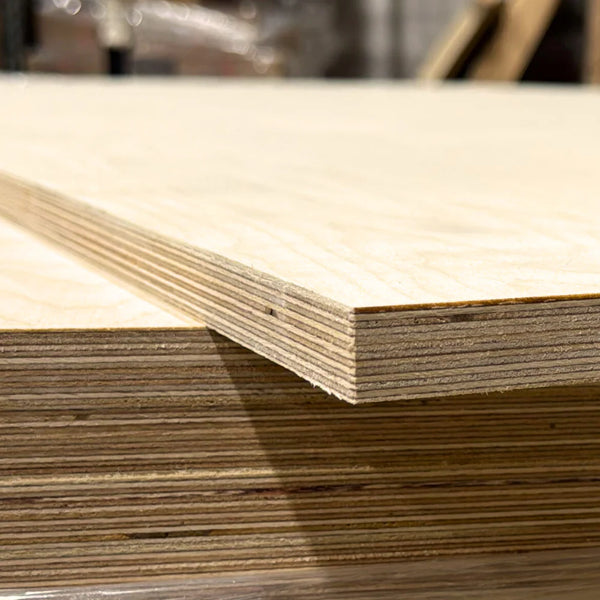
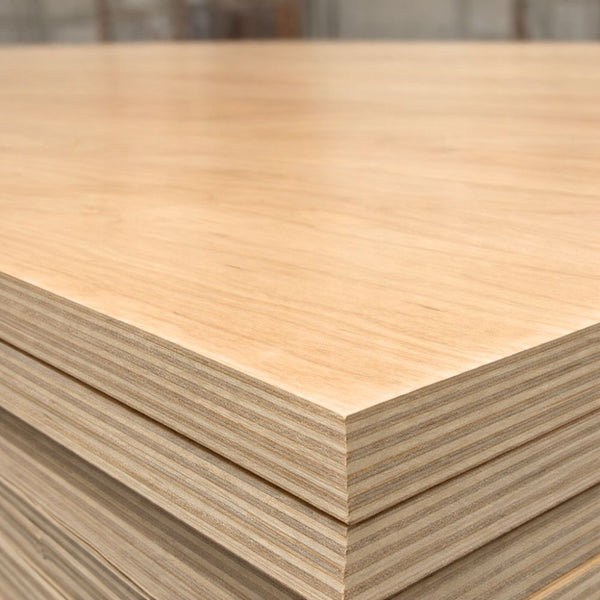
Not all plywood performs the same way. When comparing MDF vs plywood, it's important to understand that cabinet-grade plywood, Baltic birch plywood, and prefinished plywood each serve different purposes in cabinet construction.
MDF remains one of the best choices for painted cabinet doors and decorative panels because of its smooth, uniform surface. However, when strength, screw-holding power, shelf stiffness, and durability matter, plywood products usually have the advantage.
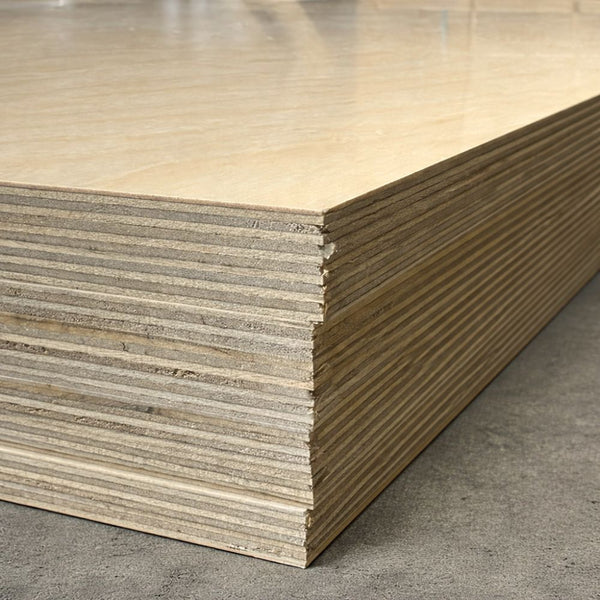
Among plywood options, Baltic birch is known for its multi-ply construction and consistent core, while prefinished plywood adds a factory-finished surface that reduces finishing labor for cabinet interiors and built-ins.
- Baltic birch plywood: If you want a strong, consistent multi-ply panel for boxes, drawers, or shop-grade cabinetry, Baltic birch is often a step up in core quality. Explore: Baltic birch plywood.
- Prefinished plywood: If the interior needs to look clean without painting (closets, cabinet interiors, built-ins), prefinished sheets can save a lot of finishing time. Explore: prefinished plywood.
- Standard cabinet-grade plywood: A solid default for cabinet boxes, shelves, and general cabinetry when you choose the right grade and protect exposed edges.
For most cabinet projects, the choice is not MDF or plywood. The best results often come from using plywood where strength is required and MDF where a flawless painted finish is the priority.
Important considerations before you choose
Moisture exposure is not theoretical
If a sink base has even a small chance of leaks, MDF becomes a risk product unless it’s moisture-rated and sealed properly. Plywood is not waterproof, but it tends to fail slower and more predictably.
Edge treatment matters
MDF edges need sealing or edgebanding. Plywood edges usually need edgebanding for appearance and durability. Unprotected edges are where cabinets get ugly fast.
Plan your cut list first
Waste and bad sheet planning is where cabinet jobs bleed money. If you want a quick estimate for sheet usage, use the Plywood & MDF Sheet Calculator before you order.
FAQ
Is MDF okay for kitchen cabinets?
Yes, for painted doors and panels in normal dry conditions. For sink bases and wet zones, plywood is usually the safer choice.
Does MDF hold screws for hinges?
It can, but it’s easier to strip than plywood. Pre-drill, don’t over-tighten, and consider plywood when you expect heavy doors or repeated adjustments.
What’s better for cabinet boxes: MDF or plywood?
Plywood is the default for boxes because of screw holding, stiffness, and moisture tolerance.
What about painted cabinet boxes?
You can paint plywood boxes. You’ll usually need more surface prep than MDF, but you gain strength and durability.
Is Baltic birch overkill for cabinets?
Not if you care about a consistent core and strong joinery, especially for drawers and shop-grade cabinet construction. It’s a material choice, not a status symbol.
Which is better for kitchen cabinets, plywood or MDF?
Plywood is usually better for cabinet boxes, sink bases, shelves, and structural parts. MDF is usually better for smooth painted cabinet doors and drawer fronts.
Is MDF stronger than plywood?
For most cabinet construction, plywood is stronger and more forgiving for screws, shelves, and box construction. MDF is smoother and flatter for painted surfaces, but it is not usually the better structural material.
Is MDF good for shelves?
MDF can work for short painted shelves with good support, but plywood is usually better for long shelves or shelves that need to hold heavy items.
Is MDF heavier than plywood?
Yes, MDF is usually heavier than plywood at a similar thickness, which matters for large cabinet boxes, doors, and wall-mounted builds.
Is MDF the same as plywood?
No. MDF is made from wood fibers and resin pressed into a smooth panel. Plywood is made from layers of wood veneer bonded together with alternating grain direction.
Final thoughts
MDF and plywood both belong in cabinet work — just not in the same places. If you want smooth painted doors, MDF is often the cleanest path. If you want cabinet boxes that stay tight, hold screws, and tolerate real life, plywood is usually the safer decision. Choose by cabinet part, protect edges, and plan for moisture like it will happen — because eventually it does.