
On the surface, maple plywood and Baltic birch look like interchangeable materials. Both are used in cabinets, furniture, and millwork, and both are considered “cabinet-grade” options. But once you start cutting, assembling, and finishing, the differences show up quickly.
Contractors and cabinet makers don’t choose between these materials based on species alone. They choose based on how the panel behaves—how it machines, how the edges look, how consistent the sheets are, and how the finish turns out.
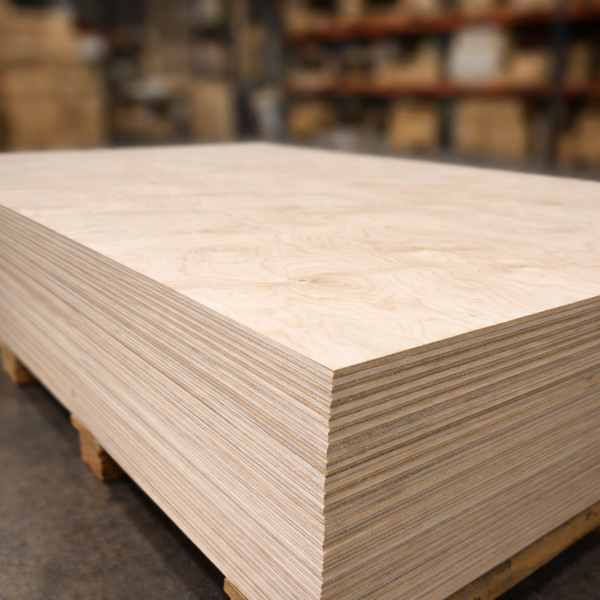
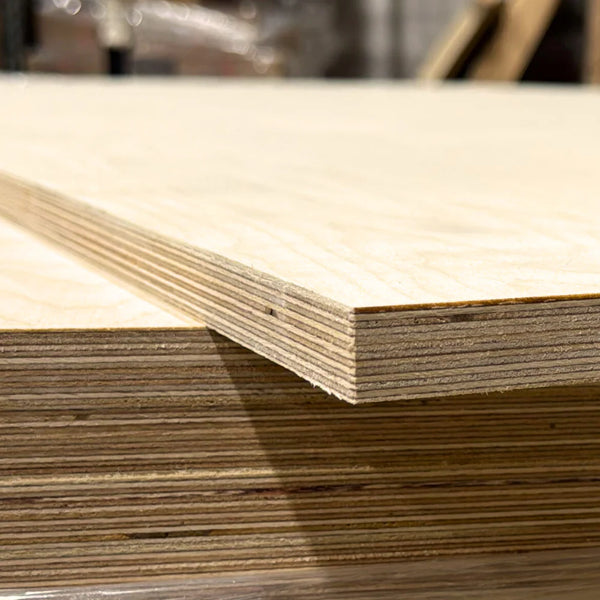
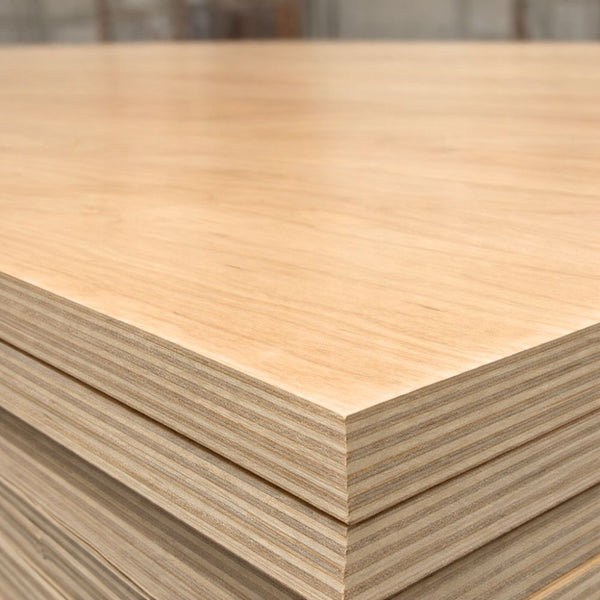
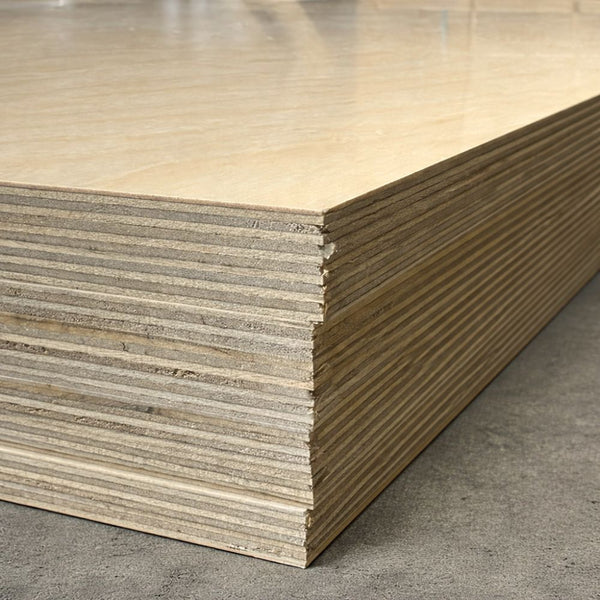
Maple plywood is usually a hardwood veneer panel with a veneer or combination core, optimized for surface finish. Baltic birch uses a multi-ply all-birch core with more layers, providing stronger edges and better consistency for joinery and exposed-edge work.
How Professionals Compare Maple Plywood vs Baltic Birch
The decision is not about which material is “better.” It’s about which one matches the job.
| Factor | Maple Plywood | Baltic Birch |
|---|---|---|
| Core construction | Veneer or combination core | Multi-ply all-birch core |
| Face quality | Smooth, consistent veneer | More variation, less uniform surface |
| Edge appearance | Layer variation, often requires edge banding | Uniform layered edge, suitable for exposed edges |
| Joinery performance | Good, but depends on core quality | Very consistent and strong |
| Best use | Cabinet boxes, painted furniture | Drawer boxes, exposed-edge cabinetry |
---
Where Maple Plywood Performs Better
Painted cabinetry
Maple plywood is often chosen for painted cabinets because of its smoother face veneer. It produces a more uniform finish with less visible grain variation.
Cabinet boxes with covered edges
When edges are banded or hidden, the face quality becomes more important than the core. This is where maple plywood makes sense.
For cabinet interiors, many builders also buy prefinished plywood 4x8 to avoid finishing raw surfaces.
---
Where Baltic Birch Performs Better
Drawer boxes
Baltic birch is widely used for drawer construction because of its multi-ply core. The edges are strong, consistent, and visually clean.
Exposed-edge cabinetry
When the plywood edge is part of the design, Baltic birch provides a more uniform and finished look without requiring edge banding.
This is why many contractors browse Baltic birch plywood sheets for cabinet and furniture builds where edge quality matters.
---
Key Differences That Show Up During Installation
- Cutting: Baltic birch produces cleaner edges with less tear-out
- Assembly: More consistent joinery with multi-ply construction
- Finishing: Maple provides a smoother, more uniform surface
- Sheet consistency: Baltic birch is typically more predictable across batches
These differences don’t always show in the store—but they show during the build.
---
When to Choose Maple Plywood vs Baltic Birch
| Project Type | Better Choice | Reason |
|---|---|---|
| Painted kitchen cabinets | Maple plywood | Smoother face veneer for paint finish |
| Drawer boxes | Baltic birch | Stronger edges and better joinery |
| Closets and built-ins | Depends | Face vs edge visibility determines choice |
| Exposed plywood furniture | Baltic birch | Edge becomes part of design |
---
Common Buyer Mistakes
- Choosing maple plywood expecting strong exposed edges
- Using Baltic birch where a smooth painted surface is required
- Ignoring core construction and focusing only on species
- Assuming all “cabinet-grade plywood” performs the same
---
Where Contractors Source These Materials
Material consistency matters more than brand labels. That’s why many professionals compare actual product specs instead of generic names and often browse Berta Store listings when selecting cabinet and furniture plywood.
Buyers searching for berta plywood are typically looking for specific panel construction, not just species names.
---
FAQ
Is maple plywood better than Baltic birch?
No. Maple plywood is better for smooth finishes, while Baltic birch is better for edges and joinery.
What is best for drawer boxes?
Baltic birch is the preferred choice due to its multi-ply construction and edge strength.
What is best for painted cabinets?
Maple plywood is commonly used because it provides a smoother and more consistent paint surface.
Can you use Baltic birch for cabinets?
Yes, especially for exposed-edge designs or high-durability applications.
Final Thoughts
Maple plywood and Baltic birch are both used in cabinet and furniture work, but they solve different problems. One is chosen for surface quality, the other for structural consistency and edge performance.
The right choice depends on how the panel will be used—not what it’s called. Contractors who match material to application avoid rework and build assemblies that perform consistently across the entire project.