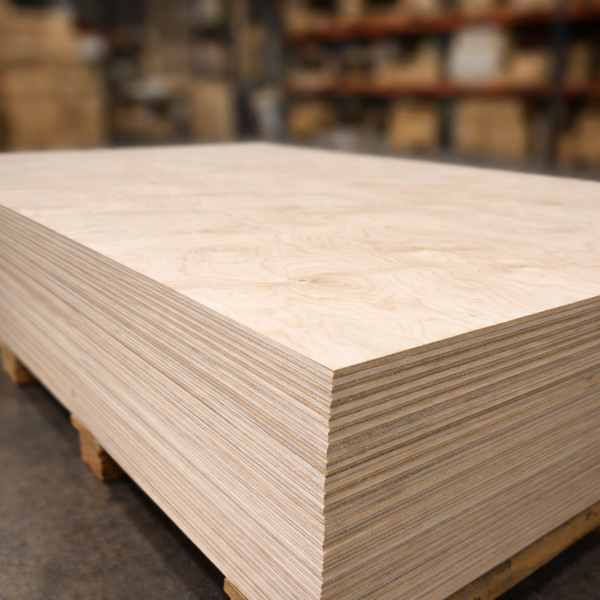

Best plywood for cabinets: cabinet-grade hardwood plywood (3/4″) for boxes, and Baltic birch for drawers and exposed edges.
Quick selection:
- Cabinet boxes → Cabinet-grade plywood
- Drawers / exposed edges → Baltic birch (multi-ply)
- Visible interiors → Prefinished plywood
Choosing plywood comes down to use case. Cabinet boxes, drawers, and visible interiors require different core structures, face grades, and thicknesses.
This guide shows exactly what plywood to use for each application—so you avoid common failures like weak edges, chipping, or poor finish results.
Best Plywood for Cabinets
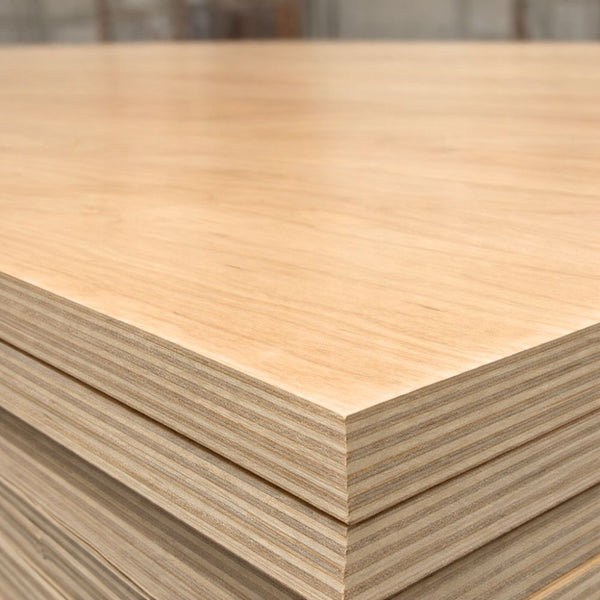
The best plywood for cabinets is cabinet-grade hardwood plywood with a reliable core. For drawer boxes or exposed edges, multi-ply Baltic birch is the more durable option.
- Cabinet boxes → Cabinet-grade plywood (3/4")
- Drawers → Baltic birch (multi-ply)
- Visible interiors → Prefinished plywood
Step 1: Start With the Use Case (Not the Wood Species)
Cabinet boxes and built-ins
You need flat panels, consistent machining for dados/rabbets, and reliable screw holding. Face quality matters if it’s visible (interiors, paint-grade).
Drawer boxes and exposed edges
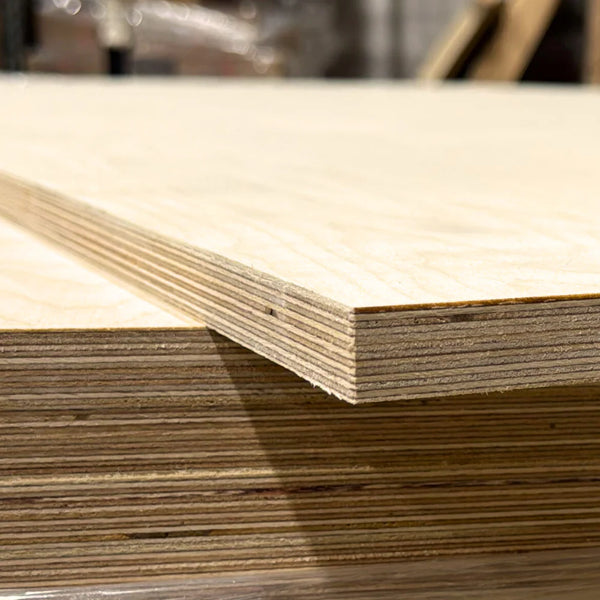
You need a uniform edge and predictable ply structure. This is where multi-ply panels outperform typical hardwood plywood because voids and soft inner plies show up on edges and joints.
Cabinet interiors and shelves that stay visible
You’re buying surface durability and time savings. A factory-finished surface avoids inconsistent on-site clear coating and holds up better to routine wiping.
General construction and structural use
You are buying structural rating first (span, exposure rating), not appearance. Face patches are normal; the performance is in the stamp and rating.
Moisture-prone areas
You need the correct glue/exposure rating and proper sealing practices. “Waterproof plywood” is often misunderstood. Even exterior-rated panels can fail if edges are left raw in repeated wet/dry cycles.
Step 2: Core Construction Is What Controls Performance
Two panels can both be labeled “birch plywood” and behave completely differently. Core construction is what controls stiffness, fastener holding, edge quality, and how the sheet machines.
Veneer core
Common in cabinet plywood. Machines well and can be strong, but quality varies by mill. Voids and overlaps are the main risk.
Combination core
Often used to stabilize panels and control cost. It can be fine for cabinet boxes, but soft inner layers can reduce screw holding and edge durability.
Multi-ply core (Baltic birch style)
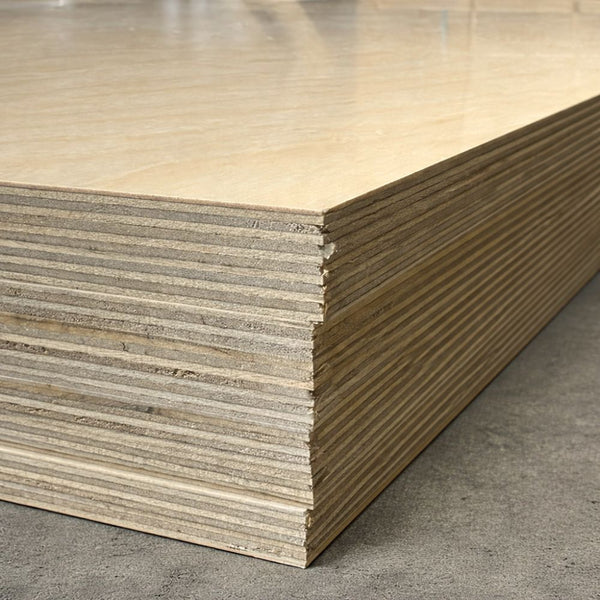
More uniform layers, better edge results, and more consistent joinery performance. This is the safer choice when edges are exposed or joinery repeats across many parts.
Core Comparison Table (What Changes on the Jobsite)
This table focuses on what you actually feel during cutting, fastening, and finishing.
| Core Type | Best For | Strength / Stiffness | Edge & Joinery | Common Failure |
|---|---|---|---|---|
| Veneer core | Cabinet boxes, built-ins, general shop use | Good when well-made | Can be good; depends on voids | Hidden voids cause weak edges and blowouts |
| Combination core | Paint-grade boxes, panels where edge is covered | Moderate; can feel softer | Edges often need banding | Screw strip-out or edge crumble in dados |
| Multi-ply (Baltic birch style) | Drawer boxes, exposed edges, repeat joinery | High and consistent | Best edge stability and clean joinery | Usually not failure—more about selecting the right thickness |
Step 3: Face Grade Determines Finish Results
Face grade controls what you see after paint or clear coat. If the finish is visible, face quality matters more than most buyers think.
Use higher face grades when:
- Cabinet interiors are visible
- Painted doors/ends must look clean under light
- You want fewer patches telegraphing through finish
Lower face grades are acceptable when:
- The surface is hidden (subfloor, roof deck, behind drywall)
- You are laminating or skinning over the panel
- It’s temporary construction use
Step 4: Thickness Selection (What Pros Actually Use)
Typical thickness picks
- 3/4" (18–19mm): cabinet sides, bottoms, fixed shelves, partitions
- 1/2" (12mm): cabinet backs in dadoes, drawer parts (design-dependent), light partitions
- 1/4" (6mm): back panels, skins, dust panels (not structural)
Two fast rules that prevent failures
- Shelves sag: long spans need thicker panels, proper support, or a stiffer core
- Edges take abuse: drawers and exposed edges need a better core, not just a nicer face
Plywood Selection Table by Project Type
This is the fastest way to choose without overthinking species names.
| Project | What to Prioritize | Recommended Panel Type | What to Avoid |
|---|---|---|---|
| Cabinet boxes | Flatness, machining, screw holding | Cabinet-grade hardwood plywood (verified core) | Unknown core quality; thin face that sands through |
| Drawer boxes / exposed edges | Uniform plies, edge stability, joinery repeatability | Multi-ply Baltic birch | Void-prone cores; soft inner layers |
| Visible cabinet interiors | Durable surface, consistent finish | Prefinished plywood | Finishing raw interiors on-site (inconsistent, time-heavy) |
| Paint-grade built-ins | Face consistency under primer/paint | Birch or maple-faced cabinet plywood (good face grade) | Patchy faces; low-grade faces that telegraph |
Comparisons That Matter for Cabinet Work
Baltic birch vs standard hardwood plywood
If edges are exposed or you’re building drawers, multi-ply Baltic birch is the safer decision. The uniform ply stack reduces void surprises and makes joinery more consistent. For typical cabinet boxes where edges are banded or hidden, cabinet-grade hardwood plywood can be the practical choice if the core is verified.
Prefinished plywood vs unfinished plywood
Prefinished plywood is a workflow choice: it reduces finishing time and gives a consistent interior surface. It’s most useful for cabinet interiors, shelves, and built-ins where the inside face remains visible. It does not replace the need for a stable core—it replaces a finishing step.
Maple plywood vs birch plywood
Maple is often chosen when you want a cleaner, tighter grain and a more uniform look under clear finishes or paint systems. Birch can be a solid cabinet choice as well, but finish results depend heavily on face grade and how patching looks under your coating system.
Common Buying Mistakes That Cause Plywood Problems
- Choosing by species name: “birch” can still be thin-faced and voidy. Core matters.
- Over-sanding thin face veneers: once you sand through, you can’t fix it cleanly.
- Ignoring edge performance: drawer boxes and exposed edges need the right ply structure.
- Skipping a quick core check: one look at the edge (or a test rip) can reveal voids and soft layers.
Tools That Reduce Waste on Plywood Projects
If you want to reduce sheet waste and plan cuts before ordering, use a cut-list approach. For general sizing and planning, start here: plywood calculator. For sheet planning and part totals, use: Plywood Cut List Calculator.
Internal References (Materials Mentioned in This Guide)
For cabinet interiors and visible shelves: prefinished plywood for cabinet interiors. For multi-ply panels used in cabinet and drawer work: Baltic birch plywood for cabinets. For a maple-faced cabinet panel option: maple plywood for cabinetry.
FAQ
What plywood is best for kitchen cabinets?
Cabinet-grade hardwood plywood with a verified core is the standard for boxes. For drawers or exposed edges, multi-ply Baltic birch is the more reliable choice.
Is prefinished plywood worth it for cabinets?
Yes when cabinet interiors or shelves stay visible. It saves finishing time and gives a consistent surface, but you still need a stable core for good cabinet performance.
What thickness should I use for cabinet boxes?
Most cabinet boxes use 3/4" for sides and bottoms. 1/2" is common for captured backs and some partitions. 1/4" is for backs and skins, not structure.
Why does some plywood chip or blow out when cutting?
Common causes are thin face veneers, voids near the cut line, and dull blades. Better core consistency and proper cutting setup reduce edge failure.
What’s the difference between Baltic birch and “birch plywood”?
Baltic birch is typically a multi-ply construction with more uniform layers. “Birch plywood” often means birch-faced hardwood plywood that may use different core constructions and can vary widely.
Final Thoughts
The right plywood is the one that matches the job’s demands: how it’s cut, how it’s fastened, whether edges are exposed, and what the finish needs to look like. If you choose by use case first, then lock in core type, face grade, and thickness, you avoid the common failures that cost time on cabinet and build work.