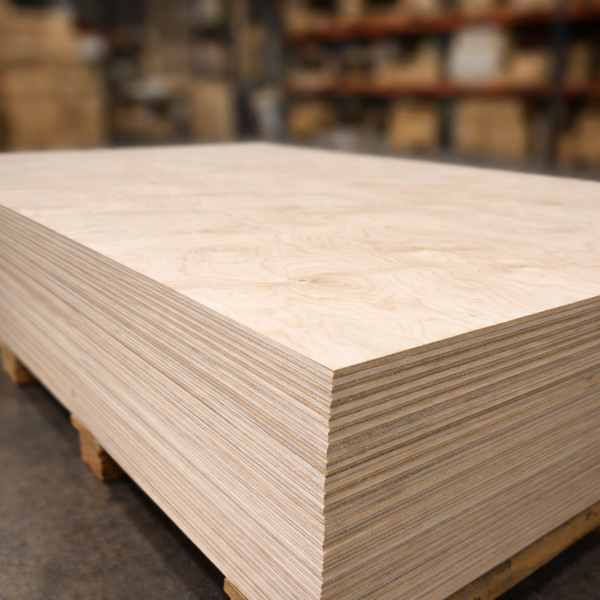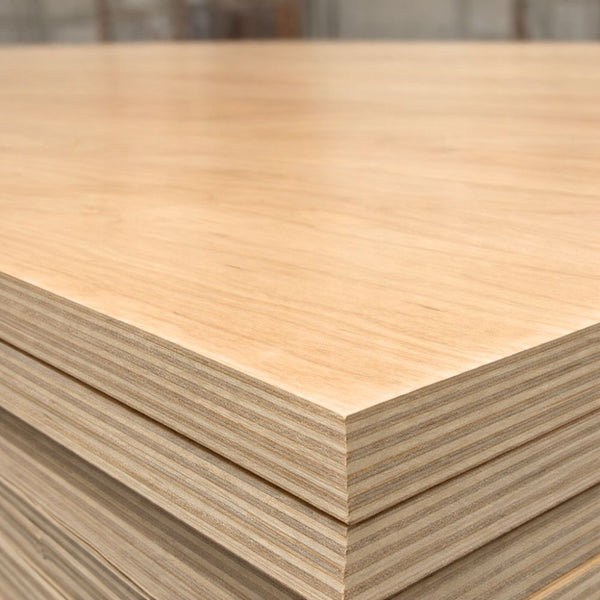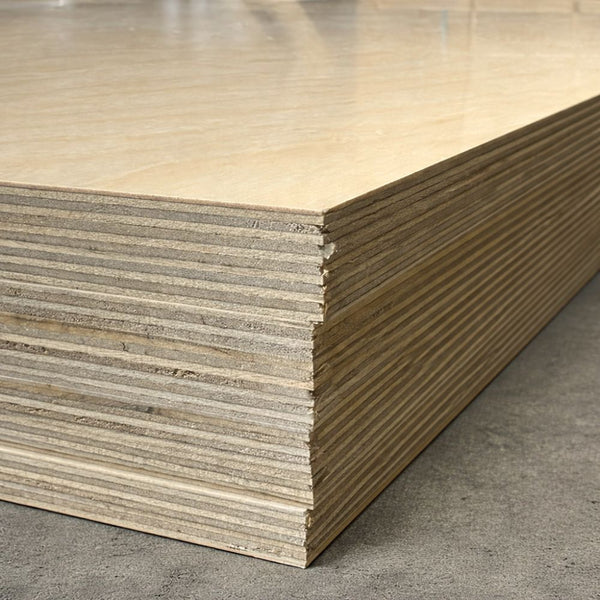

On paper, plywood from big box stores and cabinet-grade plywood look similar. Both come in 4x8 sheets, both are labeled as birch or hardwood plywood, and both are widely available. But once the sheets are cut, machined, and assembled, the differences become obvious.
Contractors and cabinet shops don’t choose plywood based on availability. They choose based on consistency, edge performance, and how the material behaves during installation. That’s where the gap between Home Depot plywood and cabinet-grade plywood becomes clear.
Home Depot plywood typically uses mixed cores and lower consistency manufacturing, while cabinet-grade plywood is produced with stricter standards for face quality, core construction, and thickness tolerance, making it more reliable for cabinetry and furniture applications.
What Contractors Actually Mean by “Cabinet-Grade Plywood”
Cabinet-grade plywood is not just a marketing term. It refers to panels that meet practical requirements for cabinet work: When a retail sheet is labeled Sande, first check what the Sande veneer name does and does not specify.
- Consistent thickness for joinery (dados, rabbets)
- Stable core with fewer voids
- Predictable face veneer for finishing
- Better sheet-to-sheet uniformity
This is why many professionals choose to buy cabinet-grade plywood for cabinets instead of relying on inconsistent big box inventory.
---
Home Depot Plywood vs Cabinet-Grade Plywood (Side-by-Side)
| Factor | Home Depot Plywood | Cabinet-Grade Plywood |
|---|---|---|
| Core quality | Varies widely, often mixed or lower density | More consistent, fewer voids |
| Face veneer | More patches and variation | Cleaner and more predictable finish |
| Thickness tolerance | Inconsistent across sheets | Tighter and repeatable |
| Edge quality | More voids and tear-out risk | Cleaner edges and stronger joinery |
| Best use | Utility builds, temporary work | Cabinets, furniture, built-ins |
---
Where Home Depot Plywood Works (and Where It Doesn’t)
Where it works
- Shop tables and jigs
- Garage storage and utility shelving
- Temporary builds and framing support
Where it fails
- Kitchen cabinets and visible cabinetry
- Furniture with exposed edges
- Precision joinery projects
Most issues appear during cutting and assembly—voids, inconsistent thickness, and edge breakdown.
---
Where Cabinet-Grade Plywood Performs Better
- Cabinet boxes: cleaner joinery and square assembly
- Drawer boxes: stronger edges and better durability
- Built-ins: consistent finish across multiple sheets
For interior cabinet work, many professionals also order prefinished plywood panels to reduce finishing time and improve consistency.
---
Baltic Birch vs Standard Cabinet Plywood
Not all cabinet-grade plywood is the same. When edge durability matters, multi-ply panels perform differently.
For drawer boxes and exposed edges, many contractors choose to browse Baltic birch plywood sheets because the core is more uniform and predictable.
---
Why Contractors Avoid Big Box Plywood for Cabinets
- Inconsistent sheet quality across the same batch
- More prep work due to patches and defects
- Higher failure rate during cutting and assembly
- Time loss that offsets initial cost savings
This is why experienced builders often move toward suppliers like Berta Store when they need consistent cabinet materials rather than general-purpose panels.
---
Common Buyer Mistakes
- Assuming all birch plywood is cabinet-grade
- Choosing lower-cost sheets for visible cabinetry
- Ignoring core construction and focusing only on face
- Expecting big box plywood to perform like shop-grade material
FAQ
Is Home Depot plywood good for cabinets?
It can work for budget or utility cabinets, but it is not typically used in professional cabinet work due to inconsistency and core quality issues. For two common veneer labels, use the Sande-versus-birch cabinet comparison alongside the actual sheet specification.
What plywood do contractors use for cabinets?
Most contractors use cabinet-grade plywood with consistent core construction, and often multi-ply panels for drawer boxes and exposed edges.
Is cabinet-grade plywood worth it?
Yes, especially for kitchen cabinets and furniture where consistency, durability, and finish quality matter.
What is better: Baltic birch or regular birch plywood?
Baltic birch performs better for edge durability and joinery, while standard birch plywood can work well for cabinet boxes when edges are covered.
---
Final Thoughts
The difference between Home Depot plywood and cabinet-grade plywood is not just price—it’s predictability. One is built for general use, the other for precision work.
For cabinet projects, furniture, and built-ins, choosing the right panel from the start reduces rework, improves finish quality, and leads to more consistent results across the entire job.