
Quick answer
If a panel truly measures 22/32 inch, it is 11/16 inch thick. That is thinner than true 3/4 plywood by 1/16 inch. For cabinet boxes, long shelves, closet panels, and built-ins, 3/4 cabinet-grade plywood is usually the better choice.
There is one important catch: many people search for “22/32 vs 3/4” when they actually mean 23/32 vs 3/4. 23/32 is the common actual thickness for many nominal 3/4 plywood sheets. A true 22/32 panel is thinner and should be planned differently.
Is 22/32 the same as 3/4?
No. 22/32 is not the same as 3/4. When reduced, 22/32 becomes 11/16. In decimals, 22/32 equals 0.6875 inches. True 3/4 equals 0.750 inches.
That difference is 1/16 inch. In rough carpentry, 1/16 inch may not sound large. In cabinet making, it can affect dado fit, shelf pin layout, edge banding coverage, cabinet box squareness, and how flush parts finish after assembly.
Important correction: if you are comparing standard “3/4 plywood,” the number you probably want is 23/32, not 22/32. Many nominal 3/4 plywood sheets measure close to 23/32. Use the plywood thickness chart to compare actual and nominal thicknesses before building.
Actual thickness comparison table
Use this table before you cut cabinet parts. The label on the sheet is helpful, but the actual thickness is what matters at the saw, router table, CNC, or edge bander.
| Thickness | Decimal inches | Compared to true 3/4 | Cabinet-making meaning |
|---|---|---|---|
| 22/32" | 0.6875" | 1/16" thinner | Usable for some parts, but not the best default for cabinet sides, long shelves, or joinery planned around 3/4 material. |
| 23/32" | 0.71875" | 1/32" thinner | Common actual thickness for many nominal 3/4 plywood sheets. Often treated as cabinet-standard material. |
| 3/4" | 0.750" | Reference size | Standard planning thickness for cabinet boxes, closet panels, built-ins, shelves, and furniture parts. |
| 18mm | 0.7087" | About 0.041" thinner | Common cabinet standard in Baltic Birch and metric panels. Good for strong, stable cabinet construction when the panel quality is high. |
Why 22/32 appears in plywood thickness searches
22/32 is not the typical label most cabinet shops look for when buying 3/4 plywood. It shows up because plywood thickness can be confusing. Buyers see fractions like 19/32, 23/32, and 15/32, then search for nearby numbers while trying to understand what a sheet actually measures.
The common cabinet conversation is usually 23/32 vs 3/4. Plywood may be sold by a nominal size, while the actual finished panel is slightly thinner after pressing, sanding, and finishing. A sheet sold as 3/4 may not measure a perfect 0.750 inches.
What changes the final thickness?
Core construction, sanding, face veneer thickness, factory finish, moisture movement, and panel category all affect the final measurement. This is why cabinet shops measure panels before cutting grooves, backs, shelves, or cabinet sides.
Which is better for cabinets?
For most cabinet boxes, 3/4 cabinet-grade plywood is better than true 22/32. It gives more stiffness, better screw holding, cleaner edge banding coverage, and more confidence when building frameless cabinets, tall pantry sides, closet panels, and wide shelves.
A true 22/32 panel can still work in the right place. It may be acceptable for lighter built-ins, short spans, utility parts, backs, or projects where the design is adjusted around the exact thickness. It is not the thickness to blindly substitute into a cabinet plan written for 3/4 material.
| Cabinet part | True 22/32 plywood | 3/4 cabinet-grade plywood | Practical recommendation |
|---|---|---|---|
| Cabinet sides | May work for lighter boxes if joinery is adjusted | Better default for cabinet boxes and frameless construction | Use 3/4 for stronger, cleaner cabinet cases. |
| Bottoms and tops | Can be undersized for plans based on 3/4 | More reliable for square assemblies | Use the same thickness across the cabinet box when possible. |
| Cabinet backs | Often more than enough, depending on construction | Usually stronger than needed unless the back carries load | Choose based on fastening method and wall support. |
| Fixed shelves | Acceptable only for shorter spans and lighter loads | Better for wide shelves and heavier storage | Use 3/4 for long cabinet shelves, pantry shelves, and closets. |
| Drawer boxes | Usually thicker than needed for smaller drawer sides | Strong but bulky for some drawer designs | Use Baltic Birch when drawer machining and clean edges matter. |
For cabinet boxes, closets, shelving, furniture, and millwork, start with the cabinet-grade plywood collection. For clean, ready-to-use cabinet interiors, compare prefinished plywood.
Which is better for shelves?
For shelves, thickness matters because shelves sag under load. A true 22/32 sheet is thinner than 3/4, so it has less stiffness. The difference becomes more noticeable as the shelf gets wider or carries heavier items.
If the shelf is short, well-supported, and lightly loaded, 22/32 can work. If the shelf is wide, adjustable, or expected to hold dishes, pantry goods, books, tools, or closet storage, 3/4 cabinet-grade plywood is the safer choice.
| Shelf situation | 22/32 plywood | 3/4 plywood | Better choice |
|---|---|---|---|
| Short cabinet shelf | Usually acceptable with side support | Also works well | Either can work if the span is short. |
| Wide adjustable shelf | More likely to flex under load | Stiffer and more reliable | Use 3/4 cabinet-grade plywood. |
| Closet shelf | Depends on brackets and span | Better for hanging and daily use | Use 3/4 or a strong prefinished panel. |
| Furniture shelf | Can work when engineered correctly | Better when the shelf is visible or load-bearing | Use Baltic Birch or maple plywood when edges and faces matter. |
For strong shelves, drawer boxes, furniture parts, jigs, and clean exposed edges, compare the Baltic Birch plywood collection.
Cabinet grade vs construction grade considerations
A clean 3/4 cabinet-grade sheet will usually build a better cabinet than a rougher construction-grade sheet that happens to be close in thickness. Cabinet work depends on flatness, clean faces, stable cores, predictable machining, and a surface that fits the finished project.
Construction-grade plywood is made for sheathing, subfloors, and structural use. It may be strong, but it is not always the right choice for visible cabinet interiors, edge-banded shelves, drawer parts, or tight joinery.
How to choose the right thickness before cutting
Use this quick shop workflow before ordering material or sending a cabinet file to the saw.
Measure the sheet
Use calipers on the actual panel. Do not assume 3/4, 23/32, 22/32, or 18mm from the label alone.
Check your joinery
Cut a test dado, rabbet, or groove before machining finished cabinet parts. Build around the real thickness.
Match thickness to the part
Use stronger 3/4 material for sides, tops, bottoms, and wide shelves. Use thinner panels where the design supports them.
Choose the better panel, not just the bigger number
For cabinets, a flat cabinet-grade panel with a stable core is more valuable than a rough panel with a slightly thicker label.
Recommended products for cabinet projects
If you are comparing 22/32 vs 3/4 for cabinets, the real decision is usually material quality. Cabinet-grade plywood, Baltic Birch, and prefinished plywood usually matter more than a small nominal thickness difference.

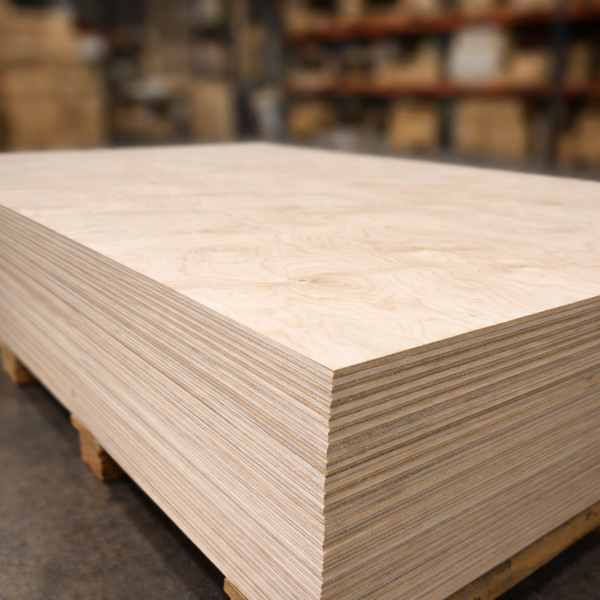
4x8 prefinished cabinet-grade plywood
A practical choice for cabinet boxes, closets, shelves, built-ins, and clean interiors when you want a smooth finished surface without extra sanding or sealing.
Shop prefinished plywood
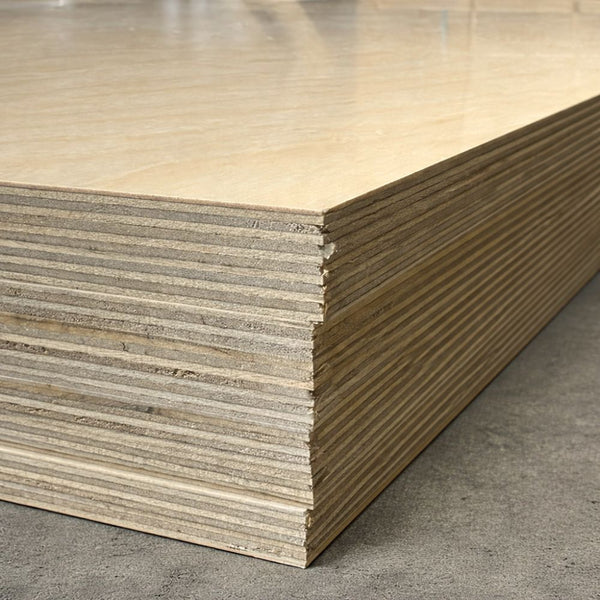
Baltic Birch BB/BB 4x8 plywood
Dense Baltic Birch for drawer boxes, furniture parts, shelves, jigs, painted work, CNC projects, and cabinet parts that need clean machining.
Shop Baltic Birch BB/BB
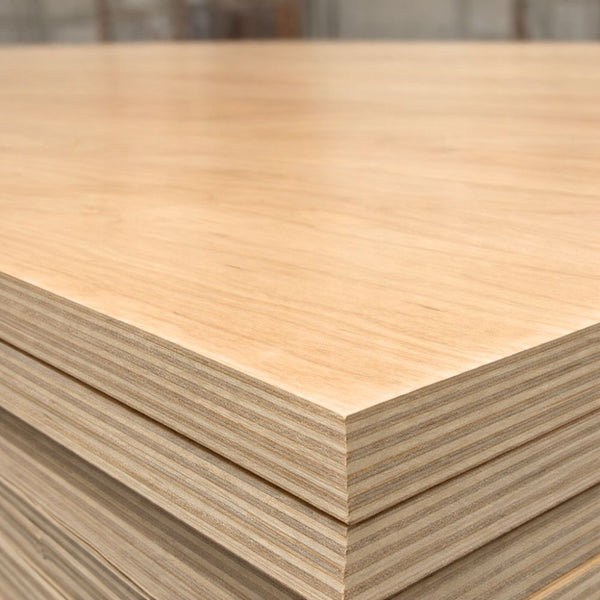
prefinished maple plywood 4x8
A premium maple panel for visible interiors, furniture-grade cabinetry, shelves, closets, retail fixtures, and built-ins where the face matters.
Shop maple plywoodFAQ
Is 22/32 plywood the same as 3/4 plywood?
No. 22/32 equals 0.6875 inches, while true 3/4 equals 0.750 inches. That makes 22/32 plywood 1/16 inch thinner than true 3/4 plywood.
Did I mean 23/32 instead of 22/32?
Probably. Many nominal 3/4 plywood sheets measure close to 23/32, not 22/32. If you are checking a 3/4 plywood label, compare the actual sheet measurement with 23/32 and 18mm standards.
Can I use 22/32 plywood for cabinets?
You can use it for some cabinet parts if the design is adjusted for the actual thickness. For cabinet sides, wide shelves, closet panels, built-ins, and frameless cabinet boxes, 3/4 cabinet-grade plywood is usually a better choice.
Is 3/4 plywood actually 3/4 inch thick?
Not always. Many plywood sheets sold as 3/4 are nominal and may measure slightly thinner, often around 23/32. Measure the panel before cutting dados, rabbets, shelf grooves, or CNC files.
Which thickness is better for shelves?
For short, lightly loaded shelves, 22/32 can work with good support. For wider shelves, pantry shelves, closet shelves, and heavy storage, 3/4 cabinet-grade plywood is the safer choice.
What matters more than 22/32 vs 3/4?
Panel quality, core construction, flatness, face grade, and surface finish usually matter more. A stable cabinet-grade panel will build cleaner cabinets than a rougher construction panel with a similar thickness.
Bottom line
For most cabinet projects, 3/4 cabinet-grade plywood is better than true 22/32 plywood. A true 22/32 sheet is 1/16 inch thinner than 3/4, and that difference can affect cabinet boxes, shelves, joinery, edge banding, and hardware layout.
If the question is really 23/32 vs 3/4, the answer changes: 23/32 is commonly treated as the actual thickness for nominal 3/4 plywood. In that case, panel quality, core construction, and flatness matter more than the small thickness difference.
Start with the cabinet-grade plywood collection, choose prefinished plywood for clean cabinet interiors, or use Baltic Birch plywood when strength, clean machining, and stable edges matter most.