
Quick answer
For most cabinet projects, 19/32 plywood and 5/8 plywood can be treated as functionally the same thickness. 19/32 equals 0.59375 inches. True 5/8 equals 0.625 inches. The difference is only 1/32 inch.
That small difference can matter when you are cutting tight dadoes, rabbets, or cabinet parts that must fit flush. But for cabinet strength and finish quality, the bigger decision is not 19/32 vs 5/8. It is whether the sheet has a stable core, clean faces, good flatness, and the right surface for the job. For thicker cabinet panels, check the 22/32, 23/32 and 3/4-inch distinctions before transferring the same assumptions.
Is 19/32 the same as 5/8?
Not exactly. Mathematically, 19/32 and 5/8 are different. 19/32 is 0.59375 inches. 5/8 is 0.625 inches. That means 19/32 plywood is 0.03125 inches thinner than true 5/8 plywood.
In the plywood aisle, though, 19/32 is often used as the actual measured thickness for material sold as nominal 5/8. That is why many builders use the two terms almost interchangeably. The label may say 5/8, while the panel actually measures close to 19/32 after pressing, sanding, and finishing.
Cabinet shop note: do not cut a dado based only on the printed label. Measure the panel with calipers first. Even a small thickness difference can leave a cabinet side loose in a groove or proud at the joint.
Actual thickness comparison table
This table shows the exact math and the practical cabinet meaning. Use it when you are planning cabinet boxes, shelves, drawer parts, finished panels, or replacement pieces.
| Thickness label | Exact decimal | Compared to true 5/8 | Cabinet-making meaning |
|---|---|---|---|
| 19/32" | 0.59375" | 1/32" thinner | Common actual thickness for nominal 5/8 plywood. Measure before cutting dados, rabbets, and shelf grooves. |
| 5/8" | 0.625" | Reference size | Nominal thickness used in planning, drawings, and product labels. The actual sheet may be thinner. |
| 1/2" | 0.500" | 1/8" thinner | Useful for backs, drawer parts, panels, and lighter cabinet components when the design supports it. |
| 3/4" | 0.750" | 1/8" thicker | Common choice for cabinet boxes, shelves, closet panels, built-ins, and furniture parts when stiffness matters. |
For a larger reference, use the plywood thickness chart before finalizing a cut list.
Why manufacturers use 19/32 instead of 5/8
Plywood starts thicker during production. Layers are glued, pressed, sanded, and sometimes finished. By the time the panel is ready to sell, the final measured thickness can be slightly under the nominal size.
That is why actual plywood thickness often looks unusual: 15/32 instead of 1/2, 19/32 instead of 5/8, and 23/32 instead of 3/4. The fraction is not random. It describes the actual target thickness after manufacturing.
What changes the final thickness?
Sanding, face veneer thickness, core construction, glue line, factory finishing, and moisture movement can all affect the final measurement. Two panels with the same nominal label can still feel different at the saw or router table.
Which is better for cabinets?
For cabinets, 19/32 vs 5/8 is usually not the deciding factor. If the cabinet design calls for nominal 5/8 material, 19/32 plywood is often close enough for side panels, partitions, cabinet backs, light shelves, and built-in components. The exact answer depends on the cabinet style, span, hardware, and joinery.
For frameless cabinet boxes, tall pantry sides, wide shelves, heavy appliance areas, or high-use shop cabinets, 3/4 cabinet-grade plywood is often the safer choice. It gives more screw holding, better stiffness, and more room for joinery.
| Cabinet part | 19/32 or nominal 5/8 | 3/4 cabinet-grade plywood | Practical recommendation |
|---|---|---|---|
| Cabinet sides | Works for lighter boxes and many built-ins | Better for stronger boxes and frameless construction | Use 3/4 when strength, hardware holding, and long-term stiffness matter. |
| Cabinet backs | Often more than enough | Usually heavier than needed | Choose based on how the back is installed and whether it carries load. |
| Fixed shelves | Fine for short spans and light storage | Better for wider shelves and heavier loads | Check shelf width, load, and edge support before choosing. |
| Drawer boxes | Can work, but joinery needs accurate sizing | Strong but may be bulky for smaller drawers | For premium drawer boxes, panel quality and clean machining are more important than the nominal label. |
| Visible interiors | Works when the surface is clean and consistent | Works well for premium builds | Consider finished surfaces when labor time matters. |
For cabinet boxes, closets, shelving, furniture, and millwork, start with the cabinet-grade plywood collection. For clean interiors without extra finishing, compare prefinished plywood.
Which is better for shelves?
Shelves are where the small thickness difference can show up less than expected. A 19/32 shelf and a true 5/8 shelf are close in stiffness. Span, load, edge banding, and support method matter more.
A short shelf with side support can perform well in 19/32 or nominal 5/8 material. A wide shelf carrying dishes, tools, files, or pantry goods should be upgraded, reinforced, or designed with a thicker panel.
| Shelf situation | 19/32 / nominal 5/8 | Better choice | Reason |
|---|---|---|---|
| Short cabinet shelf | Usually acceptable | 19/32, 5/8, or 3/4 depending on design | Short spans are less likely to sag. |
| Wide adjustable shelf | May flex under load | 3/4 cabinet-grade plywood | Extra thickness improves stiffness and shelf-pin support. |
| Closet shelf | Acceptable with enough support | Prefinished or melamine-faced panel | Finished surfaces save labor and are easier to clean. |
| Furniture shelf | Depends on span and visible edges | Baltic Birch or maple plywood | Cleaner cores and faces help when edges or interiors remain visible. |
For strong shelves, drawer boxes, furniture parts, and clean exposed edges, compare the Baltic Birch plywood collection.
Cabinet grade vs construction grade considerations
A clean 19/32 cabinet-grade sheet can be a better cabinet material than a rougher 5/8 construction-grade sheet. The thickness label is only one part of the decision.
Construction-grade plywood is built for sheathing, subfloors, and structural work. It may have rougher faces, more patches, open voids, thicker repairs, or panels that are not flat enough for clean cabinet doors, finished interiors, and tight joinery.
Cabinet-grade plywood is selected for cleaner faces, more reliable cores, better machining, and better appearance. For cabinets, closets, furniture, and millwork, that usually matters more than whether the sheet measures 19/32 or true 5/8.
How to choose between 19/32 and 5/8 for your build
Use this simple cabinet-shop workflow before buying material or cutting parts.
Measure the actual panel
Use calipers on the sheet you are cutting. Do not assume the label is the exact finished thickness.
Check the joinery
For dados, rabbets, grooves, and captured backs, cut test pieces first. A 1/32 inch gap can be visible on tight cabinet work.
Match the panel to the cabinet part
Use lighter panels where they make sense. Upgrade to 3/4 cabinet-grade material for wide spans, heavy shelves, and stronger cabinet boxes.
Choose the right surface
Use prefinished plywood for clean interiors, Baltic Birch for strong edges and machining, and maple plywood when a premium finished surface matters.
Recommended products for cabinet projects
If you are comparing 19/32 vs 5/8 for cabinets, also compare the material category. Cabinet-grade panels, Baltic Birch, and prefinished plywood usually have a bigger impact on the final result than a 1/32 inch thickness difference.
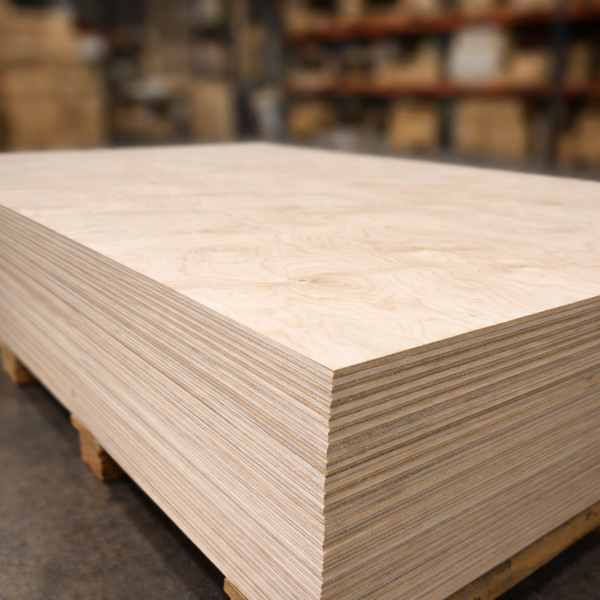
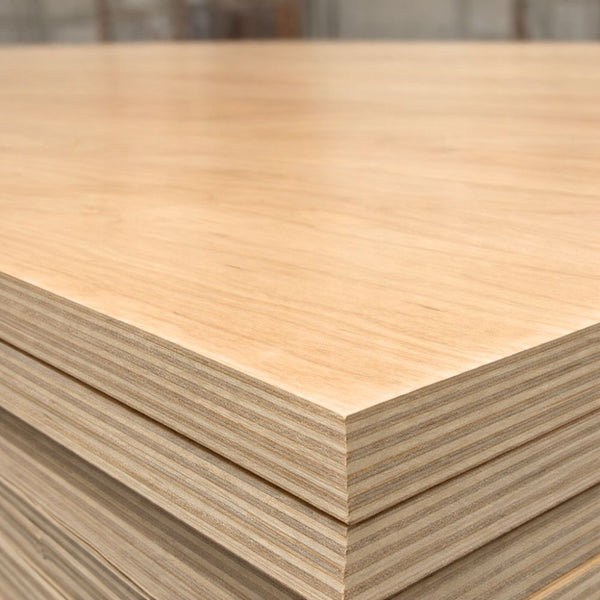
4x8 prefinished cabinet-grade plywood
A practical choice for cabinet boxes, closets, shelving, built-ins, and clean interiors when you want a ready-to-use surface.
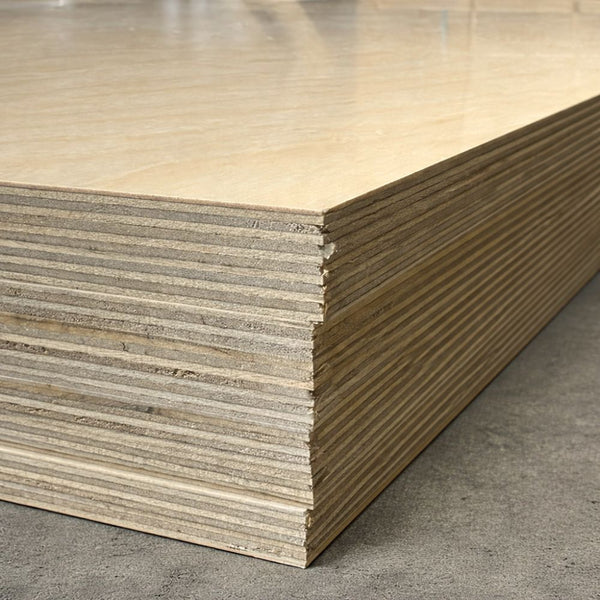
Shop prefinished plywoodBaltic Birch BB/BB 4x8 plywood
Dense multi-ply Baltic Birch for drawer boxes, shelves, furniture parts, painted projects, CNC work, jigs, and clean exposed edges.
Shop Baltic Birch BB/BBprefinished maple plywood 4x8
A premium maple panel with a factory UV finish for visible interiors, furniture-grade cabinetry, shelves, closets, and built-ins.
Shop maple plywoodFAQ
Is 19/32 plywood the same as 5/8 plywood?
Not exactly. 19/32 equals 0.59375 inches, while true 5/8 equals 0.625 inches. The difference is 1/32 inch. In many plywood products, 19/32 is used as the actual thickness for nominal 5/8 plywood.
Can I use 19/32 plywood for cabinets?
Yes, for many cabinet parts. It can work for lighter cabinet boxes, backs, partitions, short shelves, and built-ins. For wide shelves, frameless boxes, heavy storage, or premium cabinet construction, 3/4 cabinet-grade plywood is often the better choice.
Is 5/8 plywood strong enough for shelves?
It can be strong enough for short shelves with proper support. For wider shelves or heavy storage, upgrade to 3/4 plywood, add edge reinforcement, or use a stronger panel such as Baltic Birch.
Why is plywood sold as 5/8 but measured as 19/32?
The 5/8 label is the nominal size. The actual panel can be slightly thinner after pressing, sanding, and finishing. That is why nominal 5/8 plywood may measure close to 19/32.
Which matters more for cabinets: thickness or grade?
Both matter, but grade and core quality often matter more than a small thickness difference. A flat cabinet-grade panel with a stable core will usually build better cabinets than a rougher construction-grade panel that is technically thicker.
Should I cut dados for 19/32 or 5/8?
Cut dados for the actual panel in your shop. Measure the sheet with calipers, make a test groove, and adjust the cut before running cabinet parts.
Bottom line
For most cabinet projects, treat 19/32 and 5/8 plywood as functionally equivalent. The difference is only 1/32 inch, so it usually does not decide whether a cabinet will be strong, square, or durable.
What matters more is panel quality, core construction, flatness, face grade, and the surface you want after installation. A clean cabinet-grade panel, a stable Baltic Birch core, or a factory-finished plywood surface will usually matter more than the small difference between 19/32 and true 5/8.
Start with the cabinet-grade plywood collection, compare prefinished plywood for ready-to-use interiors, or choose Baltic Birch plywood when strength, machining, and clean edges matter most.