
White Melamine Plywood: When It Works—and When It Doesn’t
What Is White Melamine Plywood
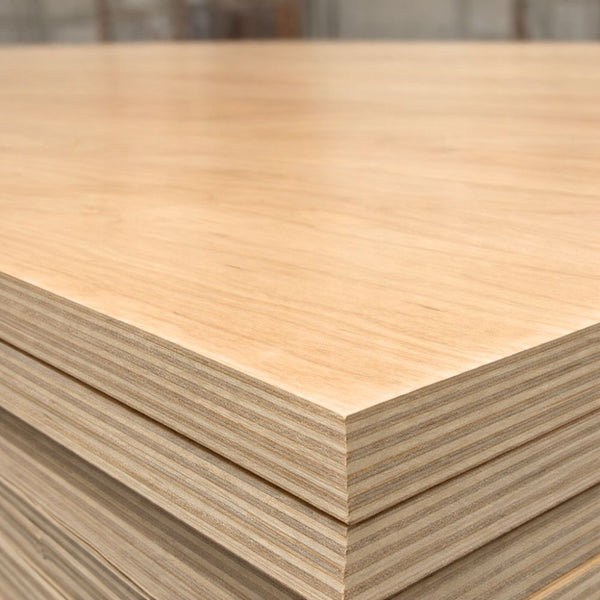
White melamine plywood is often mistaken for standard white boards or laminate panels. The key difference is the core. This material uses a plywood core rather than particleboard, which improves screw holding and durability.
However, performance depends on how the panel is used. When applied correctly, it provides a clean, consistent interior finish. When misused, it can lead to sagging shelves, chipped edges, and early failure.
What White Melamine Plywood Is Actually Used For
White melamine plywood is designed as an interior finish panel. It eliminates the need for painting or coating and provides a consistent white surface across large projects.
- Cabinet interiors
- Closet systems and wardrobes
- Shelving with proper span support
- Commercial casework and storage
In these applications, it reduces labor and improves consistency compared to raw plywood.
How Professionals Evaluate White Melamine Plywood
Core construction
The plywood core is what separates higher-quality melamine panels from standard particleboard melamine. It provides better fastener holding and improved edge strength.
- Stronger screw retention
- Less edge blowout during cutting
- Better long-term stability
This is why plywood-core panels are typically specified for cabinet work instead of particle-core alternatives.
Surface durability
The melamine surface resists stains and light abrasion but is brittle at the edges. Proper cutting and edge banding are required to prevent chipping.
Where White Melamine Plywood Performs Well
- Cabinet interiors: Clean, reflective surface that improves visibility
- Closets: Easy-to-clean and consistent finish
- Storage systems: Durable for light-to-moderate use
Panels like white melamine plywood for cabinets are commonly used where finishing time needs to be reduced without sacrificing structural performance.
Where This Material Fails
- Long unsupported shelves: prone to sagging
- Moisture exposure: not suitable for wet or exterior environments
- Exposed edges: chips without proper edge treatment
The finished surface does not compensate for incorrect design or installation.
Thickness and Specification Guidance
Most cabinet applications use nominal 3/4 inch panels. Actual thickness varies slightly and should always be verified before machining.
- Check actual thickness for dado cuts
- Inspect edge quality for voids
- Confirm consistency across sheets
White Melamine Plywood vs Other Materials
vs Standard plywood
Standard plywood offers better finishing flexibility and edge durability. Melamine plywood eliminates finishing work but limits post-processing.
vs Baltic birch plywood
Baltic birch provides stronger edges and better machining performance. Melamine plywood is better suited for interior surfaces where appearance matters.
vs Particle-core melamine
Plywood-core melamine offers better fastener holding and durability. Particle-core boards are cheaper but less reliable in cabinet construction.
For structural cabinet work, many shops rely on Baltic birch plywood for cabinets where strength and consistency are required.
Common Buyer Mistakes
- Assuming the surface determines strength
- Using particle-core panels for cabinet construction
- Skipping edge banding
- Overloading shelves without support
Most failures are caused by incorrect application rather than material defects.
When White Melamine Plywood Is the Right Choice
- Interior, climate-controlled environments
- Projects requiring a finished white surface
- Cabinet interiors and built-ins
It is not a substitute for structural panels or exposed-edge designs.
FAQ
Is white melamine plywood the same as melamine board?
No. Melamine board is usually particle-core. Melamine plywood uses a plywood core, which is stronger.
Is white melamine plywood waterproof?
No. The surface resists stains, but the panel is not designed for moisture exposure.
Can it be used for cabinet boxes?
Yes, when properly supported and used in interior applications.
Do edges need to be finished?
Yes. Edge banding or solid edging is required to prevent chipping.
Final Thoughts
White melamine plywood is a practical cabinet material when used correctly. It reduces finishing time and provides a consistent interior surface, but it has clear structural and environmental limits.
Choosing it for the right application ensures clean, durable results without unnecessary material cost or failure risk.