
Staining plywood looks straightforward until the first panel dries unevenly. Blotching, dark patches, washed-out faces, and mismatched panels are common—and almost always predictable once you understand how plywood is built.
Professionals don’t ask whether plywood can be stained. They ask which plywood stains well, what preparation is required, and when staining is the wrong finish choice entirely. This guide explains how plywood reacts to stain, which panels perform reliably, and where staining fails.

Baltic Birch Plywood
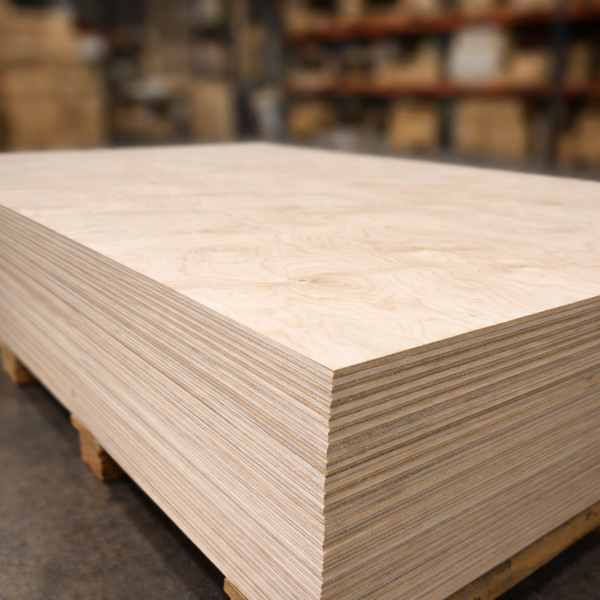
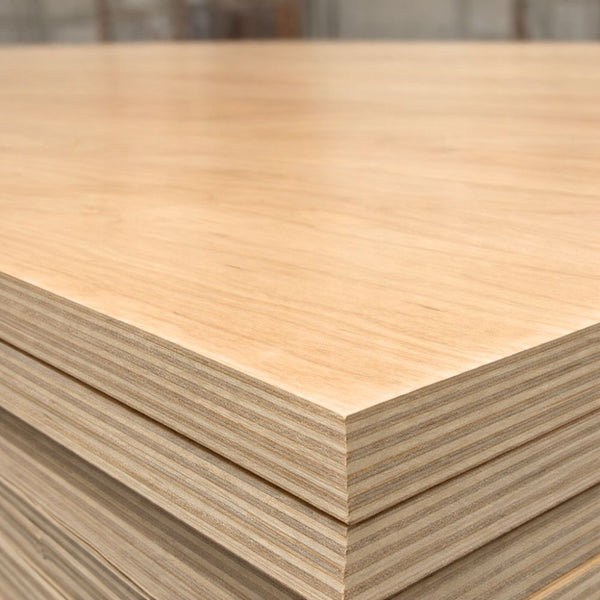
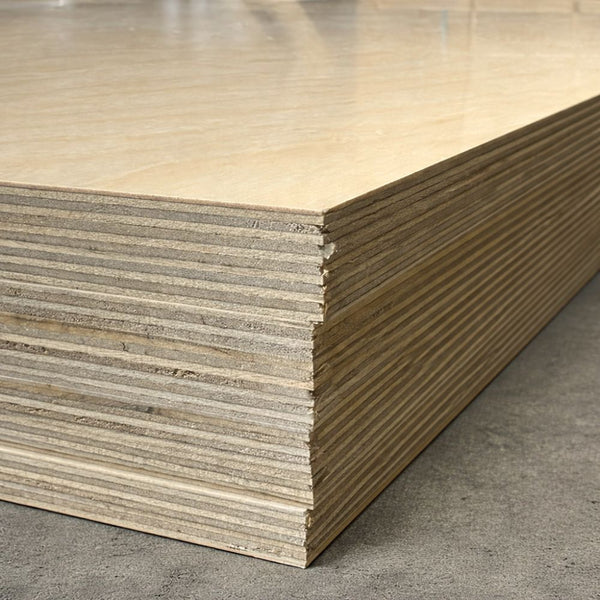
Cabinet-grade Baltic birch plywood with clean faces, stable cores, and strong performance for stained or clear-finished projects.
Unfinished Baltic Birch BB/BB
Unfinished cabinet-grade Baltic birch plywood designed for staining, sealing, painting, furniture, and built-ins.
Why Staining Plywood Is Different From Staining Solid Wood
Plywood is a layered panel. Only the face veneer accepts stain, and that veneer is thin—often less than 1/40 inch. Unlike solid wood, you cannot sand aggressively to correct mistakes without risking sand-through.
In addition, plywood veneers are often rotary-cut or sliced, which affects grain density and stain absorption. Two sheets from the same stack can stain differently if veneer quality varies.
How Professionals Evaluate Plywood for Staining
Face veneer thickness and consistency
Thicker, uniform veneers absorb stain more evenly and allow light sanding without damage. Thin veneers magnify blotching and limit correction.
Species and grain pattern
Some species stain evenly by nature. Others require conditioning or alternative finishes. For a naturally dark face that may suit a clear finish, review walnut plywood cabinet and furniture uses before selecting a stain schedule.
Core stability
Core construction affects flatness and moisture movement. Panels that move or cup during finishing create visible finish defects.
This is why experienced builders source stain-grade panels from a controlled plywood collection rather than relying on commodity sheets.
Plywood Types That Stain Well
Baltic birch plywood
Baltic birch is one of the most predictable plywoods for staining. Its uniform veneer and consistent core reduce blotching and color variation.
Baltic birch plywood BB/BB is commonly chosen for furniture, cabinets, and built-ins where a clear or stained finish matters.
Expect:
- Even stain absorption
- Minimal patching or filler bleed-through
- Consistent tone across panels
Cabinet-grade hardwood plywood
High-quality maple, birch, or veneer-core plywood designed for cabinetry generally stains well when the face veneer is intact and uniform.
Lower grades introduce veneer patches and grain variation that show immediately once stain is applied.
Plywood Types That Commonly Fail When Stained
Construction-grade plywood
Sheathing and utility plywood are not designed for finish work. Veneer thickness, patches, and glue bleed-through create unpredictable stain results.
Rotary-cut veneer plywood
Rotary-cut faces often contain mixed grain density. This causes dark blotches and uneven color uptake.
Panels with filler-heavy faces
Fillers do not accept stain. They appear as light spots or halos once finished.
If the face looks inconsistent raw, it will look worse stained.
Surface Preparation That Actually Matters
Sanding discipline
Sand lightly and evenly. Over-sanding creates thin spots and burn-through. Most professionals stop at 180–220 grit on plywood.
Dust removal
Residual dust blocks stain penetration. Vacuum and wipe surfaces before staining.
Pre-stain conditioner (when needed)
Conditioners help reduce blotching on species prone to uneven absorption. They do not fix poor veneer quality.
Common Staining Failures and Their Causes
- Blotching: Uneven grain density or thin veneers
- Light patches: Veneer repairs or filler areas
- Dark edges: Over-sanding or glue contamination
- Panel mismatch: Mixing plywood from different batches
Most failures originate in material selection, not stain choice.
When Staining Plywood Is the Wrong Decision
Staining is not always the correct finish.
- When veneer quality is inconsistent
- When panels will be mixed from multiple sources
- When uniform color is critical
In these cases, a painted or prefinished panel often produces better long-term results.
Planning Material Quantities for Stain Matching
Stain consistency improves when panels come from the same production run. Ordering extra sheets reduces the risk of mismatched replacements.
Tools like the Plywood & MDF Sheet Calculator help estimate required quantities accurately and avoid mid-project substitutions.
FAQ
Can all plywood be stained?
Technically yes, but not all plywood stains well or predictably.
Why does plywood blotch more than solid wood?
Thin veneers and variable grain density amplify absorption differences.
Is birch plywood hard to stain?
Lower-grade birch can blotch. Baltic birch stains more evenly.
Should plywood be sealed before staining?
Conditioning helps on blotch-prone species but cannot fix poor veneer.
Final Thoughts
Staining plywood is a material decision before it is a finishing decision. When the face veneer is consistent and the panel is chosen for finish work, staining produces clean, repeatable results. When plywood is selected for price or availability alone, staining exposes every shortcut.
Professionals who treat stain-grade plywood as a finish material—rather than a generic panel—avoid rework and deliver predictable outcomes.