
Quick answer
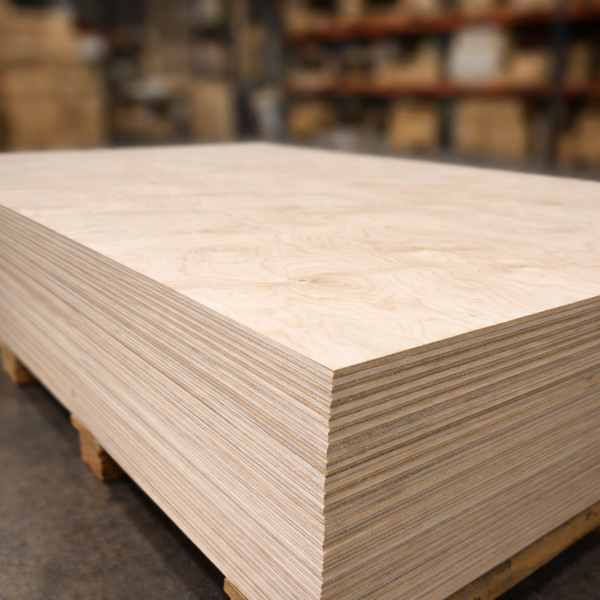
For cabinet boxes, shelves, built-ins, and furniture panels, 3/4 maple plywood is the safest default. It gives better stiffness, cleaner screw holding, and a more solid feel than thinner panels.
Thin maple plywood still has a place. 1/4 inch works for backs and inserts. 1/2-inch maple plywood can work for drawer parts, light panels, and smaller components. But when the part carries weight or needs to stay flat across a larger span, use 3/4.
Maple plywood thickness chart
Maple plywood is used for cabinets because it combines a clean hardwood face with the stability of plywood. The thickness you choose affects weight, screw holding, shelf sag, joinery, and how the finished cabinet feels when it is installed.
Use this chart as a practical starting point. Availability varies by supplier and product line, so always check the exact product page before ordering.
| Maple plywood thickness | Typical use | Cabinet recommendation | What to watch |
|---|---|---|---|
| 1/4" | Cabinet backs, drawer bottoms, inserts, panels, templates | Good for non-structural parts | Needs support. Not a good choice for shelves or cabinet sides. |
| 1/2" | Drawer parts, backs, light panels, small cabinet components | Useful when weight matters | Can flex on wider spans. Joinery needs accurate sizing. |
| 5/8" | Light cabinet boxes, panels, lighter shelving | Works in some cabinet builds | Less common than 3/4 for premium cabinet boxes. |
| 3/4" | Cabinet boxes, shelves, closets, built-ins, furniture, millwork | Best default | Heavier, but stronger and more reliable for daily-use cabinetry. |
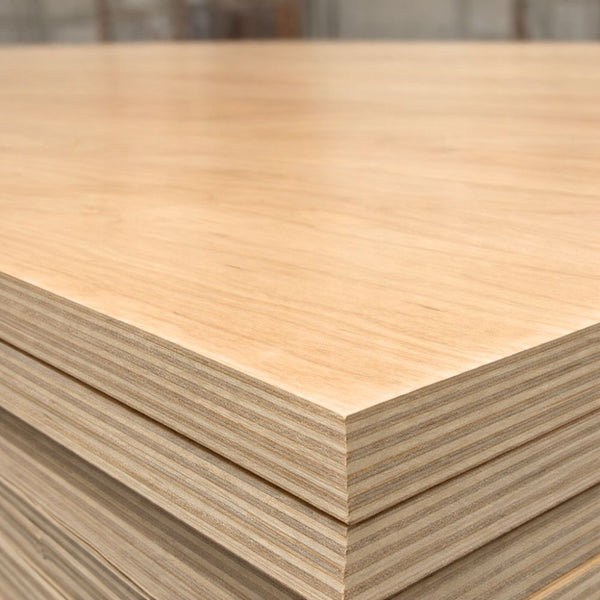
Berta Store’s prefinished maple plywood 4x8 sheet is a 3/4 cabinet-grade panel made for cabinets, shelving, furniture, closets, built-ins, and visible interior work.
What thickness maple plywood should you use for cabinets?
For most cabinet boxes, use 3/4 maple plywood. It is stiff enough for sides and partitions, holds screws better than thinner panels, and gives shelves more resistance against sag.
If you are building a face-frame cabinet, the frame adds strength, so you may see thinner panels used in some shops. For frameless cabinets, closets, tall pantry panels, wide shelves, or finished built-ins, 3/4 is usually the safer choice.
| Cabinet part | Recommended thickness | Why it works | Shop note |
|---|---|---|---|
| Cabinet sides | 3/4" | Better stiffness, better screw holding, stronger cabinet box | Best default for frameless cabinets and finished built-ins. |
| Cabinet bottoms and tops | 3/4" | Keeps the box square and supports hardware, fasteners, and load | Use the same thickness as the sides when possible. |
| Fixed shelves | 3/4" | Reduces sag and gives a better finished edge | Add a front edge strip for longer spans or heavier loads. |
| Cabinet backs | 1/4" to 1/2", sometimes 3/4" | Depends on whether the back is captured, applied, or structural | Use thicker backs when the cabinet hangs from the back panel. |
| Drawer bottoms | 1/4" to 1/2" | Enough for many drawers when properly captured in grooves | Use thicker bottoms for large drawers or heavy contents. |
| Furniture panels | 1/2" to 3/4" | Depends on size, visible edges, and load | Use 3/4 when the panel needs to feel substantial. |
Why 3/4 maple plywood is the cabinet standard
Cabinet parts are not judged only by thickness. They also need to machine cleanly, stay flat, hold fasteners, and look good after installation. That is why 3/4 cabinet-grade maple plywood is common in cabinet shops.
A 3/4 maple plywood panel gives the cabinet more material for screws, shelf pins, Confirmat-style fasteners, dados, rabbets, edge banding, and hardware. It also feels more solid on finished interiors and exposed shelves.
Where 3/4 maple plywood performs best
Use it for cabinet sides, tall panels, fixed shelves, closet partitions, furniture cases, retail fixtures, office millwork, and built-ins where the finished maple face will be visible.
Maple plywood thickness by project type
The right thickness changes with the project. A drawer bottom does not need the same panel as a pantry shelf. A closet partition needs more stiffness than a cabinet back. Use the table below before cutting a material list.
| Project | Better thickness | Use maple plywood when | Consider another panel when |
|---|---|---|---|
| Kitchen cabinet boxes | 3/4" | You want a clean maple interior and a strong cabinet case. | You need white interiors or a lower-maintenance melamine surface. |
| Bathroom vanities | 3/4" | The maple face will be visible and the cabinet needs a finished interior. | The project needs a different moisture strategy or painted finish. |
| Closet systems | 3/4" | You want a premium wood look for vertical partitions and shelves. | You want a decorative melamine surface or a specific color. |
| Drawer boxes | 1/2" or 5/8", sometimes 3/4" | You want a finished maple look and the drawer design supports the thickness. | You want exposed multi-ply edges or lighter drawer sides. |
| Furniture panels | 1/2" to 3/4" | The maple face is part of the final appearance. | You need a raw panel for custom staining or exposed-edge design. |
| Retail fixtures and office millwork | 3/4" | The project needs a durable finished face and repeatable 4x8 sheets. | You need a specialty finish, laminate, or painted MDF surface. |
Maple plywood for shelves: thickness and sag
Shelves are where thickness matters quickly. A thin shelf can look fine on day one and start to sag after months of books, dishes, tools, or pantry goods.
For short shelves with light storage, 1/2 inch may work. For most cabinet shelves, closet shelves, and furniture shelves, 3/4 maple plywood is the better choice. For wide spans, use 3/4 with a front edge strip, center support, or a stronger shelf design.
| Shelf situation | 1/2" maple plywood | 3/4" maple plywood | Practical choice |
|---|---|---|---|
| Short cabinet shelf | Can work for light use | More solid and durable | Use 3/4 if the shelf is visible or used daily. |
| Wide adjustable shelf | More likely to flex | Better stiffness | Use 3/4 and consider a front edge strip. |
| Pantry shelf | Not ideal for heavy goods | Better for weight | Use 3/4 with proper side support. |
| Closet shelf | Works only with enough brackets | Better for daily use | Use 3/4 for cleaner edges and less flex. |
| Furniture shelf | Depends on span and design | Better premium feel | Use 3/4 when the shelf edge remains visible. |
Prefinished maple plywood vs other cabinet panels
Maple plywood is usually chosen for its light hardwood look. If the surface will be visible inside a cabinet, shelf unit, closet, or furniture piece, prefinished maple saves finishing time and gives the project a clean, consistent appearance.
If the surface does not need to be maple, you may prefer a general prefinished plywood panel. If the edge detail and multi-ply construction matter more than the face, compare Baltic Birch plywood.
| Panel type | Best use | Surface | Choose it when |
|---|---|---|---|
| Prefinished maple plywood | Cabinet interiors, furniture, shelves, closets, built-ins | Light maple face with clear factory finish | You want a clean maple appearance without finishing after assembly. |
| Prefinished plywood | Cabinet boxes, closets, commercial interiors, production work | Factory-finished cabinet surface | You want a ready-to-install panel for repeated cabinet and closet builds. |
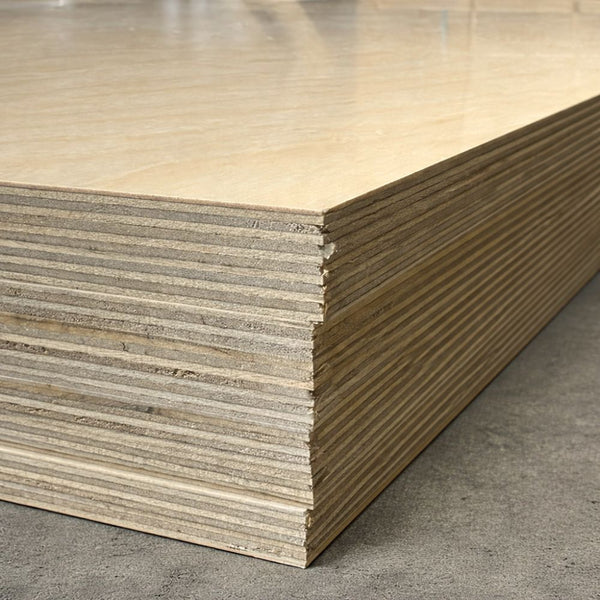
| Baltic Birch plywood | Drawer boxes, furniture parts, jigs, shelves, exposed-edge work | Birch face with strong multi-ply construction | You want clean machining, strong edges, and a stable core. |
| General cabinet-grade plywood | Cabinet boxes, millwork, shelving, furniture components | Varies by product | You want to compare plywood types before choosing a surface and thickness. |
Compare more options in the cabinet-grade plywood collection before deciding on thickness, surface, and core.
Featured product: 3/4 prefinished maple plywood

Prefinished maple plywood 4x8
Berta Store’s maple plywood is a 4x8 cabinet-grade panel with a clear UV-cured finish on both faces. It is made for cabinet boxes, finished interiors, shelving, closet systems, furniture panels, built-ins, retail fixtures, and interior millwork.
Use it when the maple face is part of the finished look and you want to reduce sanding, staining, and sealing time after cutting.


How to choose maple plywood thickness before ordering
Do not choose thickness from habit alone. Match the panel to the part, the load, and the finish. A thicker panel costs more and weighs more, but it can save time when it prevents flex, loose joinery, or weak shelf edges.
Start with the cabinet part
Cabinet sides, tops, bottoms, partitions, and shelves usually call for 3/4. Backs, inserts, and drawer bottoms can often use thinner panels.
Check the span and load
A short shelf can use less material. A wide shelf or pantry shelf needs more stiffness, edge reinforcement, or closer support.
Measure before cutting joinery
Use calipers on the actual sheet. Cut dadoes, rabbets, grooves, and CNC files around the real panel thickness, not only the label.
Decide if the face will be visible
If the interior or face stays visible, a prefinished maple surface can save finishing labor and give the cabinet a cleaner final look.
For broader nominal and actual thickness comparisons, use the plywood thickness chart before finalizing your cut list.
FAQ
What is the best maple plywood thickness for cabinets?
For most cabinet boxes, shelves, closets, built-ins, and furniture panels, 3/4 maple plywood is the best default. It gives better stiffness and screw holding than thinner panels.
Is 1/2 maple plywood strong enough for cabinets?
It can work for some cabinet backs, drawer parts, light panels, and smaller components. For cabinet sides, wide shelves, and daily-use cabinet boxes, 3/4 is usually the better choice.
Can I use 1/4 maple plywood for cabinet backs?
Yes, 1/4 maple plywood can be used for non-structural cabinet backs, inserts, panels, and drawer bottoms when it is properly supported or captured in grooves.
Is maple plywood good for shelves?
Yes. Maple plywood works well for shelves when the thickness matches the span and load. For most cabinet and closet shelves, 3/4 maple plywood is the safer choice.
What is prefinished maple plywood?
Prefinished maple plywood has a maple face with a factory-applied clear finish. It can reduce sanding, staining, and sealing time for cabinet interiors, shelves, furniture, and built-ins.
Should I choose maple plywood or Baltic Birch?
Choose maple plywood when you want a clean maple face for visible interiors and furniture panels. Choose Baltic Birch when multi-ply construction, exposed edges, drawer boxes, or clean machining are the priority.
Bottom line
For cabinet work, 3/4 maple plywood is the right default. It is the better choice for cabinet boxes, shelves, closets, built-ins, furniture panels, and finished interiors where strength and appearance both matter.
Use thinner maple plywood only when the part is light-duty or well-supported, such as cabinet backs, inserts, panels, and some drawer bottoms. If the part carries load, holds hardware, or stays visible, move up to 3/4.
Start with prefinished maple plywood 4x8, compare the full cabinet-grade plywood collection, or browse prefinished plywood and Baltic Birch plywood if your project needs a different surface or core.