
Baltic Birch vs Birch Veneer: Which One Should You Use?
What Is the Difference Between Baltic Birch and Birch Veneer
Baltic birch and birch veneer are often confused because both use birch, but they serve completely different roles in cabinet and furniture construction. One is built to carry load and hold fasteners. The other is designed to create a finished wood surface over a core material.
Using the wrong material leads to common failures—cabinet boxes that weaken over time or unnecessary cost from using full plywood where it isn’t needed. The difference comes down to core construction, durability, and how the panel behaves during fabrication and installation.
How Baltic Birch and Birch Veneer Are Built
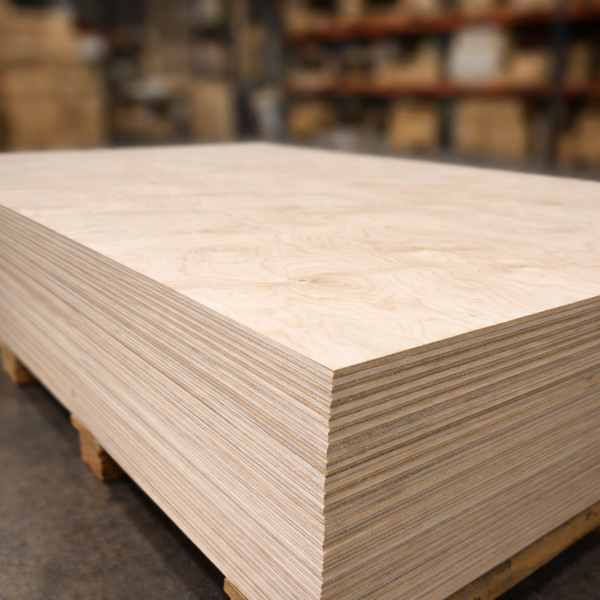
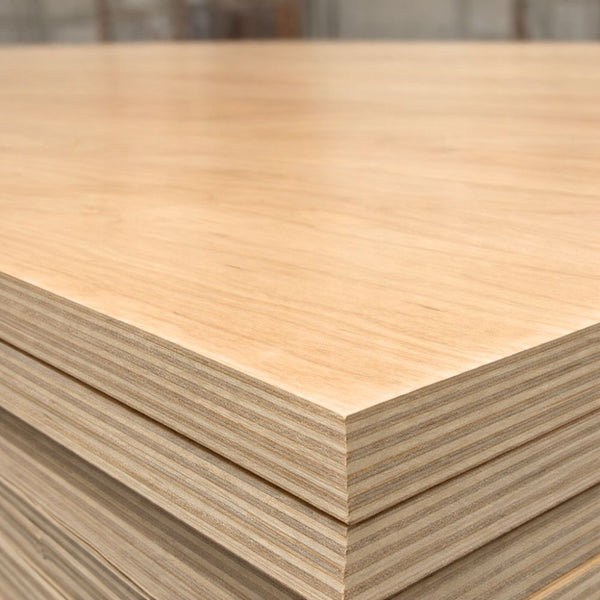
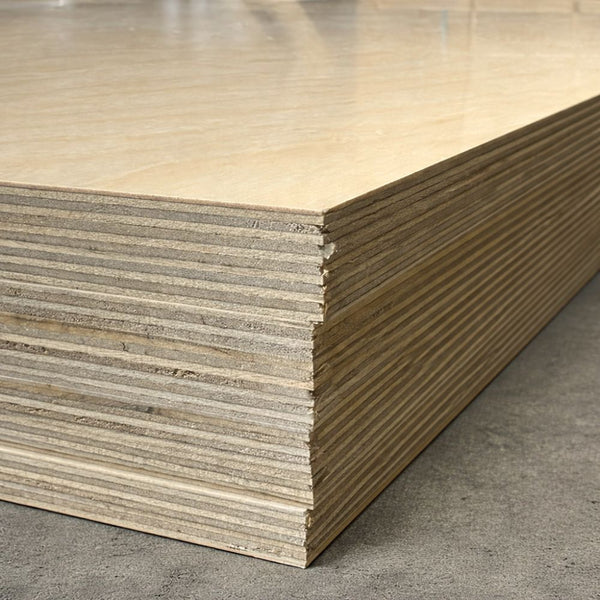
Baltic birch is a hardwood plywood made from multiple thin layers of birch veneer, typically 9–13 plies depending on thickness. These layers are cross-laminated and bonded under pressure, creating a dense, stable panel with minimal internal voids. The result is consistent strength across the entire sheet.
Birch veneer, by contrast, is only a surface layer. A thin slice of birch is applied to a substrate such as MDF, particleboard, or lower-grade plywood. The appearance is birch, but the performance depends entirely on the core material underneath.
This difference in construction is what separates structural plywood from decorative panels.
Structural Performance and Strength Differences
Baltic birch is designed for structural use. The multi-ply construction distributes load evenly and provides strong screw-holding capacity. It performs well in cabinet boxes, drawer systems, and shelving where stability matters over time.
Birch veneer panels do not provide the same strength. Fastener holding depends on the substrate, and edges are typically weaker. This limits their use in load-bearing or high-stress applications.
For cabinet construction, Baltic birch is the standard choice where durability and long-term performance are required.
Appearance and Surface Finish
Baltic birch has a clean, uniform face with a light tone and subtle grain. It is often used where a consistent, natural wood look is acceptable or where edges are intentionally exposed as part of the design.
Birch veneer offers more flexibility in appearance. Because it is sliced and applied as a surface, it can provide a more controlled grain pattern and is often used where a refined, furniture-grade finish is required.
The key difference is that Baltic birch is both structure and surface, while veneer is only the finish layer.
When to Use Baltic Birch vs Birch Veneer
- Use Baltic birch for cabinet boxes, drawers, shelving, and structural panels.
- Use birch veneer for cabinet faces, wall panels, and decorative surfaces.
- Avoid veneer in load-bearing or moisture-prone applications.
- Avoid Baltic birch where a finished surface over a lower-cost core is sufficient.
In cabinet work, it is common to combine both materials—Baltic birch for structure and veneer panels for visible surfaces.
Moisture Resistance and Stability
Baltic birch offers better dimensional stability due to its cross-laminated structure. It resists warping and maintains its shape under changing humidity conditions, making it suitable for kitchens and interior environments with moderate moisture exposure.
Birch veneer panels depend on the substrate. MDF and particleboard cores are more sensitive to moisture and can swell or degrade if exposed. This limits veneer use to controlled interior environments.
Workability and Fabrication
Baltic birch machines cleanly and holds edges well. It supports precise cutting, routing, and joinery without significant tear-out. This makes it suitable for CNC work, drawer construction, and detailed fabrication.
Birch veneer requires more care during cutting and sanding. The thin surface layer can be damaged if over-sanded or chipped during processing. Proper tooling and technique are required to maintain the finish.
Comparison Table: Baltic Birch vs Birch Veneer
| Feature | Baltic Birch | Birch Veneer |
|---|---|---|
| Construction | Multi-ply solid birch | Thin birch layer over core |
| Strength | High | Depends on substrate |
| Screw Holding | Strong | Limited |
| Moisture Resistance | Moderate | Low to moderate |
| Best Use | Cabinets, drawers, structure | Panels, finishes, decorative use |
How This Compares to Other Cabinet Materials
Compared to Baltic birch plywood for cabinets, standard birch plywood often includes mixed wood cores and internal voids. This affects consistency and long-term durability.
Prefinished plywood, such as UV-coated birch panels, provides a ready-to-use surface while maintaining a plywood core. This reduces finishing time while preserving structural performance.
For interior cabinet components where consistency and machining matter, multi-ply Baltic birch is typically preferred. Veneer panels are added where surface appearance is the priority.
Common Mistakes When Choosing Between These Materials
- Using veneer panels for cabinet boxes or structural parts
- Assuming veneer equals solid wood performance
- Overpaying for Baltic birch when only a decorative surface is needed
- Ignoring moisture exposure when selecting veneer-core panels
Most issues come from misunderstanding the role of each material rather than the material itself.
FAQ
Is birch veneer real wood?
Yes. Birch veneer is real wood, but only as a thin surface layer. The core underneath is usually MDF, particleboard, or plywood.
Which is stronger: Baltic birch or birch veneer?
Baltic birch is significantly stronger due to its multi-ply construction. Veneer panels depend on the strength of their core.
Can birch veneer be used for cabinets?
It is suitable for cabinet faces and panels, but not for cabinet boxes or load-bearing components.
Why is Baltic birch used for drawers?
It offers strong screw holding, consistent thickness, and resistance to warping, which are critical for drawer construction.
Does Baltic birch need edge banding?
Not always. The layered edge can be left exposed or finished depending on the design.
Final Thoughts
Baltic birch and birch veneer serve different roles in woodworking and cabinetry. Baltic birch is a structural material built for strength, precision, and long-term performance. Birch veneer is a surface solution used to achieve a finished appearance over a core panel.
The correct choice depends on whether the project requires durability or visual finish. Matching the material to the function is what determines the outcome of the build.